
Home / Installation / VRV and VRF systems
VRF Air Conditioning in London for Large Homes and Buildings
One system with its own controls for every zone. We survey your building, design it zone by zone, then supply and fit it with clean work.
Free, no-obligation site survey. Lines open Monday to Friday, 9am to 5pm.
Rated 5.0 on Google
9.95 out of 10 on Checkatrade
Tell us about your buildingOn our contact page or by phone
An engineer visitsTo look at your rooms and plan the work
You get a written quoteSo you can decide in your own time
 9.95 out of 10on Checkatrade
 REFCOM registeredREF1022012
 F-Gas certifiedengineers
What it is
What VRF air conditioning is
In short
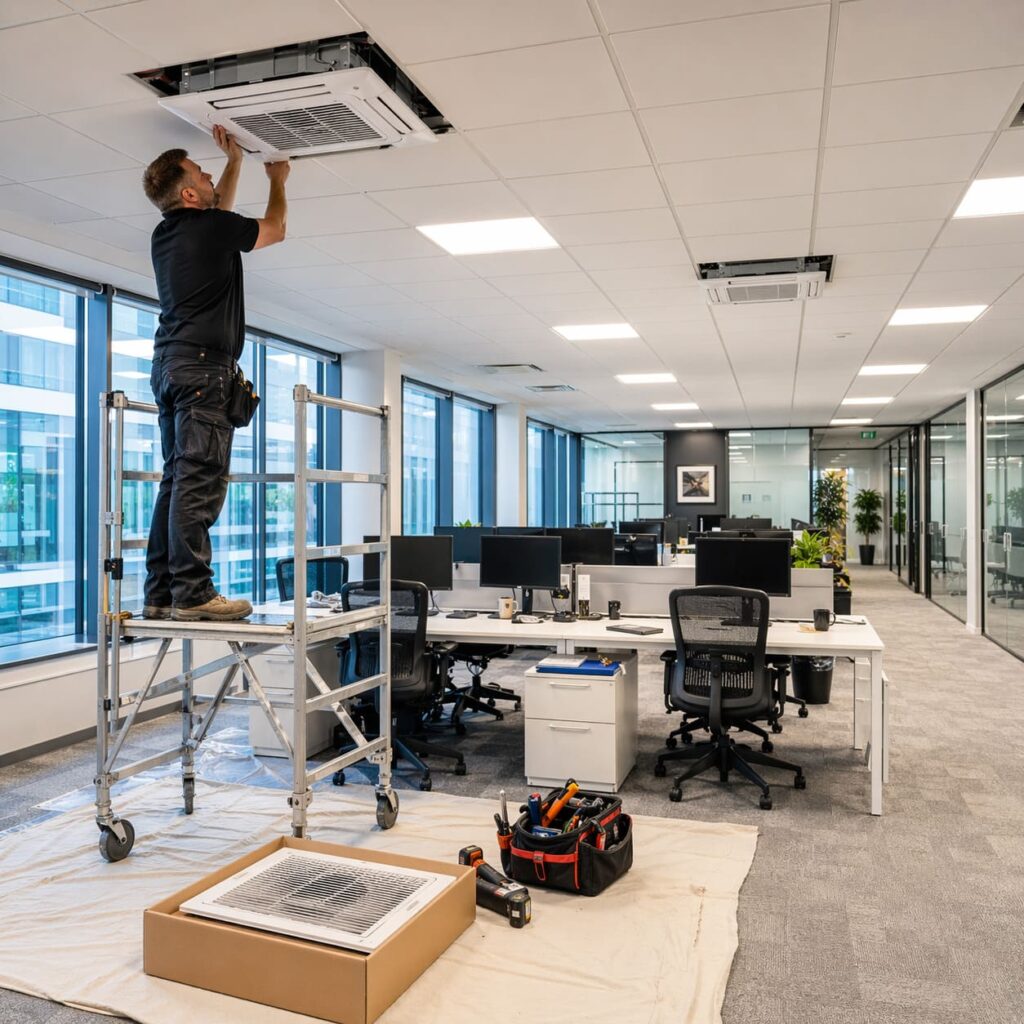
VRF air conditioning in London lets one system cool and heat many rooms, and each room or zone gets its own controls. It suits large homes, offices, hotels and buildings over several floors. We survey your building and design the system zone by zone. Then our engineers supply, fit and set it up with care, so everyone in the building stays comfortable all year round.
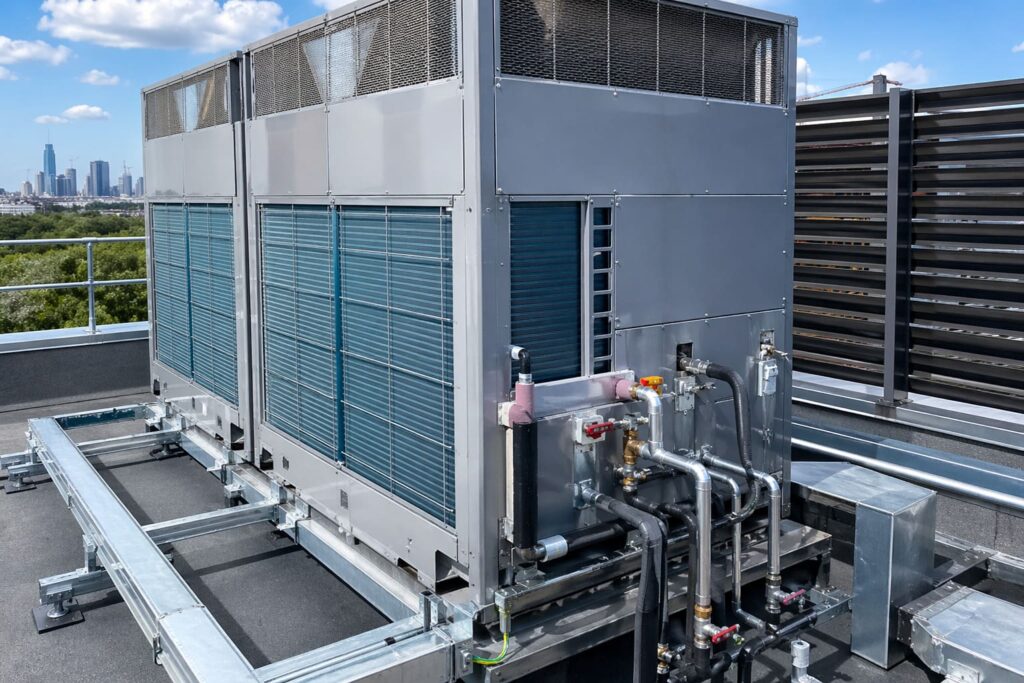
Outdoor unitsOne or more outdoor units sit on the roof and feed every indoor unit.
Pipe riserThe pipes run up a shaft called a riser, so one pipe route serves every floor.
Branch boxOn each floor a branch box splits the pipe to the indoor units.
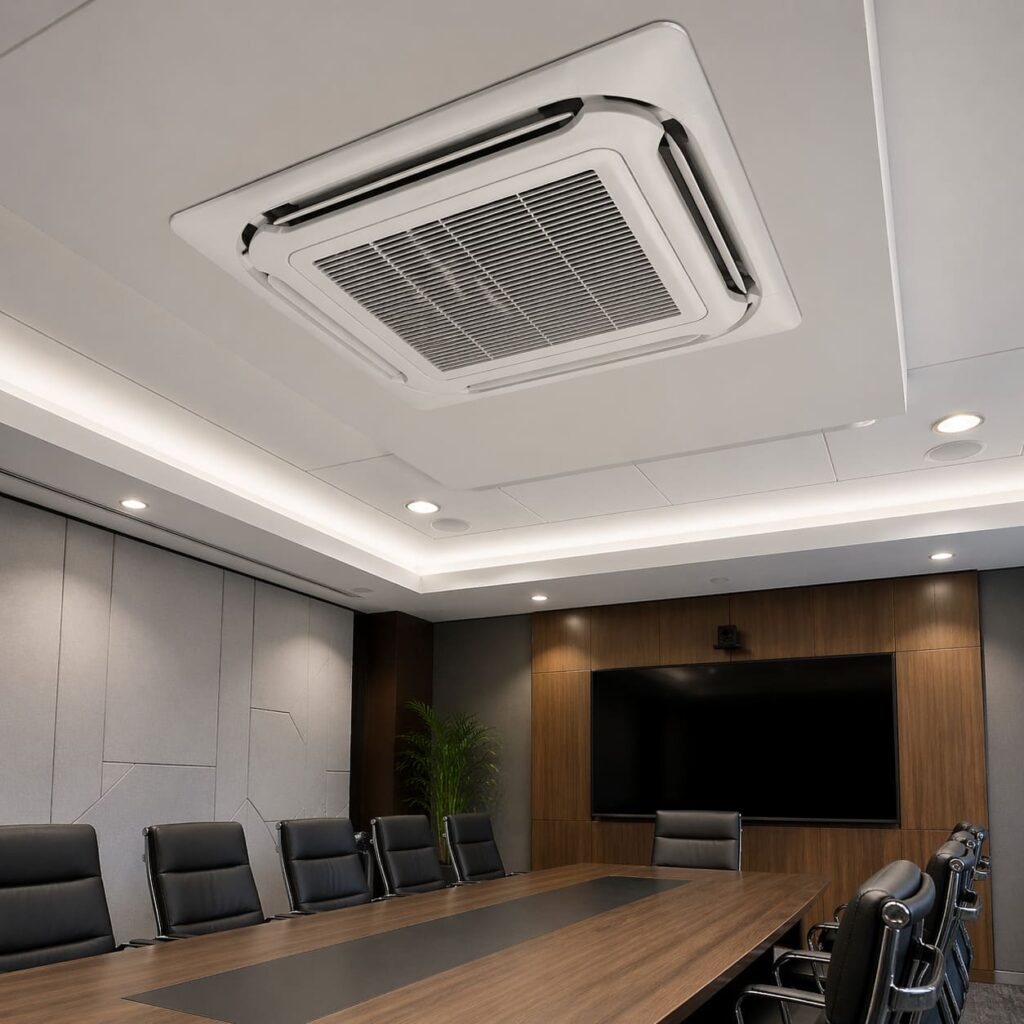
Mixed indoor unitsCeiling cassettes, ducted units and wall units can share one system, and each zone can be set on its own.
Central controllerA central controller is for the building manager. Each zone can still have its own controller.
One outdoor system serves every floor through a single pipe riser, each room can be set on its own, and heat recovery systems can cool some rooms while heating others.
VRF stands for variable refrigerant flow. One maker's UK guide describes it as a system where an outdoor unit is piped to many indoor units, which heat or cool the rooms. It changes the flow of refrigerant to match what each zone needs. A zone can be one room, a floor or an open-plan area.
VRV stands for variable refrigerant volume. The same guide says VRV and VRF are in essence the same technology, and VRV is one maker's trademarked name for it.
Each zone can have its own controller, so people can set the temperature that suits them. One system can mix indoor unit types. The maker's guide lists ceiling cassettes, wall-mounted units, floor units and concealed ducted units.
Where it suits
Where a VRV system suits London buildings
A VRF or VRV system suits a property with many rooms or zones.
Good places include
-
Large houses and period homes over several floors, with basements and loft rooms.
-
Offices on one or more floors, with meeting rooms and open-plan areas.
-
Hotels, serviced flats and guest rooms.
-
Shops, restaurants, gyms and clinics in mixed-use buildings.
Our commercial air conditioning installation page covers business premises.
For a home with a few rooms, a multi-split system can be a simpler fit.
London buildings
What London buildings mean for a VRF system
London buildings bring their own limits, and we plan for them from the first visit.
Tight roof space
Roof space and outside walls are often tight. One maker's guide notes that some outdoor units come in modules that fit around a rooftop.
Older buildings
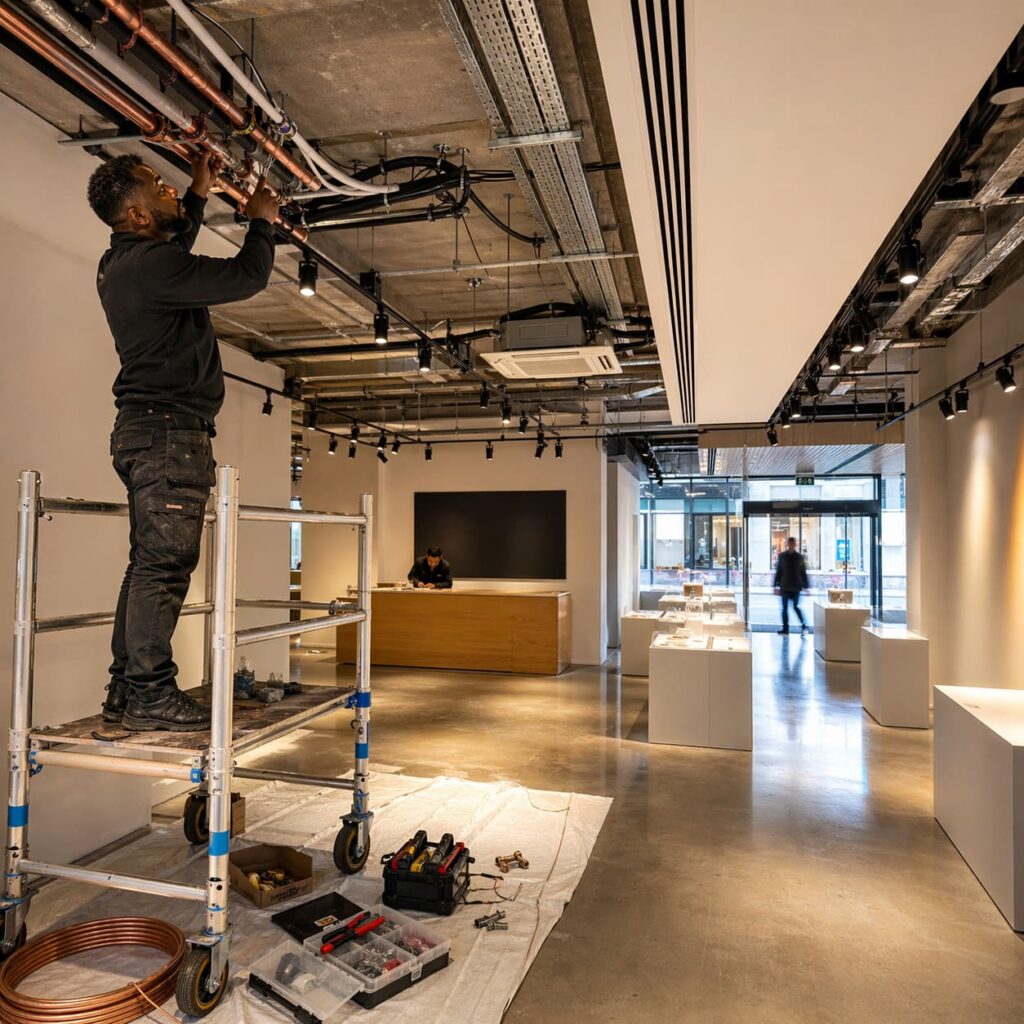
We look for pipe routes through ceiling voids and risers, which are the shafts that carry services between floors, so period features stay as they are.
Leased space
If you lease your space, your landlord or freeholder may need to agree the work first.
Close neighbours
We place outdoor units away from neighbours' windows where we can.
Planning rules can apply to outdoor units too. Our air conditioning installation page explains what to check.
Discuss your project. Tell us about your building and how each area is used, and we will suggest a layout that suits it.
Discuss your projectHeat recovery
Heat recovery VRF systems
Some VRF systems can heat and cool at the same time. The maker's guide explains that a heat recovery system takes heat from the zones being cooled and moves it to the zones that need warmth. This helps where the sunny side of a building needs cooling while the shaded side needs heat.
At the survey we look at how your building is used and explain whether heat recovery suits it.
Our process
How VRF installation works
Our VRF and VRV installers plan each job around your building. Eight clear steps take you from first call to a working system.
 Book a site survey
Prefer to talk? Call 020 3886 2326.
Tell us about your building
You tell us about the building, the rooms and how each area is used.
Survey
An engineer surveys the rooms, ceiling voids, risers and the space for the outdoor units.
Size and plan
We work out how much heating and cooling each zone needs, choose the indoor units and plan the pipe routes and controls.
Written quote and permissions
We send you a written quote and help you check permissions with your landlord, freeholder or building manager.
Plan around your people
We plan the work around the people using the building, and we can work outside your opening hours.
Careful fitting
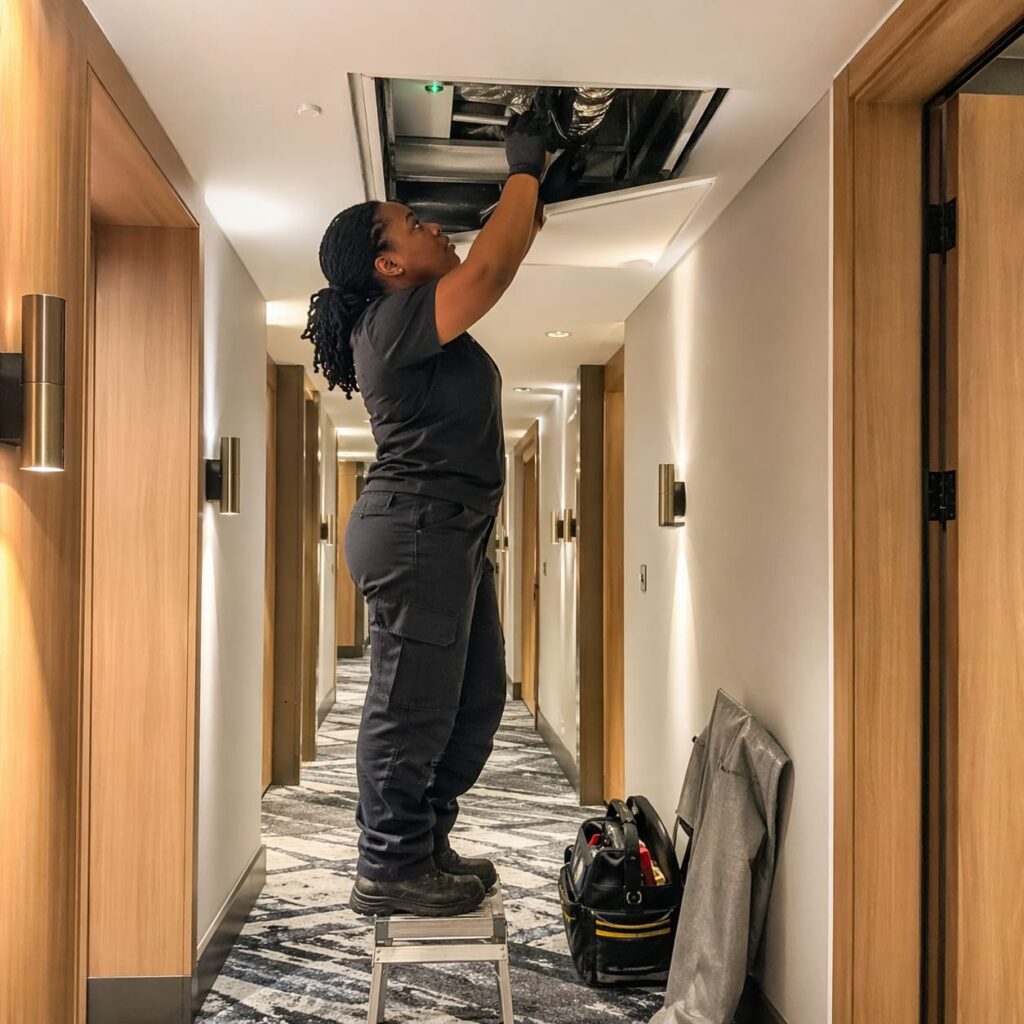
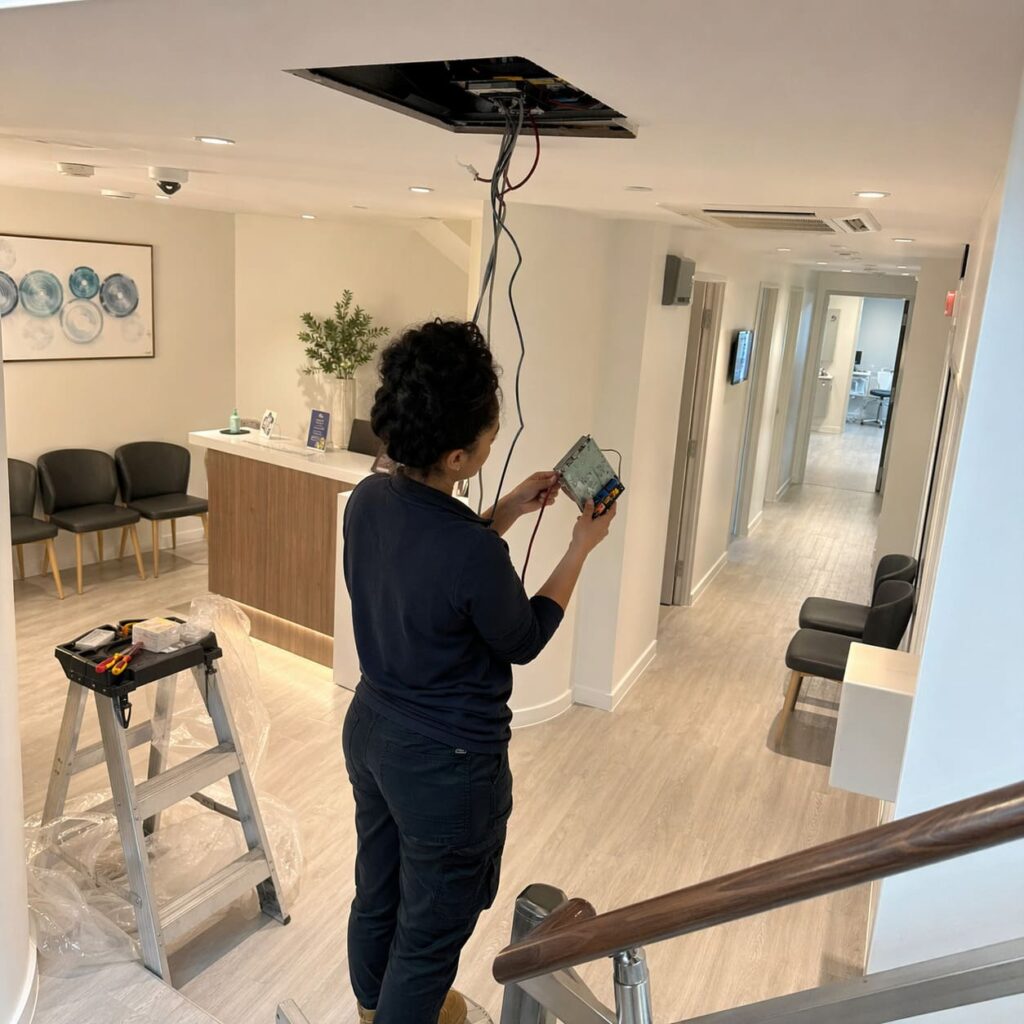
Our engineers fit the pipework, indoor units, drains, wiring and outdoor units, and keep dust and disruption low.
Leak tests and set-up
We test the pipework for leaks, run every zone in heating and cooling mode, and set up the controls.
Controls and handover
We show you or your building manager how to use the controls and look after the system.
The rules
Rules for larger systems
At the time of writing, GOV.UK says the user of fixed air conditioning is responsible for having it checked for F gas leaks. F gas, short for fluorinated gas, is the refrigerant in many systems. Equipment holding F gas equal to 5 tonnes of carbon dioxide or more must be checked at least every 12 months, and larger amounts more often.
GOV.UK also says air conditioning with a rated output of more than 12kW must be inspected by an energy assessor, with no more than a five-year gap between inspections. People often call this a TM44 inspection. Our page on planned preventative maintenance explains how we help you keep on top of both.
Costs
What affects the cost of a VRF system
The main things that shape the cost of a VRF air conditioning installation are:
-
the number of zones and indoor units, and the types you choose
-
whether you choose heat recovery
-
the length of the pipe runs, the number of floors and the routes through risers and ceilings
-
where the outdoor units go, and whether they need lifting onto a roof
-
the controls, such as a central controller for a building manager
-
working outside office hours
Your written quote sets out each part of the work.
Why us
Why choose us for VRF air conditioning
RightAir Solutions designs each VRF system zone by zone, around your building and the way people use it, with quiet, efficient systems sized for each zone.
Little disruptionWe can work outside your opening hours, keep disruption low and leave clean, considered work behind us.
One standardWe bring the same standard to homes and commercial projects, including complex London properties.
Honest adviceWe give honest advice with no sales pressure, and a written quote you can check.
Supplied, fitted, looked afterWe supply, fit and maintain the equipment, with regular servicing.
We fit VRF and VRV systems from makers including Daikin, Mitsubishi Electric, Fujitsu, Toshiba, Panasonic, LG and Samsung.
RightAir Solutions works mainly in West and North West London, including Kensington, Chelsea, Maida Vale and Hampstead, and across London.
Reviews
What our customers say
Read reviews from homes and businesses across London, posted on Google.


Are VRF and VRV the same?
Yes, in practice. One maker's UK guide says they are in essence the same technology, and VRV is one maker's trademarked name for it.
Is VRF better than split air conditioning?
Each suits a different job. A VRF system suits a building with many rooms or zones on one system, and a split system suits a single room.
Can a VRF system heat and cool at the same time?
Yes, if it is a heat recovery system. It can cool some rooms and heat others at once, by moving heat from the rooms being cooled to the rooms that need it.
Can I have VRF air conditioning in my home?
Yes, in a larger home with many rooms or several floors. For a smaller home, a multi-split system may suit.
What are the drawbacks of a VRF system?
The main one is that it is a bigger project, with pipework running through the building to every zone. It needs careful design, and it is easiest to fit during a refurbishment or fit-out.
Other systems we fit
Areas we cover
We also work in South West London, including Clapham, Wandsworth and Battersea. Other neighbourhoods we cover include Mayfair, Marylebone, Fitzrovia, Soho, Holborn, Covent Garden, Bloomsbury, Westminster, Paddington, Edgware Road, Notting Hill, Ladbroke Grove, Holland Park, Hammersmith, Shepherd's Bush, Acton Park Royal, Ealing, St John's Wood, Swiss Cottage, Finchley Road, West Hampstead, Golders Green, Hendon, Kilburn, Queen's Park, Cricklewood, Highgate, Camden and Islington.
VRF and VRV systems
Planned zone by zone
Plan your VRF system
Share a few details about your building, and we will be in touch to arrange your survey and written quote.