Who is legally responsible for air conditioning compliance in commercial buildings?
Responsibility for air conditioning compliance in commercial buildings typically rests with the building’s duty holder, which may be the owner, tenant, or managing agent, depending on contractual arrangements. Facilities managers often handle operational tasks, but legal accountability remains with the designated duty holder under UK regulations.
Table of Contents
Understanding Compliance in Commercial HVAC Systems
In commercial buildings, air conditioning compliance involves more than simply installing a system and keeping it running. It includes meeting safety, environmental, and energy efficiency standards set by UK law. These standards apply not just to how systems are installed, but also to how they are maintained and monitored throughout their lifecycle.
Key compliance areas include:
- F-Gas Regulation: Systems using fluorinated gases must be properly installed, leak-tested, and maintained. Engineers handling these systems must hold appropriate certification.
- TM44 Inspections: Required for any building with a total cooling capacity above 12kW. These inspections assess energy efficiency and must be carried out at least every five years.
- Building Regulations Part L: Focuses on energy use and carbon emissions linked to fixed plant systems, including air conditioning.
- Health and Safety Provisions: The Health and Safety Executive (HSE) expects employers to provide safe indoor climates, which includes ensuring systems do not pose health risks.
- Energy Performance of Buildings Directive (EPBD): Supports broader goals of reducing energy consumption and improving the sustainability of commercial premises.
Importantly, compliance is not a one-time obligation. It extends across the operational lifespan of a system, requiring regular checks, documentation, and updates to remain valid.
The Legal Duty Holder: Who Bears Ultimate Responsibility?
Under UK law, the legal responsibility for compliance usually lies with the party defined as the duty holder. This is most commonly the building owner, but in many lease agreements, responsibility is transferred entirely or in part to tenants or managing agents.
Clear distinctions often break down as follows:
- Freeholders tend to be responsible for base building systems in multi-tenant spaces, particularly in shared areas.
- Leaseholders may take on full compliance duties if the lease covers all HVAC infrastructure within their demise, including installation and maintenance requirements.
- Tenants are sometimes accountable for equipment they have installed or control independently, particularly in fully let commercial properties.
- Managing Agents and Facilities Management Companies, while not legally liable in most cases, often act as the responsible party in practice. Their roles should be governed by well-defined contracts.
Unclear or split arrangements can lead to confusion. Overlapping responsibilities frequently cause key compliance steps, such as TM44 renewals or refrigerant checks, to be missed. Reviewing lease documents and service agreements helps clarify who holds which obligations.
Pro Tip: Review lease agreements to confirm whether HVAC compliance lies with the tenant, owner, or managing agent before commissioning services.
The Role of Facilities Managers and Building Operators
Facilities managers play a central role in ensuring day-to-day compliance, even if they are not the legal duty holder. Their involvement typically includes practical enforcement of regulations through operational oversight.
Common responsibilities include:
- Coordinating maintenance schedules with external contractors to ensure legal service intervals are met.
- Maintaining up-to-date records, such as refrigerant logs, leak test reports, and service histories, all of which may be subject to external inspection.
- Ensuring access for TM44 assessors and responding to findings from inspection reports.
- Monitoring system performance and identifying early signs of non-compliance, such as temperature anomalies or unusual noises.
- Reporting compliance risks to property stakeholders when issues arise.
In high-specification buildings across areas like Kensington or Maida Vale, consistency and discretion are especially important. Facilities teams often walk a fine line between operational diligence and tenant expectations. When responsibilities are delegated clearly, FMs can uphold compliance without being exposed to liability themselves.
Compliance Through Maintenance: Why It’s Not Just About Installation
Air conditioning compliance is not something that is completed the day a system is commissioned. It requires continuous attention through a structured maintenance pattern that helps systems stay legal, safe, and efficient.
Maintenance obligations typically include:
- Regular leak checks under the F-Gas Regulation, with frequency depending on refrigerant volume.
- Filter changes and hygiene maintenance, which support indoor air quality and reduce system strain.
- Energy efficiency assessments, particularly in advance of TM44 inspections.
- Refrigerant top-ups, where needed, as well as proper containment of gases removed from service.
- Recording all interventions in service logs, which form the audit trail necessary for proving compliance.
Professional servicing intervals must be defined and adhered to, with adjustments for system size, location, and usage patterns. A planned preventative maintenance (PPM) schedule is often the most effective structure. Companies like RightAir Solutions build these programmes around both compliance requirements and long-term system resilience, which reduces the risk of breakdown and regulatory breach alike.
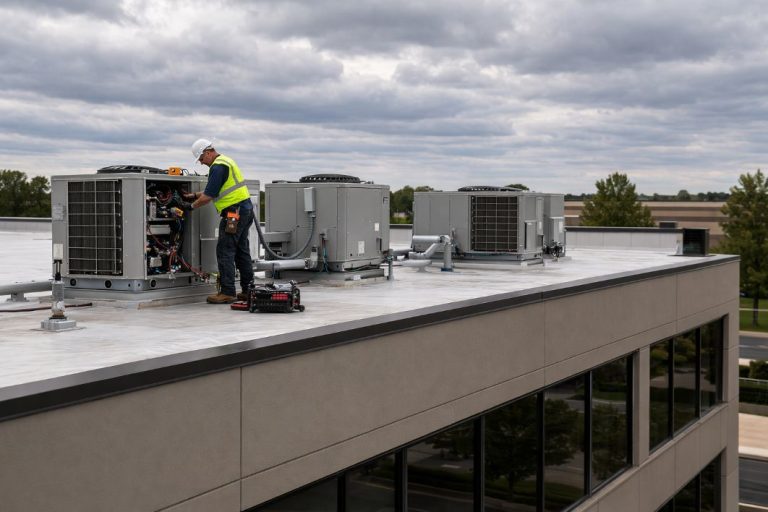
Schedule a TM44 Inspection with Confidence
Ensure your building meets legal energy efficiency standards with timely TM44 assessments by accredited professionals.
TM44 Inspections: What They Are and Who Arranges Them
A TM44 inspection is a formal evaluation of an air conditioning system’s energy performance. These assessments are required for all commercial buildings with air conditioning systems that collectively exceed 12kW in output.
Key facts about TM44 inspections:
- Who needs one: Any commercial property exceeding the system threshold, regardless of layout or sector.
- Frequency: Every five years, based on the date of the last valid inspection certificate.
- Purpose: To assess energy efficiency, identify inefficiencies, and offer recommendations for improvement.
- Conducted by: Accredited assessors registered with a recognised body.
- Responsibility: Typically lies with the duty holder or whoever controls the building services. This may be defined in the lease or service contracts.
Failure to undertake or renew a TM44 can result in fines and affect general compliance status. It can also raise issues during property transactions or insurance renewals. Arranging inspections ahead of expiry and maintaining controls documentation can help ensure compliance stays uninterrupted.
Pro Tip: TM44 inspections can be combined with maintenance visits to reduce disruption and ensure systems are in audit-ready condition.

The Importance of Clear Contracts and Service Agreements
Much of the confusion around HVAC compliance stems from vague or outdated contracts. Without clear delegation of responsibility, key tasks can slip through the cracks.
Strong agreements should include:
- Defined roles: Identify who is in charge of arranging TM44 inspections, managing service contracts, and handling refrigerant compliance.
- Planned maintenance scopes: Lay out service intervals, performance testing expectations, and reporting formats.
- Delegated authority clauses: Clarify where authority ends and who is empowered to make decisions or commission works.
- Escalation mechanisms: Provide a way to resolve disputes or non-compliance risks before they become regulatory issues.
- Integration with other compliance areas: HVAC responsibility should align with fire safety, structural services, and access planning to ensure buildings are treated holistically.
Managing agents are often the link between freeholders and tenants, and contract clarity can make or break their effectiveness. Contracts should be reviewed regularly to ensure they still reflect real operating responsibilities, especially after tenant turnover or system upgrades.
Set Up a Tailored Maintenance Plan
Keep your HVAC system compliant year-round with a planned preventative maintenance schedule customised to your building.
Working with Professional Contractors: What to Expect and Ask For
The contractors who install and service your air conditioning system play a significant role in achieving and maintaining compliance. Their expertise, documentation, and working practices all affect regulatory outcomes.
When selecting a contractor, consider the following:
- Are they certified? Look for F-Gas certification and other relevant credentials such as Refcom registration or manufacturer accreditations.
- Do they provide full documentation? Service reports, refrigerant handling logs, and inspection readiness materials should be standard.
- Can they support TM44? While not assessors themselves, reputable firms assist in system preparation for inspection.
- Do they understand your building type? For example, contractors familiar with London’s varied property stock know how to work within visual and acoustic constraints common in converted townhouses or mixed-use blocks.
- Will they help you track compliance? Lifecycle-focused providers can help maintain continuity, particularly by integrating maintenance with servicing obligations.
Working with firms like RightAir Solutions, who coordinate installation, servicing, and documentation through one point of contact, simplifies compliance management, and in particular for clients who value discretion and long-term reliability.
Final Thoughts: Taking Ownership of Compliance
Compliance in commercial air conditioning is a shared responsibility, but passive ownership leads to missed obligations and unnecessary risk. Whether you own, lease, or manage a building, recognising where your responsibilities lie is the first step.
Key actions to consider:
- Review current service and lease contracts for clarity on HVAC responsibilities.
- Confirm your TM44 status and renewal date, and schedule ahead if nearing expiry.
- Implement or update a PPM schedule with documentation aligned to compliance requirements.
- Ensure your facilities team and contractors are aligned on reporting expectations.
- Seek professional advice if your obligations are unclear or your documentation is incomplete.
Taking ownership does not mean doing everything yourself. It means ensuring the right systems, people, and processes are in place. With clarity and professional support, HVAC compliance becomes a manageable part of responsible building management.
Speak to a Compliance Specialist
Unsure who holds HVAC responsibility in your property? Our advisors can help clarify obligations and support compliance planning.
Read Similar Blogs
Air conditioning in a conservation area: what you can and can’t do without approval
Learn how to install air conditioning in a conservation area, when approval is needed, and practical steps for planning compliant, discreet solutions.

Whole-life cost of air conditioning in London: what nobody tells you about the first five years
Discover the real five-year costs of air conditioning in London, from installation to maintenance, energy bills, and comfort tips unique to local properties.

Get your air conditioning ready for summer with this practical pre-season checklist. Avoid breakdowns and enjoy reliable cooling even on the hottest days.
RightAir Solutions