Is it better to service air conditioning before summer starts?
Yes. In most homes and workplaces, servicing air conditioning before summer is the more practical choice because it gives the system a chance to be checked, cleaned, and adjusted before hot weather puts it under pressure. Waiting until summer can still be workable in some cases, but it often brings a higher chance of faults, slower appointment availability, and avoidable discomfort during the warmest weeks.

What Happens If You Wait Until Summer to Service Your Air Conditioning?
A familiar pattern appears every year. The first hot spell arrives, the system is switched on after months of light use, and a problem that seemed minor in spring suddenly becomes impossible to ignore.
Summer does not automatically cause faults, but it does expose them. A blocked filter, low refrigerant level, dirty coils, or a drainage issue may sit quietly in cooler weather and then show up when the unit has to run for longer periods. That is why delaying air conditioning service often feels fine until the exact moment it no longer is.
Peak season also changes the practical side of booking work. HVAC engineers are busier, London property managers are trying to solve comfort complaints quickly, and appointment backlogs can build after the first heatwave. Emergency repairs are usually more disruptive than planned maintenance because they happen when people are already uncomfortable and daily routines are being affected.
The main drawbacks of waiting are usually straightforward:
- A greater chance of summer AC breakdowns during periods of heavy use
- Longer waits for peak season repairs and fewer convenient appointment slots
- Lower efficiency if the system is dirty or slightly out of adjustment
- More noticeable comfort disruption in bedrooms, living spaces, offices, or meeting rooms
Another common misunderstanding is that a newer unit does not need attention yet. Modern systems are often more refined and more efficient, but they still rely on clean airflow, correct settings, and checks that align with manufacturer guidance. Where refrigerant handling is involved, F-Gas regulations also matter, which means that servicing is not simply a visual once-over.
In a London flat, that delay may mean restless nights during a warm week. In an office, it may mean uneven temperatures, noise complaints, or rooms that never quite cool down by mid-afternoon.
Planned preventative maintenance protects your investment, lowers running costs and keeps the warranty valid.
Request a QuoteThe Benefits of Servicing Your Air Conditioning Before Summer
Pre-summer AC service is mainly about readiness. A well-timed visit gives the system the best chance of performing properly when temperatures rise and usage becomes more consistent.
Early AC checks also tend to be calmer and easier to arrange. Instead of reacting to heatwave stress, you are working within a planned preventative maintenance schedule that fits the property and the way the space is used. That matters in homes with limited access, as well as in workplaces where a service visit needs to happen around staff, tenants, or clients.
Several benefits are worth noting:
- Preventative checks can spot wear, dirt build-up, or controls issues before they turn into call-outs
- Filter cleaning and internal cleaning can support better airflow and indoor air quality
- Refrigerant levels and operating performance can be reviewed before the unit is asked to run hard
- Scheduling is usually smoother outside the busiest part of the season
Air quality often gets overlooked in this discussion. Yet a neglected system can circulate dust and stale odours more noticeably once it starts running for hours at a time. A proper service does not turn every interior into a pristine environment, but it can improve how fresh and comfortable the space feels, especially in sealed rooms during hot weather.
Older London homes often benefit in a slightly different way from newer apartments or refurbished offices. In period properties, where layouts can be awkward and rooms may retain heat differently, small performance issues become much more obvious in summer. Getting ahead of them in spring is often simpler than trying to correct them in the middle of a hot spell.
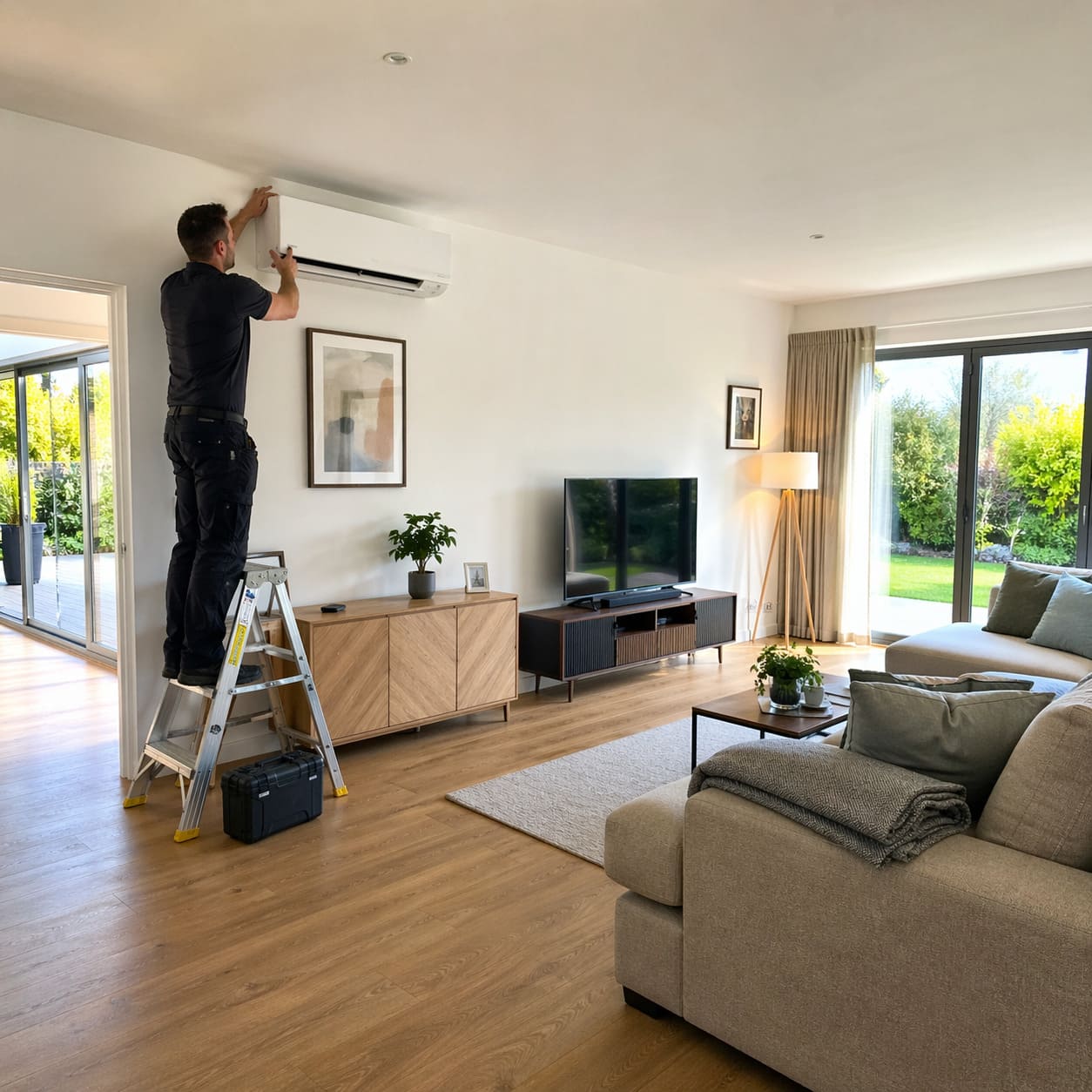
Routine filter cleaning before peak season can noticeably improve indoor air quality and cooling efficiency.

What Does a Professional Air Conditioning Service Involve?
A professional AC maintenance visit should be thorough enough to assess performance, cleanliness, and safe operation without turning into unnecessary drama. The exact scope depends on the type of system, its age, and how heavily it is used.
Most proper service visits include some version of the following:
- Inspection of the indoor and outdoor units, including visible condition, mounting, pipework, and signs of wear or leakage.
- Filter cleaning or replacement, depending on the system and manufacturer guidelines.
- Cleaning of key internal components where access allows, including parts that affect airflow and hygiene.
- Checks on refrigerant circuit performance where relevant and legally appropriate under F-Gas certification requirements.
- Testing of controls, temperatures, drainage, and general operation.
- Review of noise, vibration, and overall running behaviour.
- Confirmation that settings, including smart thermostat functions if fitted, are working as intended.
For some properties, the difference between a quick visit and a careful one becomes obvious in the details. An older split system may need closer attention to drainage and coil condition. A newer multi-split installation may need a more systematic check across several rooms to make sure each indoor unit is responding correctly.
Discreet workmanship matters as well. In high-end homes or polished commercial interiors, servicing should be clean, organised, and respectful of the surroundings. That approach is often associated with firms such as RightAir Solutions, where the work tends to be viewed as part of a wider system lifecycle instead of a one-off task.
You should also expect some variation between residential and commercial maintenance. A bedroom unit used seasonally has different demands from a meeting room cassette system that runs through long working days and needs to stay quiet while people concentrate.

How London Properties Influence Air Conditioning Maintenance Needs
London buildings rarely make maintenance simple in a standardised way. One flat may have tight external access and strict noise sensitivities, while a larger house may have several zones, long pipe runs, and rooms that heat up unevenly through the day.
Older buildings often need more thoughtful servicing because the air conditioning system has been fitted around the property rather than into a blank canvas. Pipe routes may be less direct, service access may be tighter, and visual integration may have been a major concern from the start. In those cases, maintenance is partly about preserving performance and partly about working carefully within the limits of the building.
Newer properties bring a different set of issues. Compact layouts, sealed glazing, and consistent insulation can improve cooling performance, but they can also make occupants more sensitive to airflow, control settings, and sound. A unit that is technically operating can still feel unsatisfactory if the room cools too quickly, cycles oddly, or creates noticeable noise at night.
Acoustic performance matters more in dense urban settings. Neighbours are closer, outdoor units may sit near terraces or bedroom windows, and low-level vibration can become a bigger concern than raw cooling capacity. A proper maintenance schedule should take that into account instead of focusing only on whether cold air is coming out.
Access limitations also shape what sensible servicing looks like. Some systems are easy to reach and maintain in one visit. Others need careful planning, protection of finishes, or timing around building rules and shared spaces. That is one reason experienced London contractors, including RightAir Solutions on suitable projects, tend to approach maintenance as property-specific AC care rather than a generic appointment.
Always check manufacturer warranty terms, as regular servicing is often required to keep it valid.

Common Misconceptions About Air Conditioning Servicing Timing
A few persistent myths shape how people think about maintenance, and they often lead to avoidable inconvenience.
“It’s fine to wait until it’s hot”
Sometimes it is fine, especially if the system is in excellent condition and the booking diary is still manageable. The problem is that you only find that out after demand has already increased. By then, any fault or delay matters more because the property is already warm.
“New systems don’t need servicing”
Newer equipment still needs routine attention. System manufacturers usually set maintenance expectations, and some warranty terms depend on proper upkeep. Dirt, blocked filters, and small setup issues can affect a recent installation just as much as an older one.
“Servicing is only necessary if there’s a problem”
Preventative care exists because many issues start quietly. Poor airflow, gradual loss of efficiency, or a developing drainage problem may not feel urgent at first, yet each can become much more disruptive under summer load.
“Servicing will disrupt the whole day”
A planned visit is usually less disruptive than an unplanned breakdown. In many properties, routine maintenance is a controlled job with a clear scope, especially where access has been considered in advance and the system is maintained regularly.
“All servicing is basically the same”
Service quality varies. A meaningful inspection follows maintenance best practices, pays attention to the specific system, and respects manufacturer guidance. A rushed visit that skips cleaning, testing, or proper checks may leave the underlying issue exactly where it was.

F-Gas certified servicing, filter changes, refrigerant checks and TM44 inspections, arranged around your schedule.
Book a ConsultationMaking the Right Decision for Your Property and Comfort
The timing question is really about trade-offs. Waiting may seem convenient in the short term, but early servicing usually gives you more control over comfort, scheduling, and the condition of the system before summer places extra demand on it.
Property type matters here. A lightly used unit in a straightforward space may seem forgiving for longer. A system serving a top-floor flat, a sun-exposed office, or an older building with access constraints has less room for neglect once warm weather settles in.
If you are weighing up the right moment, three points are usually enough to guide the decision:
- How much do you rely on the system during hot weather
- How disruptive would a fault be in your home or workplace
- Whether the property has any quirks that make maintenance slower or more specialised
Choosing AC service timing with those points in mind tends to lead to a better outcome than waiting for the first uncomfortable day. A system that has been checked before summer starts is easier to live with, easier to plan around, and more likely to do its job quietly when the heat arrives.
