RightAir Solutions is a company that specialises in commercial air conditioning services.

Heat Pumps vs Gas Boilers: What Do UK Homeowners Really Pay?

UK homeowners face rising bills and increasing pressure to make greener choices, leaving many unsure whether a heat pump or a gas boiler is the smarter financial decision. Upfront installation costs and long term running bills can differ widely depending on property type, energy tariffs, and available grants. To make the choice clearer, this guide compares the two systems using real examples and current 2025 figures.

Why Costs Vary So Much: The Key Factors That Change Everything

Heating costs are not fixed, and small details can make a big difference. Factors like insulation quality, property size, and heating schedules influence efficiency and long term bills. Heat pumps rely on their Seasonal Coefficient of Performance (SCOP) to determine efficiency, while gas boilers are usually measured by their ErP rating. Electricity and gas price differences, local climate conditions, and whether you use smart thermostats or heating zones all affect your final bill. These variations explain why one homeowner may see savings from a heat pump while another does not.

Checklist: • Check EPC rating and insulation levels • Consider heating usage patterns • Review gas vs electricity tariff

How Insulation Affects SCOP and Payback Periods

A heat pump’s efficiency depends heavily on how well insulated your home is. Poor insulation means the system works harder, reducing its SCOP (Seasonal Coefficient of Performance). For example, a heat pump in a well insulated home may achieve a SCOP of 3.5, while the same system in a poorly insulated home may drop to 2.1. This difference can stretch your payback period by 4 to 6 years. Improving insulation before installation improves performance, shortens the break even timeline, and often makes the home eligible for more grants. Options such as cavity wall insulation, loft insulation and full thermal envelope retrofitting are worth considering.

Heat Pump vs Boiler Installation Costs: What You’ll Really Pay in 2025

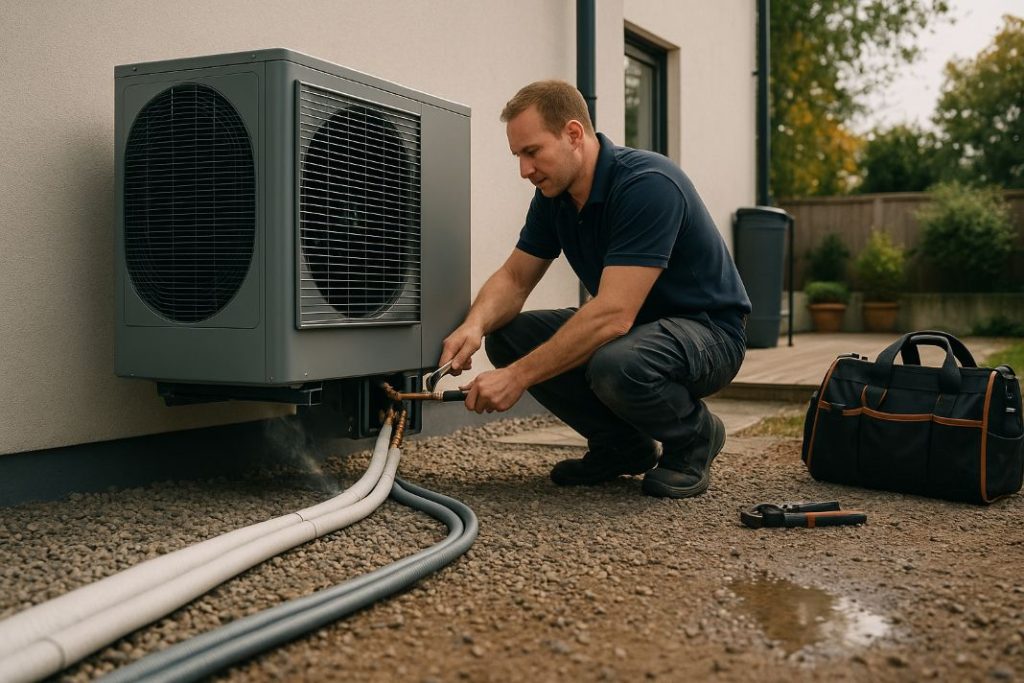
A new combi boiler in London typically costs between £2,000 and £4,000 including installation. In contrast, an air source heat pump can range from £8,000 to £14,000, with higher bills for larger properties or where extensive radiator and insulation upgrades are needed. Ground source heat pumps are even more costly, often exceeding £18,000. London homeowners may also face higher labour charges compared with the UK average. The Boiler Upgrade Scheme currently offers a grant of £7,500 for qualifying households, helping reduce the upfront gap between systems.

Checklist: • Get multiple quotes from MCS installers • Ask about radiator and pipework upgrades • Confirm BUS grant eligibility

Pro Tip: Always check your EPC rating first. It affects both eligibility and heat pump efficiency.

How do heat pump grants actually work in practice?

The Boiler Upgrade Scheme is administered through your chosen MCS certified installer. You do not apply directly. The installer submits your grant request and deducts the £7,500 from your invoice once approved. Eligibility is typically based on EPC rating and whether the property meets minimum insulation standards. For more details, check with TrustMark or visit the GOV.UK heating upgrade pages.

Will a Heat Pump Actually Save You Money on Energy Bills?

The long term savings depend on electricity and gas unit prices. In 2025, the average UK electricity cost is around 22p per kWh compared to gas at 7p per kWh. A heat pump with a SCOP of 3 can deliver three units of heat for every one unit of electricity, effectively lowering its running cost. A gas boiler typically runs at around 90 percent efficiency, meaning it wastes some of the energy it burns. On a standard tariff, a heat pump can work out cheaper for well insulated homes with consistent heating schedules, but may cost more to run in poorly insulated properties. Smart tariffs and night rates from suppliers like Octopus Energy can help shift usage to cheaper times, further improving savings.

Checklist: • Compare SCOP to boiler efficiency • Factor in smart meter tariffs • Model monthly bill estimates

What’s the average energy bill difference between gas and electric heating in 2025?

For a three bedroom semi in London, monthly heating costs in 2025 typically sit around £115 for gas and £98 for heat pump systems when using off peak electricity rates. Savings increase with better insulation and optimised heating schedules using smart meters.

Heat Pump Grants and Support Schemes Available in the UK

Government schemes make switching more affordable. The Boiler Upgrade Scheme offers £7,500 towards heat pump installation, while ECO4 helps low income households improve efficiency measures like insulation. Local London boroughs also provide additional support for residents upgrading to low carbon heating. To access these, you’ll need an MCS certified installer and may need to meet eligibility rules linked to property type, EPC rating, or income level. Applications are typically submitted through your installer and deducted directly from your invoice.

Checklist: • Choose an MCS certified installer • Check your EPC rating and income eligibility • Apply before installation begins

How Costs Compare in London Homes: Flat, Terrace or Semi

Heating bills in London vary sharply depending on property type. A one bedroom flat in Maida Vale might face an installation cost of £9,000 for a heat pump but enjoy lower monthly bills compared with an old gas boiler. A three bedroom terrace in Queen’s Park may require radiator upgrades and wall insulation, raising upfront costs. A four bedroom semi detached home in Notting Hill could see the steepest bills, but also the biggest lifetime savings, especially if combined with solar panels. Location matters too, as London labour and materials can cost more than in other parts of the UK.

Checklist: • Compare by home type and size • Add expected labour cost in London • Ask about local council schemes

Boiler vs Heat Pump for Flats in Shared Buildings

Flats with shared ownership, communal heating, or leasehold restrictions face unique challenges. Heat pump installation may not be permitted without freeholder approval. Even where permitted, space constraints can prevent outdoor unit installation. Residents in purpose built flats may also face limits on electrical upgrades or noise restrictions. In these cases, efficient modern boilers or hybrid solutions may be more practical until planning rules and retrofit policies change.

Checklist: • Get approval from freeholder or building manager • Check leasehold and planning restrictions • Explore hybrid systems if heat pumps are not viable

What Most People Miss: Hidden Costs and Practical Issues

Both systems have practical downsides that often go unmentioned. Heat pumps may require electrical upgrades, new pipework, or radiator resizing. They can take longer to heat a room compared with a combi boiler and need outdoor space for the unit, which can be a challenge in flats. Maintenance costs for heat pumps can be higher if parts fail, and availability of qualified engineers may still be limited. Boilers also carry risks, with repairs for breakdowns or replacement of worn parts adding to lifetime costs.

Checklist: • Ask about long term repair costs • Factor in space and noise constraints • Get full breakdown from installer

Pro Tip: Don’t skip insulation upgrades. They often pay off faster than the heating system itself.

When Does a Heat Pump Start Paying Off Compared to a Gas Boiler?

The break even point depends on how much energy prices change over time. On average, a well installed air source heat pump in a typical semi detached home may take 8 to 12 years to cover its upfront cost through lower running bills. Rising gas prices or inflation could shorten this payback period, while poor installation quality or under insulation could extend it. Long term forecasts suggest electricity costs may fall as the UK grid shifts towards renewables, improving the case for heat pumps.

Checklist: • Estimate energy inflation over time • Compare based on EPC rating • Use lifetime cost calculator

Can landlords benefit from installing heat pumps?

Yes. Landlords upgrading to low carbon heating may improve the property’s EPC rating, meet future rental compliance rules, and access funding through LA Flex or ECO4. Some boroughs provide additional support to private landlords for retrofit projects. Heat pump upgrades can make rental homes more appealing to eco conscious tenants.

Carbon Savings, Property Value and Future Proofing Your Home

Beyond bills, there are other benefits. Heat pumps can reduce a household’s carbon emissions significantly compared with gas boilers, especially when powered by renewable electricity. Homes with better EPC ratings are often more attractive to buyers, and upcoming regulations may penalise properties with older, inefficient boilers. Installing a heat pump now may future proof your home against the eventual phase out of gas and link well with solar panels or home batteries.

Checklist: • Review EPC score and resale value • Consider upcoming compliance changes • Plan for integration with solar/battery

Final Thoughts: How to Decide What’s Best for Your Home and Budget

The right choice depends on your property and financial goals. Heat pumps suit well insulated homes and owners looking for long term savings, while boilers remain a practical option for those needing lower upfront costs or living in properties unsuitable for a heat pump. First time buyers, landlords, and homeowners can all benefit from professional assessments by companies like RightAir to check insulation levels, system compatibility, and grant eligibility. A simple decision checklist of budget, property type, and heating plan can help ensure you choose the system that truly fits your needs.

Checklist: • Define your heating goals • Get a property energy audit • Balance upfront and lifetime cost

Share

Read Similar Blogs

RightAir Solutions

32 Donnington Rd, London NW10 3QU
 
020 3886 2326
 
GQRC+JX London