Can you install air conditioning in a listed building in the UK?
Yes, but only with permission. Installing air conditioning in a listed building in the UK typically requires both planning permission and listed building consent. These safeguards are in place to ensure that the visual and structural integrity of historically significant properties is respected. The process includes specific conditions around what can be altered and how, especially if the building is located in a conservation area or features Grade I or II protections.
Table of Contents
Understand Listed Building Status and Its Implications
In the UK, a listed building is one that has been recognised as being of national architectural or historic interest. Once a building is listed, it becomes subject to stricter controls around development, particularly those that could alter its character.
There are three primary listing categories:
- Grade I: Buildings of exceptional interest, often of national or international significance.
- Grade II*: Particularly important structures of more than special interest.
- Grade II: Nationally important buildings of special interest and by far the most common listing grade.
These listings apply to both internal and external components of a building. Contrary to common belief, listing does not apply only to the façade or outer structure. Fixtures, fittings, and internal layouts can also be covered, depending on their historic or architectural value.
Each local planning authority interprets listing regulations slightly differently, which means that even changes considered minor in one borough might require detailed justification in another. It’s important to work from the assumption that modifications to any part of the property related to air conditioning may require formal approval.
Pro Tip: Submit detailed technical documentation early in the process to improve the chances of fast consent from planning officers.

Why Air Conditioning in Listed Buildings Requires Special Consideration
Installing a modern air conditioning system within a listed building means working with rather than against the original architecture. Many of these properties were constructed long before the concept of integrated HVAC systems existed.
Aesthetic disruption is one of the top concerns for planning officers. External condensers, plastic trunking, or intrusive wall units can conflict with heritage values. Equally, internal interventions must be justified in terms of reversibility. If a system is removed in the future, it should leave minimal trace, especially on original surfaces or materials.
Older properties also present technical sensitivities. Timber joists, delicate plasterwork, solid brick walls, and irregular floor levels all affect how and where HVAC components can be installed. Traditional full-ducted systems often prove impractical or obstructive.
Visual discretion, low noise output, and minimal physical intervention are not preferences in this context. They are often planning requirements. Systems must be selected and configured to suit both the operational needs of the occupants and the historical narrative of the building.
Planning Permission and Listed Building Consent: What You Need
Before any work begins, formal approvals are usually required. Two separate permissions may apply:
- Planning Permission: Governs external changes or developments, such as placing a condenser unit in a rear garden or on a roof.
- Listed Building Consent: Specific to listed buildings and required for any work that affects their character, internally or externally.
In heritage settings, both are commonly needed. Here’s how to approach the approval process:
- Consult Early: Initial dialogue with the local planning authority or a conservation officer provides valuable guidance and avoids wasted time on unviable proposals.
- Prepare Drawings: Detailed plans showing the proposed system layout, the route for pipework, and where units will be placed are important.
- Submit a Heritage Statement: This document explains the significance of the areas affected and justifies that the proposals preserve or improve that significance.
- Review Technical Impact: Include information on fixings, noise levels, and the reversibility of installation to demonstrate a low physical and acoustic burden.
- Respond to Feedback: Be ready to adjust the proposal in response to officer comments.
Experienced contractors, including firms like RightAir Solutions, often coordinate this process on behalf of clients, ensuring that applications anticipate conservation concerns from the outset.
Book a Heritage HVAC Consultation
Consult with our specialists to assess the feasibility of installing air conditioning in your listed property.
Choosing the Right Type of Air Conditioning System
Selecting a system for a listed building requires balancing comfort with visual and structural discretion. Some traditional layouts may not cope well with invasive solutions.
Split and multi-split systems: These involve internal units paired with one or more external condensers. When planned with subtle routing of refrigerant lines and careful unit placement, they tend to work well in heritage contexts.
Wall-mounted units: Preferred where floor or ceiling alterations are restricted. These are generally more straightforward to install with minimal impact.
Ceiling cassettes or concealed ducted units: Effective in some properties, especially those with accessible voids. However, their feasibility depends heavily on the building’s construction.
Floor-mounted units: Useful where wall space is limited or where the unit must mimic the appearance of a radiator.
Discreet design and quiet operation are important. An installer with experience in heritage projects will develop a scheme that avoids conflict with protected elements while delivering functional daily comfort. Consideration should also be given to using modern smart controls, which can regulate the internal environment without requiring structural alterations.
External Units and Visual Impact: Managing the Most Visible Challenge
The external condenser unit tend to attract the most planning scrutiny. Often bulky and noisy, they can visually jar with period features or disturb adjacent residents.
Several mitigation strategies are used to address this issue:
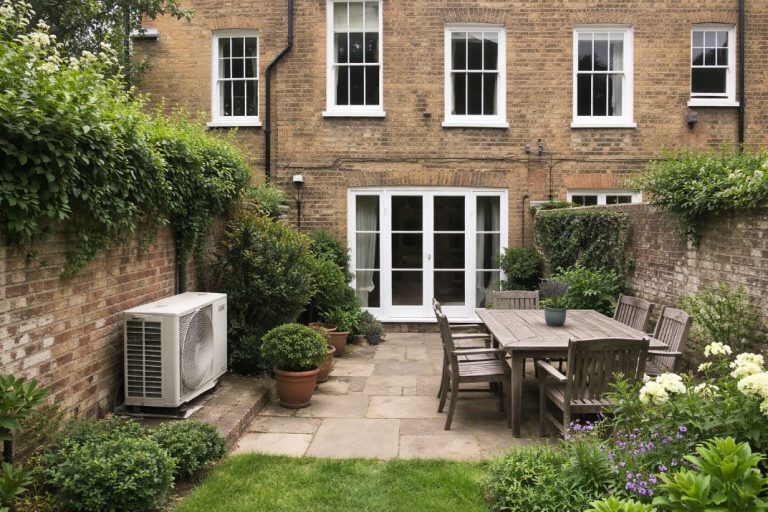
- Tucked-Away Locations: Wherever possible, condensers are positioned on flat roofs, within lightwells, or along rear garden walls to minimise street visibility.
- Acoustic and Vibration Control: Sound performance is a planning factor. Anti-vibration mounts and acoustic hoods reduce transmission through older structures and help placate neighbouring occupants.
- Screening Solutions: Wood panelling, trellises, or plantings can shield external units from direct view, blending them into the surrounding environment.
- Internal Alternatives: In very sensitive locations, systems that avoid external condensers, such as water-cooled or hybrid models, and may be required, although they come with their own installation implications.
Each property will have limitations. Some listed buildings simply lack viable placement options for traditional external units, meaning internal-only systems or building fabric compromises must be evaluated case by case.
Pro Tip: When routing pipes internally, always prioritise paths through modern additions or previously altered areas to avoid affecting original features.
Working with Conservation Officers and Local Authorities
The route to a successful installation often runs through early, well-managed discussion with your local authority. Conservation officers are not adversaries. They are stewards of a building’s significance.
Engaging positively with these officers includes:
– Asking for Pre-Application Advice: This service lets you test ideas and understand the likely direction of planning decisions before committing to full applications.
– Presenting Clear Proposals: Officers respond well to well-thought-out submissions that show genuine effort to preserve sensitive features.
– Demonstrating Reversibility: Showing that a system can be removed without permanent damage or loss of features builds trust in the proposal.
– Responding Collaboratively: Adjusting materials, routes, or product types after feedback often turns a potential refusal into an approval.
Installers familiar with conservation dialogue, such as those serving West and North West London properties, often facilitate the process by pre-empting officer expectations and articulating solutions in planning-aligned terms.
Installation Considerations: Minimising Disruption and Preserving Character
Even with approvals secured, the actual work must be carried out with great care. Listed buildings are often fragile, with elements that are difficult or impossible to replace.
The installation phase should centre on the following:
- Pre-Installation Survey: A comprehensive review allows planners and installers to route wiring and piping in a way that avoids hidden services and sensitive materials.
- Non-Invasive Routing: Surface-mounted conduit can be used sparingly and in less prominent positions, avoiding the need to chase into period plaster or stone.
- Dust and Noise Control: Protective sheeting, soft tools, and controlled drilling techniques are important to prevent unnecessary disruption.
- Access Strategy: Working hours, loading zones, and internal access routes should be carefully planned, especially in densely layered or communal buildings.
- Respect for Original Features: No system should compromise cornicing, panelling, or window structures without specific justification and consent.
When carried out properly, a finished installation should almost disappear into the building without drawing the eye or altering its rhythm.
Request a Planning Support Package
We provide detailed drawings, heritage statements, and planning documents tailored to your property’s needs.
Maintenance and Long-Term Compliance
Ongoing care is important in ensuring that the benefits of a heritage-sensitive installation continue well into the future. Maintenance is about performance. It also has legal and conservation implications.
Key considerations include:
- Scheduled Servicing: Seasonal check-ups help catch early signs of refrigerant leaks, vibration issues, or drainage problems, all of which can damage historic materials if left unaddressed.
- Compliance Records: Maintaining logs of service visits, component changes, and filter replacements helps demonstrate active stewardship, especially during future planning reviews or building sales.
- System Adjustments: Over time, if room uses change or occupancy patterns shift, air conditioning loads may need recalibration. This must be done carefully to preserve prior approvals.
- Permissions for Upgrades: Replacing or upgrading major components could trigger a new listed building consent application, particularly if the new system alters the visual or structural footprint.
Contractors such as RightAir Solutions often remain involved long-term, offering bespoke servicing plans designed for sensitive properties and helping ensure that performance never comes at the expense of compliance.
Ongoing Maintenance for Listed Properties
Custom maintenance plans designed to protect your system and your building’s historical integrity over time.
Read Similar Blogs
Should you get your air conditioning serviced at the end of summer
Weak cooling, odours or noise after summer? End of summer air conditioning servicing can reveal faults early and help you decide whether to act now or wait.
Does air conditioning add value to a London home
Air conditioning can add value in London homes when it is quiet, discreet and well planned. See what buyers notice and what can weaken appeal.
Why is your air conditioning leaking water inside and when should you worry
Air conditioning leaking water inside can damage floors and ceilings fast. Spot the likely causes, safe checks and when to call an engineer.
RightAir Solutions