Why does a loft conversion become so hot in summer, and which cooling options actually work?
Loft conversions often overheat because they sit directly under the roof, receive strong solar gain through roof windows, and may have limited air flow. The most suitable cooling option depends on the room layout, insulation, window position, noise tolerance, and whether you need a permanent system or a short-term fix. In many lofts, a properly planned split or ducted air conditioning system offers the most effective result, although portable and multi-zone options can suit some spaces.
Table of Contents
Why Loft Conversions Overheat: Understanding the Problem
A hot loft feels different from a warm bedroom elsewhere in the house. The air can seem heavy by late afternoon, surfaces stay warm well into the evening, and opening a window sometimes shifts very little heat at all.
Much of that comes down to position. A loft sits closest to the roof, so it absorbs thermal gain earlier and more intensely than lower floors. If the roof faces strong sun for much of the day, the roof space temperature can rise quickly, especially during settled summer weather in London.
Roof windows add another layer. They bring daylight and make a conversion feel open, but glazing in a sloping roof can also admit a great deal of heat. South-facing or west-facing roof windows often make the room hardest to cool in the late afternoon and early evening, which is exactly when many people want the space to feel restful.
Insulation matters too, although the issue is not always a simple case of too little insulation. Gaps, awkward detailing around eaves, and older conversion standards can all affect how heat builds up and how slowly it leaves. Building Regulations in the UK set requirements for insulation and ventilation, but many London lofts combine old structures with newer alterations, so real-life performance can vary from one property to the next.
Natural ventilation is often overestimated. A pair of open windows may help on a mild day, yet passive cooling becomes less effective when outdoor air is already warm or when the loft has poor cross-ventilation. In terraced and semi-detached homes, room layout can limit meaningful air flow, particularly if the stair enclosure or internal doors interrupt the path that cooler air would need to take.
Property age also plays a part. Older homes can have charming proportions and useful roof volume, but they may also have tight access, irregular voids, and construction details that complicate heat management. Energy Saving Trust guidance often points readers back to the basics of insulation, shading, and ventilation, and that remains sensible, although some lofts still need active cooling once summer heat arrives.
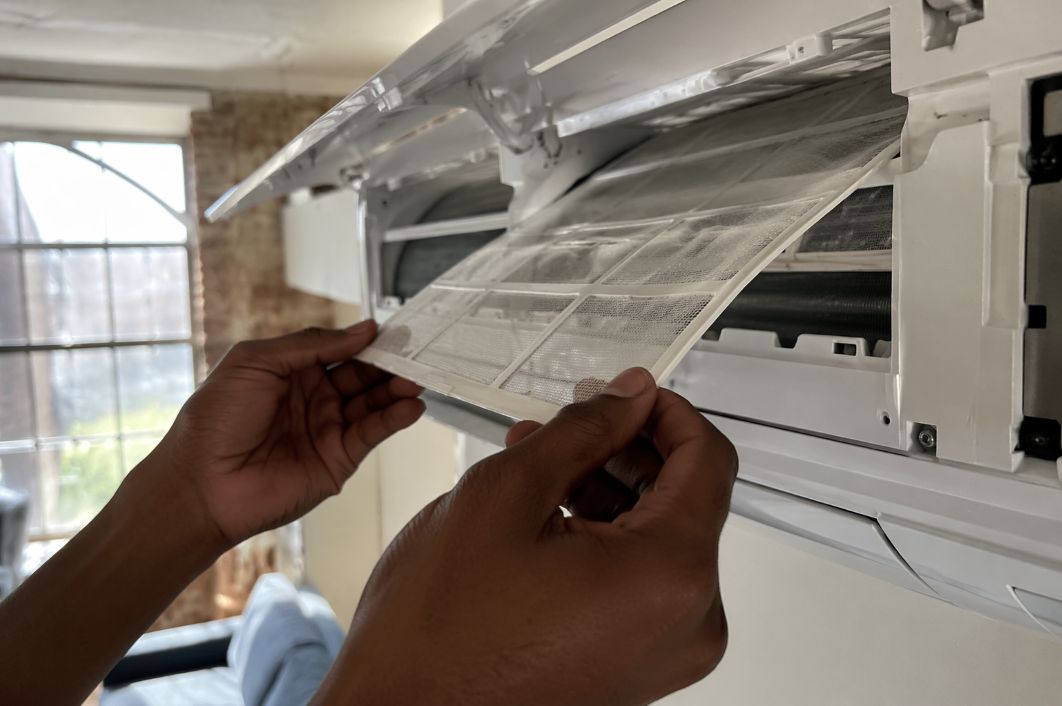
Pro Tip: Regularly check loft air conditioning filters during high-use months to maintain efficient airflow and cooling performance.
Assessing Your Cooling Needs: What Makes Loft Spaces Unique?
Choosing a cooling system for a loft conversion is rarely as straightforward as choosing one for a square room with a normal ceiling height. Slopes, eaves storage, and limited wall space all affect what can be fitted and where.
A loft bedroom has different needs from a loft office. Sleep tends to demand quieter background operation and steadier overnight temperature control. Workspaces often need comfort through the hottest part of the day, when laptops, monitors, and direct sun can raise the temperature even further.
Visual impact matters more in lofts than many people expect. A wall-mounted indoor unit can work well, but the best location may not be the most obvious one once sloped ceilings, wardrobe runs, or roof windows are taken into account. Acoustic comfort matters just as much, particularly if the loft sits above children’s rooms or adjoins a neighbour through a party wall.
Before comparing systems, it helps to look at the space through a practical lens:
- How is the room used across the day and night?
- Where can an indoor unit go without obstructing furniture or head height?
- Is there a realistic route for pipework, condensate drainage, or ducting?
- How important are low noise levels and a discreet appearance?
- Do the windows and background ventilation already support decent air flow?
Window upgrades can influence comfort as well. FENSA standards relate to compliant window installation, and window performance can affect both heat gain and ventilation behaviour. CIBSE guidance also reinforces a wider point: cooling should be assessed as part of the whole room, not as an isolated appliance choice. In a typical London loft, the successful answer usually comes from balancing heat, layout, access, and daily use, rather than focusing on a single specification.
Book a Loft AC Consultation
Find the right air conditioning system for your unique loft space with tailored professional advice.
Air Conditioning Options for Loft Conversions: An Overview
Most loft air conditioning options fall into a few clear categories. None suits every property, which means that layout and usage matter more than labels.
- Split systems: A fixed indoor unit connected to an outdoor condenser. These are common in lofts because they offer reliable cooling, good control, and relatively neat installation when routes are available.
- Ducted systems: A concealed setup that distributes air through grilles. These can look very subtle in a finished loft, but they need more planning space.
- Portable units: Plug-in appliances with an exhaust hose. They can help in the short term, although they are usually noisier and less efficient in awkward roof rooms.
- Multi-split systems: One outdoor unit linked to more than one indoor unit. These suit larger lofts or layouts with separate rooms.
- Zoned systems with smart controls: Useful where the loft serves several purposes and different areas need different temperatures at different times.
Building Regulations Part F covers ventilation, and that remains relevant even when air conditioning is being added. Cooling the room and moving stale air are related issues, but they are not the same task. A system that lowers temperature well may still need sensible ventilation support to maintain comfort.
1. Split Air Conditioning Systems
A split AC for loft use consists of an indoor unit, often wall-mounted, connected to an outdoor unit by refrigerant pipework and electrical cabling. For many converted lofts, this is the most familiar fixed solution because it can cool effectively without taking up floor space.
From the user’s point of view, a good split system feels straightforward. The indoor unit sits high on a wall, responds quickly, and can usually be controlled by handset or smart app. Modern units are often much quieter than people expect, especially on lower fan settings during the evening.
Placement still needs thought. Sloping ceilings can limit mounting positions, and condensate drainage has to be planned carefully. In older properties, the route for pipework may need to pass through cupboards, service voids, or less visible corners to avoid disrupting the room’s finish.
Outdoor unit location is part of the decision too. The unit must be positioned where air can circulate freely and where noise and appearance are managed sensibly. In London homes, that can involve balancing technical performance with neighbour considerations and the character of the building.
Maintenance is fairly routine, but it does matter. Filters need cleaning, and the system should be serviced by a qualified engineer in line with F-Gas requirements where applicable. Companies such as RightAir Solutions tend to approach these installations as part of a longer system life cycle, with attention paid to access for servicing rather than focusing only on the day of fitting. That practical detail often affects how easy the system is to live with a year later.
2. Ducted Air Conditioning Systems
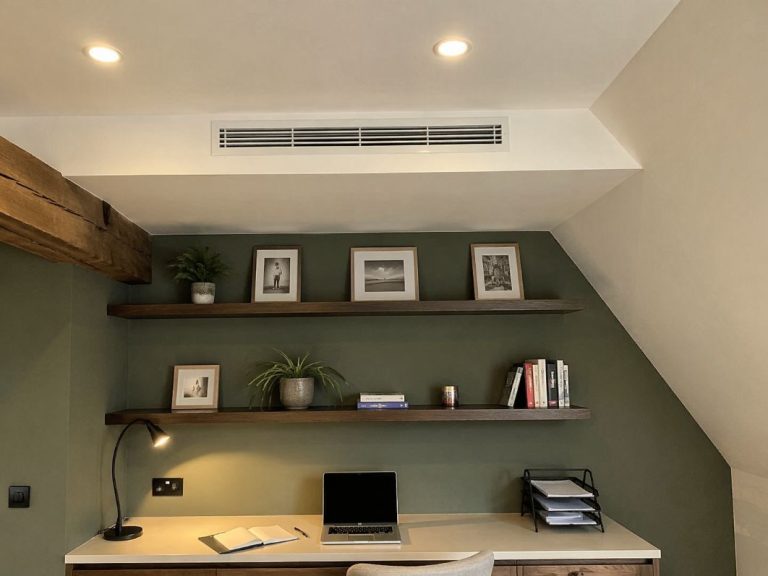
A ducted AC for loft space is usually chosen because the finished room can remain visually quiet. Instead of a visible wall unit, conditioned air is supplied through ceiling grilles or other discreet outlets, with the main equipment concealed within available voids.
That subtle appearance appeals to many homeowners, especially in lofts used as principal bedrooms or polished guest suites. Acoustic comfort can also be very good when the design is done properly, because air distribution can feel gentler and less direct than a single visible unit blowing across the room.
Space is the deciding factor. Ductwork, access panels, insulation around ducts, and service access all need room. In a new conversion or a major refurbishment, that planning can often be integrated early. In an existing loft, the structure may leave very little spare depth once plasterboard, joists, lighting, and storage have all taken their share.
Suitability usually comes down to three points:
- Sufficient ceiling or void space for ductwork and the indoor plant
- Clear service access after the room is finished
- A layout that benefits from even air distribution rather than one local cooling point
Building Regulations Part L and CIBSE guidance both sit in the background here, because efficiency and air movement need to be considered together. A concealed system can feel calm and smooth in daily use, but it asks more from the design stage than most portable or wall-mounted alternatives.
3. Portable and Temporary Air Conditioning Solutions
Portable AC for loft rooms can be useful, but expectations need to stay realistic. These units are best seen as temporary cooling rather than a full answer to persistent loft overheating.
Their appeal is obvious. They are plug-in, movable, and avoid permanent installation work. If you rent the property, need help during a short hot spell, or want to cool the room occasionally, a mobile air conditioner may feel like the simplest route.
The compromises are equally clear:
- They tend to be noisier inside the room because all the working parts are nearby.
- Venting the warm exhaust air through a window kit can be awkward with roof windows.
- Cooling can feel uneven in larger lofts or rooms with high solar gain.
- Condensation management may need regular attention, depending on the model and conditions.
Many people find the venting arrangement is the real sticking point. A portable unit still has to push heat outside, and a half-open roof window can let warm air back in around the hose setup. That does not make the unit useless, but it does explain why real performance can fall short of what the box suggests on a very hot day.
4. Multi-Split and Zoned Systems for Larger or Multi-Use Lofts
Some loft conversions are no longer single rooms. A principal bedroom with an en suite, a study area, or a divided family loft may need more flexible cooling than one indoor unit can provide.
A multi-split AC system connects several indoor units to one outdoor unit. Zoning adds another layer by allowing different areas to run at different temperatures or on different schedules. That can suit a loft used as an office by day and sleeping space by night, especially if one side of the roof receives much more sun than the other.
Control is the main advantage. One room can stay cooler for work calls and equipment use, while another can be set more gently for evening comfort. Smart AC controls make that easier, and generic smart thermostat systems or manufacturer apps can help households manage timing without constant manual adjustment.
Installation becomes more involved as challenge rises. Pipe routes, condensate runs, controller locations, and service access all have to be coordinated. Even so, zoning can make a large loft feel more natural to use, because the cooling pattern matches the way the space is actually lived in instead of treating every corner the same.
Pro Tip: Consider combining shading options like blackout blinds on roof windows with active cooling to minimise solar gain.
Installation Realities: What to Expect in a London Loft
Installing AC in a London loft usually starts with constraints rather than equipment. Access may be through a narrow staircase, external walls may be hard to reach, and the property may have neighbours close by on both sides.
Planning rules vary by borough, so any visible external element should be considered carefully. Some properties may fall under tighter local controls, particularly in conservation areas or where alterations affect the building’s appearance. Building Regulations also remain relevant, especially for electrical work, ventilation, and the way penetrations or alterations interact with the building fabric.
A typical process often includes the following stages:
- Site survey to assess heat gain, room use, access, and possible unit locations
- System design with attention to pipework routes, drainage, and external placement
- Installation planning to protect finishes and manage disruption
- Fitting, testing, and control setup
- Handover with practical guidance on use and maintenance
Good installers also think about what the homeowner will notice during the work. Floor protection, careful drilling locations, tidy routing, and sensible scheduling all matter in lived-in homes. In older loft conversions, preserving the look of the room can be just as important as getting the cooling capacity right.
FENSA can be relevant if window changes are part of a broader heat control strategy, although many AC projects proceed without altering the glazing itself. Firms with experience in high-finish London properties, including RightAir Solutions, usually place strong emphasis on acoustic management and visual integration because those details shape the day-to-day result as much as the machinery does. A neatly finished grille or a well-hidden pipe run often tells you more about the quality of the job than a brochure ever could.
Request a Loft Cooling Quote
Get a clear, detailed quote for installing air conditioning in your loft conversion without obligation.
Maintenance and Longevity: Keeping Your Loft Cool Year After Year
A loft AC system works hardest when outdoor temperatures rise, so routine servicing is part of keeping performance steady. Dust, restricted filters, and poor airflow can all reduce efficiency and make the room feel slower to cool.
Most systems benefit from regular attention that includes filter cleaning, coil checks, condensate inspection, and confirmation that controls are behaving as expected. Refrigerant checks may also be needed, subject to system type and regulatory requirements under F-Gas rules.
A simple maintenance plan usually includes:
- Cleaning or replacing filters at sensible intervals
- Booking periodic professional servicing
- Checking that drainage remains clear
- Watching for changes in noise, airflow, or cooling speed
- Reviewing controls before the hottest part of the year
Loft environments can be demanding because summer temperatures in the roof void and surrounding structure rise sharply. Over time, that makes seasonal checks especially worthwhile. If the system starts to sound different, struggles to reach set temperature, or produces less even airflow, those are practical signs to arrange inspection rather than waiting for a complete failure in the middle of a heatwave.
System upgrades can also become relevant as controls improve and older equipment reaches the end of its useful life. A quieter indoor unit, smarter scheduling, or better zoning may improve comfort without changing the whole approach to cooling.
Beyond Cooling: Rethinking Loft Comfort and Climate Control
Air conditioning can solve a major part of the problem, but loft climate control works best when cooling is viewed alongside insulation, shading, and ventilation. A room with unchecked solar gain and poor night-time air movement may still feel disappointing even with a capable AC unit.
That wider view matters because heat behaves as a system. Roof windows influence solar gain, insulation influences heat retention, and ventilation influences how stale or stuffy the room feels. Cooling lowers temperature, but comfort also depends on air quality, humidity, and how evenly the room behaves through the day.
A few common myths are worth setting aside:
- Opening windows always cools a loft effectively in summer
- A bigger unit automatically gives a better result
- Portable cooling performs the same way as fixed systems
- Air conditioning removes the need to think about insulation or ventilation
Energy Saving Trust advice often points back to reducing heat gain before relying entirely on active cooling, and that is a sensible principle. In practice, the most comfortable lofts usually combine sensible passive measures with a system that suits the room’s actual shape and use.
Seen that way, the goal is not simply colder air. The goal is a loft that feels usable in the afternoon, calm at bedtime, and stable through the hottest weeks of the year.
Download the Loft Cooling Guide
Access a comprehensive guide covering all essential factors for planning and maintaining a cool loft.
Read Similar Blogs
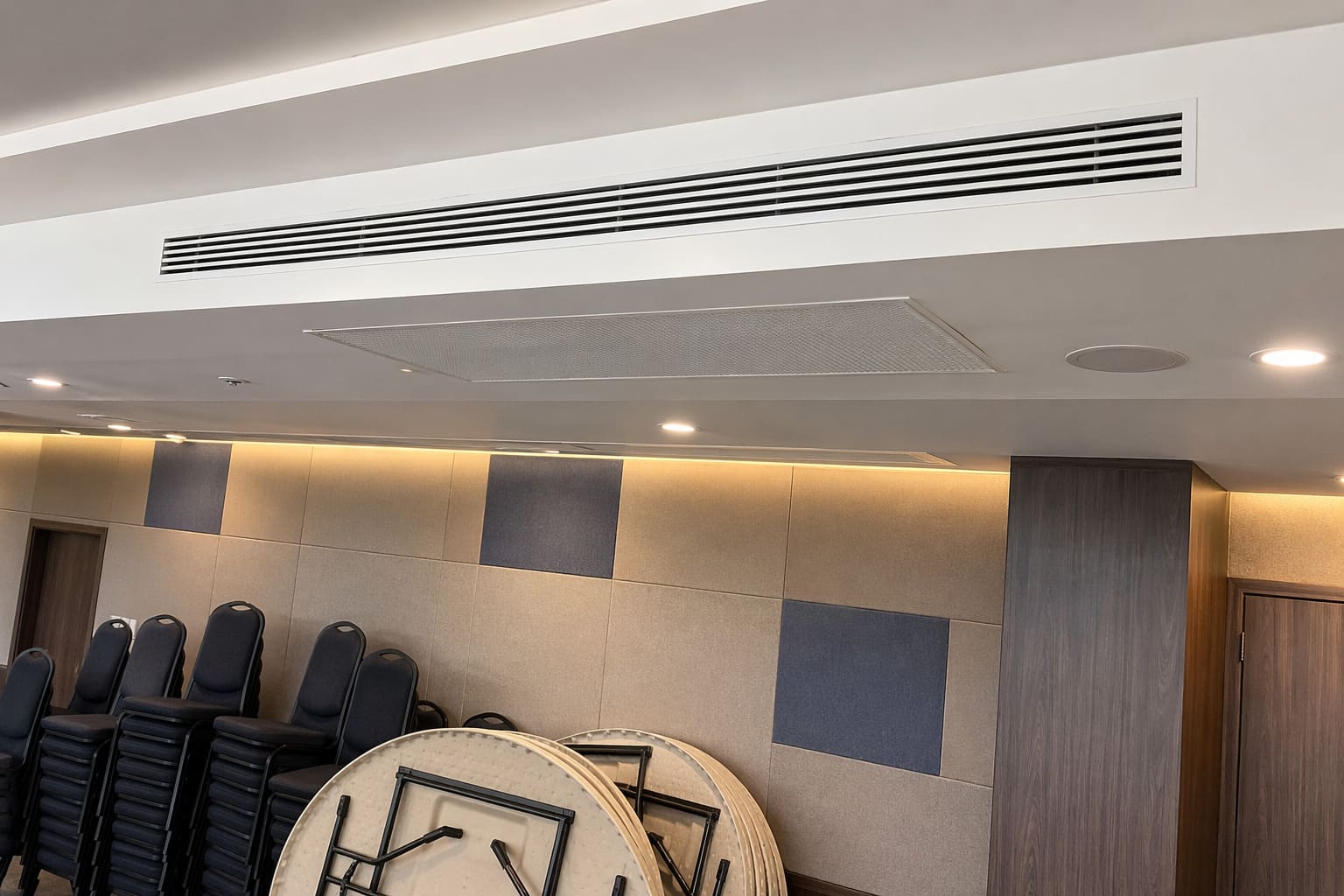
Should you get your air conditioning serviced at the end of summer
Weak cooling, odours or noise after summer? End of summer air conditioning servicing can reveal faults early and help you decide whether to act now or wait.
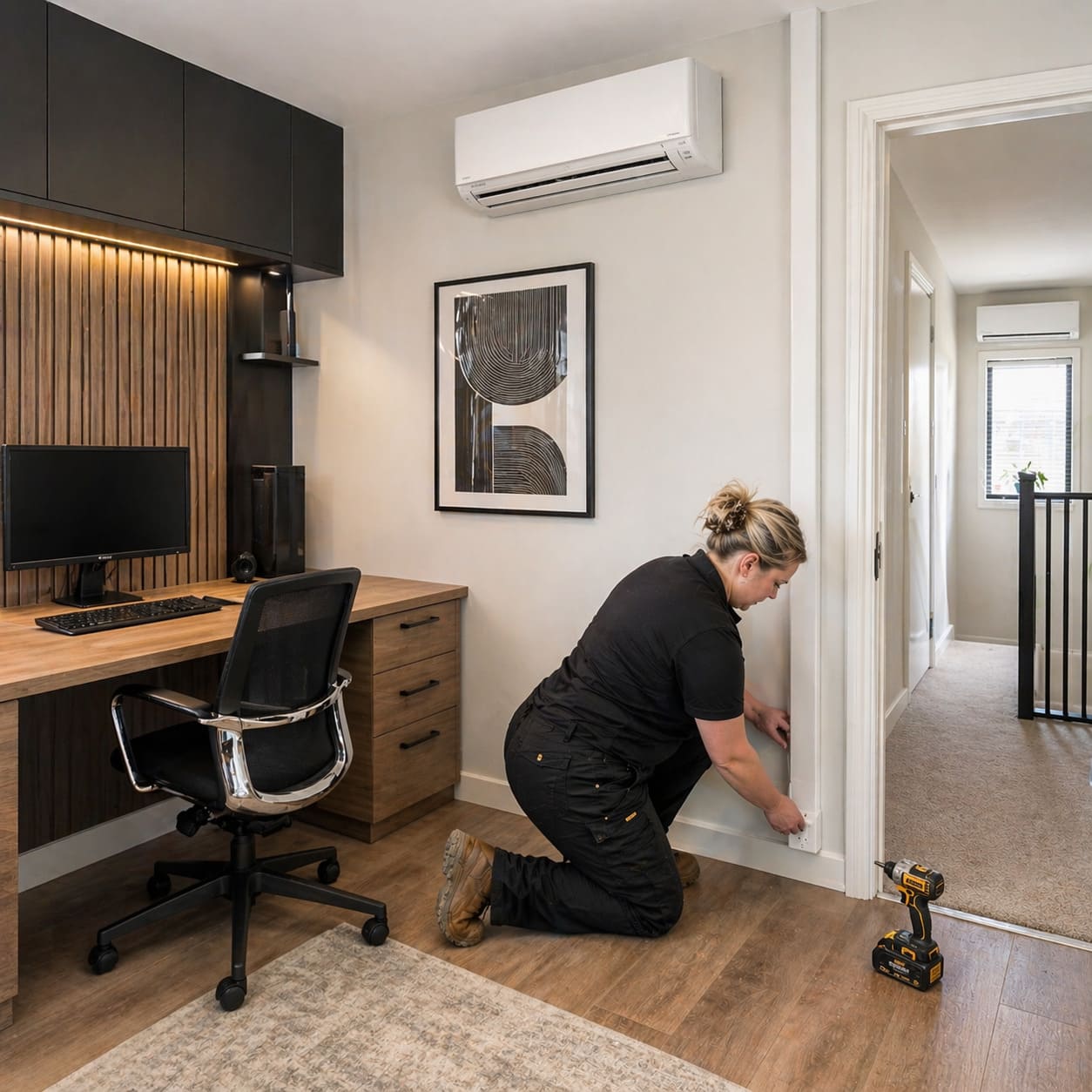
Does air conditioning add value to a London home
Air conditioning can add value in London homes when it is quiet, discreet and well planned. See what buyers notice and what can weaken appeal.
Why is your air conditioning leaking water inside and when should you worry
Air conditioning leaking water inside can damage floors and ceilings fast. Spot the likely causes, safe checks and when to call an engineer.

RightAir Solutions