What should you consider before choosing air conditioning for a home office?
Start with the room itself, then look at system type, installation limits, energy use, and ongoing care. A small shaded study in a newer flat needs a different approach from a loft office with strong afternoon sun, limited ventilation, and older electrics. The right choice usually comes from matching the system to the space, the property, and the way you work each day.
Table of Contents
Understanding Your Home Office Environment
A home office can look straightforward until summer arrives. A room that feels pleasant in spring may become stuffy by midday, especially if you work with screens, lighting, and the door closed for long periods.
Room size matters, although floor area is only part of the picture. Ceiling height affects the volume of air that needs cooling, and the shape of the room influences how evenly that cooling is felt. A compact box room may hold heat from equipment, whereas a larger office with high ceilings can take longer to cool if the system is undersized.
Window position has a huge effect on heat gain. South-facing and west-facing rooms often warm up quickly because of solar exposure, particularly during the afternoon. Glazing, blinds, and external shading all change the thermal load, so two offices of the same size can behave very differently.
Insulation and ventilation also shape comfort. Good insulation can help keep cooled air in place, but poor airflow may still leave the room feeling stale. Older sash windows, chimney breasts, and small gaps around frames can introduce draughts, which means that temperature control becomes less predictable.
Property age often adds another layer. Across London, many home offices sit within converted period houses, loft rooms, garden studios, or flats in older blocks. Those spaces can have uneven insulation, awkward wall construction, or limited routes for pipework, even before air conditioning is discussed. Building Regulations may also influence what is practical, particularly where changes affect the building fabric.
A useful starting point is to note a few room conditions before choosing a system:
- Measure the room, including ceiling height.
- Record when the sun hits the space and for how long.
- Notice whether the room feels stuffy, draughty, or both.
- Check how much heat comes from monitors, printers, and other equipment.
- Review any EPC information you already have for clues about insulation and energy performance.
CIBSE guidance often shapes how professionals think about comfort, ventilation, and heat loads, but the principle is simple enough for any householder to grasp. Home office cooling works best when it responds to the actual room, not a generic idea of what a study should be.
Pro Tip: Review how sunlight and equipment in your office impact heat build-up during peak hours to fine-tune your system’s capacity.
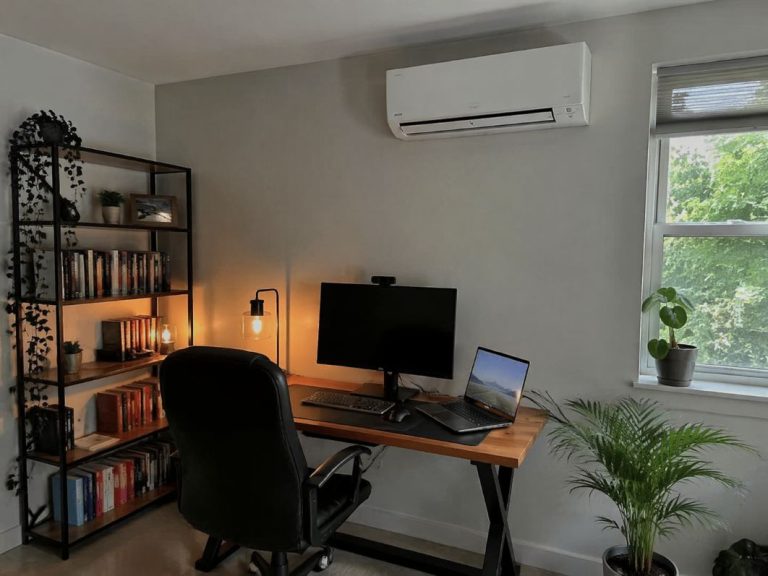
Types of Air Conditioning Systems Suitable for Home Offices
Most home offices suit a relatively small range of system types. The main difference lies in how quietly, neatly, and effectively each one fits into the room and the wider property.
A split system is often the starting point for permanent workspace temperature control. It uses an indoor unit connected to an external condenser, which usually gives steadier cooling and lower noise levels than temporary alternatives. For a person on video calls all day, acoustic performance can matter as much as cooling strength.
A multi-split system connects several indoor units to one outdoor unit. That arrangement can suit homes where the office is one part of a wider plan for bedroom or living space comfort. If several rooms need cooling, one coordinated system may integrate more cleanly than separate standalone units.
Portable air conditioners appeal because they seem simpler. In practice, they can be bulkier inside the room, noisier during use, and less tidy because they need a hose to vent warm air. For occasional use in a short heatwave, they may have a place. For daily work through a long summer, many people find them disruptive.
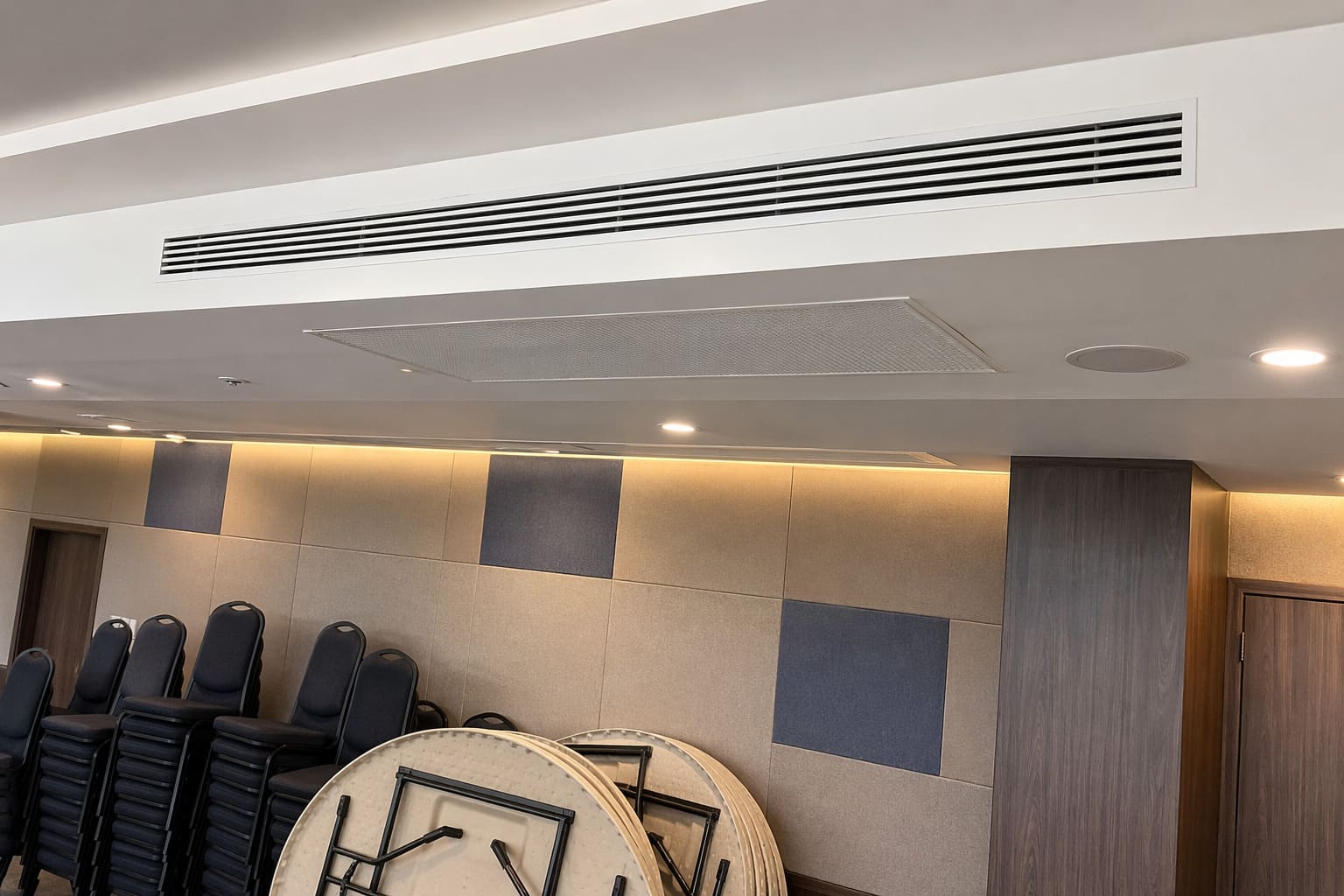
Ducted options exist too, although they tend to suit larger refurbishments or homes where concealment is a top priority and space allows for it. A discreet grille can look calmer than a wall-mounted unit, but installation becomes more involved.
Here is a simple comparison:
- Split system: quiet, efficient, permanent, usually well suited to one dedicated office.
- Multi-split: useful where several rooms need cooling from one external unit.
- Portable unit: quick to buy and move, though often louder and less visually discreet.
- Ducted system: very subtle visually, though usually better suited to broader renovation work.
Visual integration deserves more attention than it often gets. A system that cools well but dominates the wall can feel out of place in a carefully arranged workspace. Good placement considers furniture, sightlines, and how the airflow lands on the desk, not just where the unit can physically fit.
Smart thermostat technology can make everyday use easier, particularly for hybrid working. Scheduled operation, app control, and zoned settings can stop the room from overheating before the working day begins. F-Gas regulations also matter for permanent systems because installation and refrigerant handling must be carried out properly by qualified professionals.
In London homes with tighter layouts or higher design expectations, installers such as RightAir Solutions are often brought in because integration matters as much as raw cooling output. A neat result usually comes from planning the unit position, condensate route, and outdoor placement together, instead of treating them as separate decisions.
Book an Expert Consultation
Arrange a site visit to discuss the best air conditioning options for your unique home office space with a qualified specialist.
Installation Considerations and Property Constraints
Choosing the unit is only one part of the job. Air conditioning installation in London often depends on what the building will allow, how access works, and how discreetly the system can be fitted.
Planning issues are sometimes straightforward and sometimes not. Listed buildings, conservation areas, leasehold flats, and externally visible condenser positions can all raise questions for the Local Planning Authority or freeholder. Some properties will not need formal planning permission for AC, yet others may have restrictions that shape the design from the outset.
Pipework routes can be surprisingly important. A short, clean run from indoor unit to condenser is usually easier to conceal and maintain. Once the office sits at the front of the house and the outdoor unit must go at the rear, the route may need more thought to avoid visual clutter or disruption to finished interiors.
Condensate drainage is another detail people rarely think about in advance. The system needs a suitable way to remove water produced during cooling. In some rooms, gravity drainage is straightforward. In others, a pump or a different unit position may be needed, which can affect noise, appearance, or challenge.
Electrical capacity should also be checked. A home office system may not need a major electrical overhaul, but older consumer units or crowded circuits can influence installation planning. That point comes up often in older London housing stock, where previous alterations were completed in stages over many years.
Before installation, it helps to review these practical points:
- Whether the property is listed, leasehold, or in a conservation area.
- Where an external condenser could sit with minimal visual and acoustic impact.
- How pipework and drainage could be routed through the building.
- Whether access is easy, restricted, or shared with neighbours.
- What level of disruption is acceptable in a working household.
Good workmanship is often most noticeable when very little seems to have happened. Floors stay protected, wall penetrations are neat, and the final layout feels considered. RightAir Solutions is one of several firms in London that present installation in that low-disruption, methodical way, which is particularly relevant in home offices where people may still be working around the job.
Pro Tip: When planning installation, choose a system with smart controls to manage comfort efficiently and adapt to changes in your routine.
Energy Efficiency, Running Costs, and Environmental Impact
Comfort during a heatwave matters, but day to day performance matters as well. A home office system that is used regularly should be efficient, controllable, and suited to the room so that it is not working harder than necessary.
System sizing has a direct link to energy use. An oversized unit can cycle awkwardly and feel less settled in operation, whereas an undersized one may run for longer periods trying to pull the temperature down. Matching output to the room’s real heat gain is one of the simplest ways to keep performance sensible.
Inverter technology is worth understanding in plain terms. Instead of repeatedly switching fully on and fully off, an inverter compressor adjusts its output to maintain a more stable temperature. That can support quieter operation and steadier energy consumption, especially in a home office used for several hours at a time.
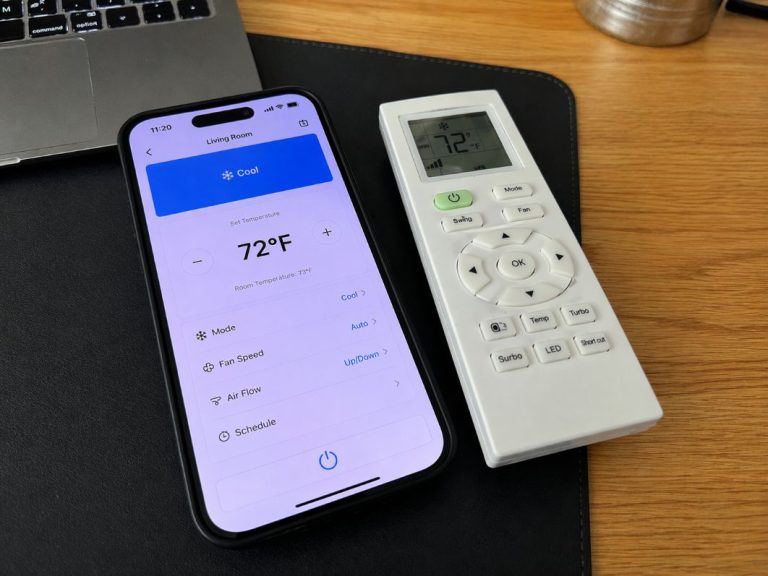
Smart controls add another layer of efficiency. A timer, occupancy pattern, or app-based setting can cool the room shortly before work starts instead of running the system all morning. Smart thermostats and linked controls are especially useful where work patterns change through the week.
Environmental impact is tied to both electricity use and refrigerant choice. F-Gas regulations exist because refrigerant gases need careful handling during installation, servicing, and decommissioning. For householders, the practical point is simple: proper design and proper maintenance both matter if the system is to operate responsibly.
Energy labels and EPC context can help, although they should not be read in isolation. A highly rated unit in a poorly insulated office will still struggle more than the same unit in a room with better shading and fewer draughts. Energy Saving Trust advice often points people back to the same principle, namely that efficiency comes from the combination of building conditions, controls, and equipment.
A few habits can improve running efficiency without making the room uncomfortable:
- Keep doors and windows closed when the system is cooling.
- Use blinds or curtains to limit direct summer sun.
- Set a realistic temperature instead of pushing for an unnaturally cold room.
- Clean filters as recommended so airflow stays consistent.
The most sustainable cooling choice is often the one that fits the room properly, operates quietly in the background, and does not need to compensate for avoidable heat gain all afternoon.
Maintenance, Longevity, and System Care
A well-chosen system still needs routine attention. Filters collect dust, coils can become dirty, and small performance issues often appear gradually rather than all at once.
Regular servicing supports airflow, hygiene, and stable operation. In a home office, where the system may run close to your desk for long stretches, cleanliness matters for comfort as much as mechanical performance. Filter cleaning or replacement is usually the simplest recurring task, and neglecting it can reduce efficiency and affect air quality.
Professional maintenance goes further than surface cleaning. A service visit may include performance checks, inspection of electrical components, condensate testing, and review of refrigerant condition where relevant. Work involving refrigerant must be handled by someone with suitable F-Gas certification.
Hygiene is sometimes overlooked. Dust, moisture, and organic build-up inside a neglected indoor unit can affect how fresh the air feels. Anti-bacterial treatments are sometimes used as part of more detailed servicing, especially where the unit has seen heavy seasonal use or has been left idle for long periods.
A sensible maintenance rhythm usually looks like this over a year. Before summer, the system is checked and cleaned so it is ready for regular use. During heavy use, the filter is monitored and cleaned if needed. After the main cooling season, any drop in performance, unusual sound, or drainage issue should be reviewed before the next peak period arrives.
CIBSE guidance supports planned care because system condition affects real performance over time, not just on installation day. That longer lifecycle view is common among firms such as RightAir Solutions, where design, fitting, and maintenance are treated as linked parts of one comfort system rather than disconnected tasks. A quiet unit that still cools evenly after several seasons usually reflects consistent care, not luck.
Request a Personalised Quote
Get a detailed price and system recommendation tailored to your property and working needs with no obligation.
Common Misconceptions and Practical Realities
Assumptions about home office cooling can lead people in the wrong direction. A few common myths come up repeatedly.
Myth: Any unit will do in a small office. Reality: Even a modest room can have high heat gain if it faces the sun, has poor insulation, or contains several monitors and other equipment.
Myth: Portable units are always the easiest answer. Reality: They are easy to purchase, but daily use can be noisier and less convenient than expected, especially in meetings or focused work.
Myth: Stronger cooling is always better. Reality: Oversized systems can feel less balanced and may not give the steady comfort people imagine.
Myth: Air conditioning will dominate the room visually. Reality: Careful placement, compact unit choices, and tidy pipe routes can reduce visual impact a great deal.
Myth: Installation always means major disruption. Reality: Some homes are complex, but many installations are completed with limited disturbance when access and routing have been planned well.
Myth: Running costs are automatically high. Reality: Energy use depends on sizing, controls, room conditions, and how the system is operated day to day.
Many misconceptions come from treating every property as if it behaves the same way. London flats, terraces, and converted houses rarely do. An upper-floor office in a period conversion may need a very different solution from a shaded rear room in a newer block, even if both are used for the same nine-to-five routine.
Looking Ahead, Designing for Comfort and Adaptability
Home offices are no longer a temporary feature for many households. Rooms once used occasionally now support full working weeks, video meetings, concentrated solo work, and changing schedules across the year.
That shift makes adaptability worth thinking about early. A system chosen for one summer can still feel right several years later if it suits changing room use, varied occupancy, and smarter control habits. Hybrid working often means the office is busy on some days and empty on others, so flexible scheduling becomes just as useful as raw cooling output.
Future-minded planning usually includes a few simple ideas:
- Choose controls that can adapt to changing routines.
- Think about how the room might be used outside working hours.
- Consider visual fit and noise now, because both affect long-term satisfaction.
- Avoid temporary fixes that solve one hot week but create daily irritation afterwards.
CIBSE and Energy Saving Trust guidance both point, in different ways, to the same broader truth. Comfortable buildings depend on fit, balance, and sensible operation. For a home office, that means looking past the first hot spell and choosing a cooling approach that supports concentration, quiet, and steady comfort through the summers ahead.
Download the Home Office Cooling Checklist
Make informed decisions for home office comfort by using our practical checklist covering key installation, efficiency, and maintenance points.
Read Similar Blogs
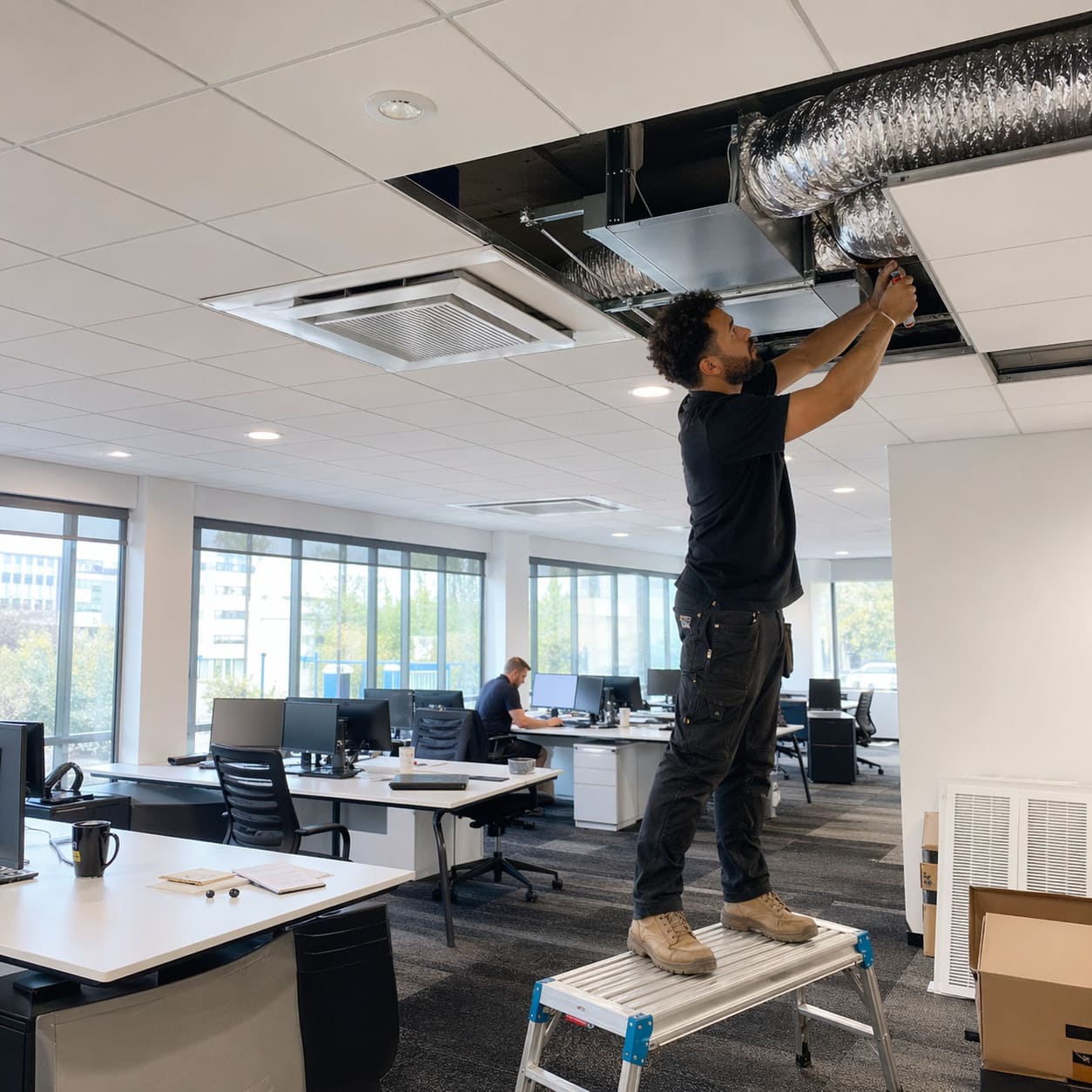
Why is your air conditioning leaking water inside and when should you worry
Air conditioning leaking water inside can damage floors and ceilings fast. Spot the likely causes, safe checks and when to call an engineer.
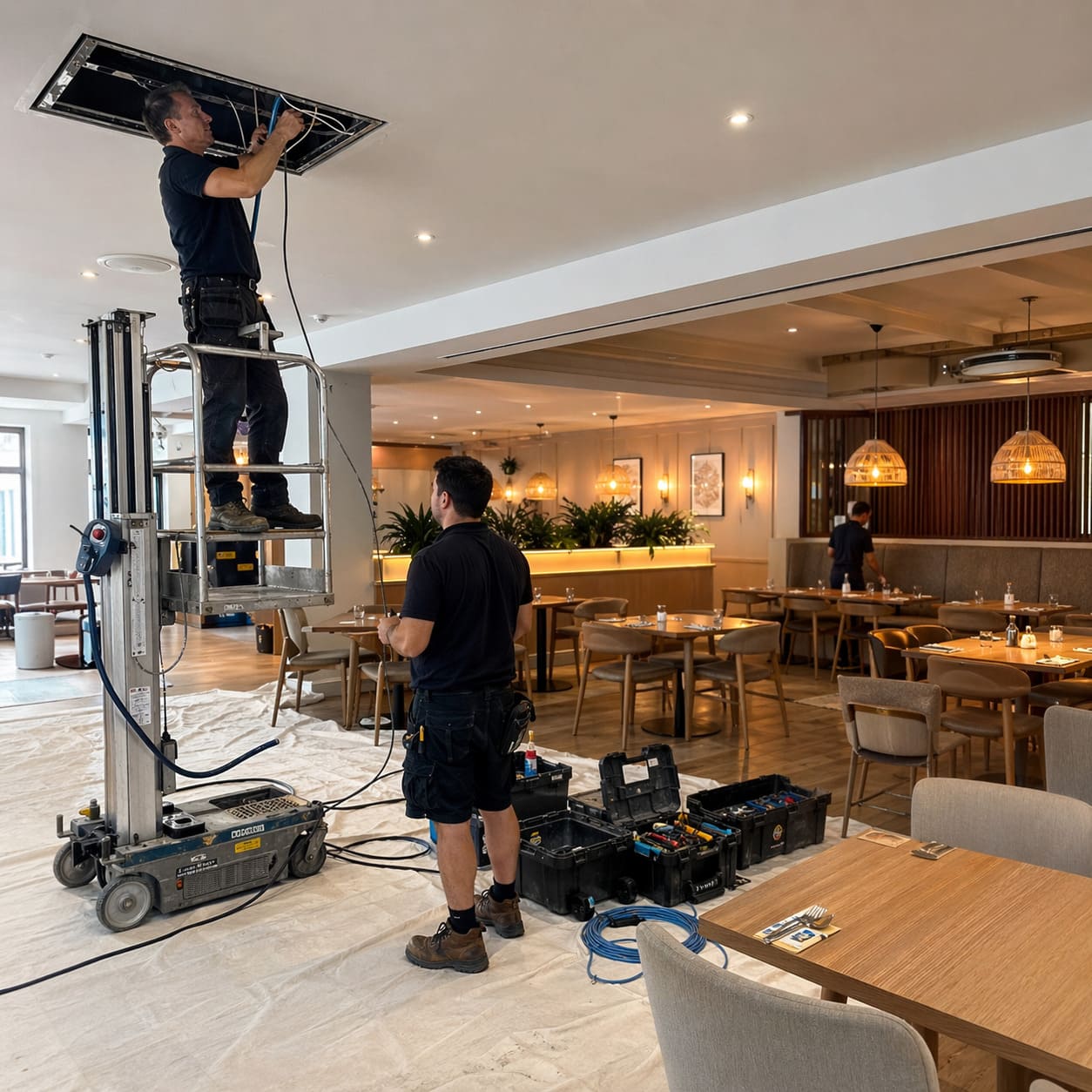
How commercial air conditioning is quoted and why two quotes rarely match
Need a commercial air conditioning quote you can compare properly? See why scope, survey assumptions and exclusions change the figure.
Can you get a grant for air conditioning now the Boiler Upgrade Scheme covers air to air heat pumps
Thinking about air conditioning grants? See when an air to air heat pump can qualify under the Boiler Upgrade Scheme and what must line up first.
RightAir Solutions