What does it mean if your air conditioning system still uses R410A refrigerant?
A system that uses R410A is not automatically unsafe or unusable, but it does sit within an older refrigerant standard that is being phased down because of its environmental impact. That matters because servicing, refrigerant availability, long-term planning, and replacement decisions can all be affected, especially if the equipment is ageing or installed in a property where access and disruption need careful handling.
R410A was widely used for years, so many systems still rely on it. The issue is less about panic and more about knowing what you have, what rules now shape its future, and when repair stops being the sensible option.
Table of Contents
Understanding R410A: what it is and why it was used
R410A is a refrigerant gas used in many air conditioning systems installed over the past two decades. If you have ever wondered what is R410A, the simple answer is that it is the substance inside the system that absorbs and releases heat so the unit can cool indoor spaces.
Its rise made sense at the time. Older refrigerants such as R22 were being moved out because of ozone depletion concerns, and R410A became a common replacement. The change was a bit like the shift from leaded to unleaded petrol. One standard gave way to another because the wider environmental picture had changed.
Air conditioning manufacturers adopted R410A because it worked well with the system designs then becoming standard across homes, offices, and mixed-use buildings. It offered good cooling performance, and HVAC industry standards gradually made it a familiar choice across the market.
A few useful facts help explain its place in the history of air conditioning gases:
- R410A replaced many older systems using R22, which had more direct ozone-related concerns.
- R410A does not damage the ozone layer in the same way, which is one reason it was seen as progress.
- R410A still has a high global warming potential, which is why the conversation has moved on again.
- Many systems that feel fairly modern still use it, because installation dates and refrigerant generations do not always line up with what owners expect.
That last point often catches people out. A neat wall-mounted split system or a concealed ducted unit in a refurbished London flat can still be based on refrigerant types that are no longer the preferred route for new equipment. The refrigerant lifecycle is longer than most people assume, and system compatibility often ties a unit to the gas it was built to use.
Pro Tip: Retain detailed service records as they support both compliance and future upgrade planning for your air conditioning system.
The regulatory shift: why R410A is being phased out
The move away from R410A is mainly driven by F-Gas Regulations in the UK and Europe. Those rules focus on reducing the use of refrigerants with higher global warming potential, even if they were once treated as an improvement on older options.
Seen from a property management angle, this is part of a broader tightening of environmental rules for air conditioning. The emphasis is on lower-GWP refrigerants, controlled handling, and a gradual reduction in the volume of higher-impact gases entering the market.
The key point is that R410A has not become irrelevant overnight. Existing systems can often continue operating, but the regulatory direction is clear. The market is being pushed away from it.
A simple timeline helps:
- Older ozone-harming refrigerants were phased out first. This opened the door for options such as R410A.
- F-Gas phase-down rules then shifted attention to global warming potential. Refrigerants that once seemed acceptable came under fresh scrutiny.
- Manufacturers began developing and releasing lower-GWP alternatives for new systems. New product lines increasingly moved in that direction.
- Supply pressure grew around higher-GWP refrigerants. Quotas and market changes affected availability and planning for maintenance.
Confusion often arises because “phase-out” and “ban” are used loosely in everyday conversation. In practice, compliance depends on several factors, including whether the system is existing or new, what type of work is being carried out, and how refrigerant is handled during servicing. The UK Government framework and Environment Agency oversight sit behind these obligations, but for most owners the practical effect is simpler than the legal wording suggests: older refrigerants become harder to build around as time goes on.
Book a System Assessment
Get a professional review of your current air conditioning to identify upgrade and maintenance options tailored to your property.
The practical implications for existing systems
If your current system still uses R410A, the first question is usually straightforward: can it keep running? In many cases, yes. A working system does not always need immediate replacement just because of the refrigerant it contains.
Even so, servicing R410A systems can become more complicated over time. If a unit develops a leak or needs a refrigerant top-up, the job may be affected by availability, equipment age, and the manufacturer’s guidance for that model. An older system with repeated faults is very different from a well-maintained one that has been operating reliably.
London properties add another layer. A compact flat, a listed building, or a high-spec house with concealed services can make maintenance and replacement more involved than the system itself might suggest. Access routes, ceiling voids, external unit placement, and noise sensitivity all influence what is practical.
Several day-to-day issues tend to matter most:
- Repairs may become less straightforward if the system loses refrigerant and needs attention.
- Long-term maintenance planning becomes more important because parts and refrigerant support can narrow with age.
- Reliability may drop as equipment gets older, especially where servicing has been irregular.
- Building constraints can turn a simple change into a larger project, particularly in older London stock.
Owners and facilities teams often assume the main issue is regulation alone. In reality, the turning point is frequently operational. A unit that cools poorly, runs noisily, trips faults in summer, or needs repeated visits starts to create inconvenience before it creates a compliance problem.
That is why some specialist firms, including RightAir Solutions, tend to look at the full system lifecycle rather than treating refrigerant in isolation. The age of the unit, the pattern of faults, how the property is used, and the feasibility of an upgrade all belong in the same conversation. In a period conversion with limited service space, for example, even a small refrigerant issue can trigger a wider review of system layout and future suitability.
Pro Tip: Schedule system upgrades during off-peak periods to minimise disruption in high-use properties.
Options for upgrading or replacing R410A systems
Once an R410A system begins to look dated or unreliable, the realistic choices usually fall into two categories: a limited upgrade where feasible, or full replacement with equipment designed around a newer refrigerant.
Those options are not interchangeable. System compatibility decides a great deal, and many units cannot simply be converted to a different refrigerant without major compromises or manufacturer restrictions.
Here is the broad distinction:
Option | What it usually involves | Where it may suit
|
|---|---|---|
Keep and maintain | Continued servicing, repairs, leak checks, and careful monitoring | Systems that are stable, accessible, and still performing well |
Partial upgrade | Replacing selected components or controls where compatible | Installations with sound core equipment but dated peripheral parts |
Full replacement | New indoor and outdoor units, new refrigerant standard, updated controls | Ageing systems, repeated faults, or properties already planning wider works |
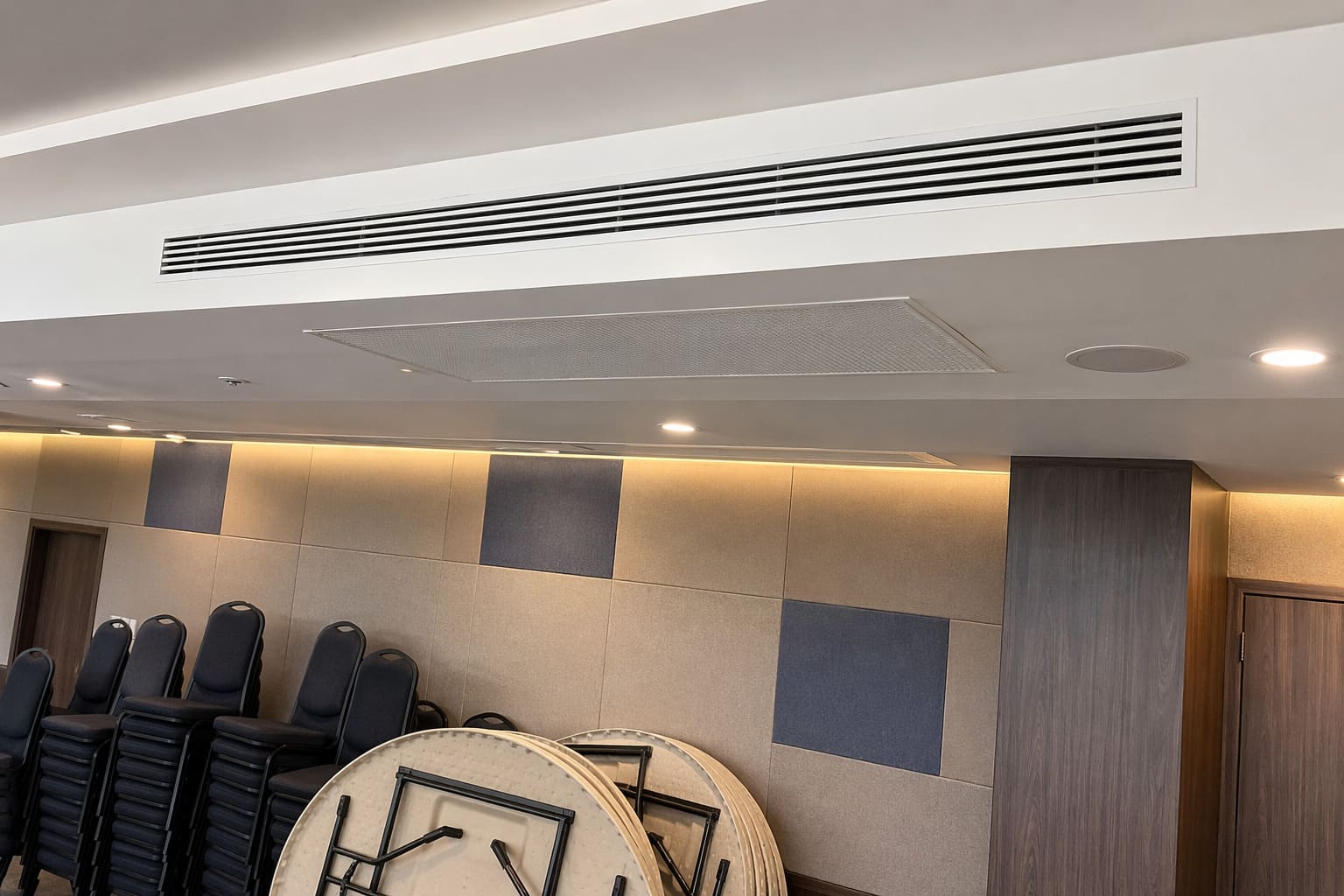
A full replacement can bring gains beyond refrigerant choice. Modern air conditioning systems are often quieter, more discreet, and easier to integrate with smart thermostat technology or zoned control strategies. In homes where visual impact matters, slimmer indoor units or better concealed ducted layouts can improve the way the system sits within the building.
Retrofit feasibility depends heavily on the property. A newer commercial fit-out with accessible ceiling voids presents one type of job. A heritage house with protected finishes, tight risers, and strict acoustic expectations presents another. Building regulations, condensate drainage routes, and external unit siting can all shape the answer before the refrigerant issue is even addressed.
For that reason, replacing R410A is rarely a one-line decision. The best route depends on whether you need to preserve existing finishes, reduce future service dependency, improve noise performance, or prepare the property for a longer period of uninterrupted use. In well-planned projects, the refrigerant change becomes one part of a broader upgrade to comfort and control.
Request a Replacement Quote
Find out how much it would cost to replace your aging R410A system with a modern, energy-efficient solution.
What to expect during the transition: process and disruption
Moving away from an R410A system is usually more manageable than people fear, although the level of disruption depends on the type of property and the extent of the work. Replacing a single split unit in a modern apartment is very different from updating a multi-room system in an occupied townhouse or office.
Most projects follow a fairly clear sequence:
- Survey and system review. The installer checks the existing equipment, pipe routes, drainage, power supply, and access constraints.
- Design and planning. Replacement options are matched to the building layout, noise expectations, and how the space is used.
- Scheduling. Work is arranged to limit downtime, which may involve phased installation in occupied properties.
- Removal and installation. Old equipment is recovered properly, and new units, controls, and associated services are fitted.
- Testing and handover. The system is commissioned, settings are checked, and the user is shown how the controls operate.
In London properties, planning often matters more than speed. A period townhouse may need careful routing to avoid damage to original finishes. A lateral flat may require close attention to neighbour noise, lift access, or management rules for plant placement. Commercial spaces can bring their own constraints, including trading hours and occupancy patterns.
Good installation teams also think about dust control, protection of surfaces, waste removal, and communication with residents or staff. None of that eliminates disruption completely, but it changes the feel of the project. A well-run job is organised, predictable, and easier to live with.
Where phased installation is possible, occupied buildings can often keep part of the cooling system available during the works. That practical detail matters far more in midsummer than any technical explanation of refrigerant policy.
Looking ahead: the future of refrigerants and sustainable cooling
The future of air conditioning is moving in two linked directions: lower-impact refrigerants and better overall system performance. New refrigerants matter, but so do controls, insulation standards, load calculations, and the way equipment is used day to day.
No refrigerant is completely free from environmental impact. That is worth keeping in mind, because “green HVAC technology” can sound simpler than it really is. Sustainable cooling usually comes from a combination of lower-GWP refrigerants, sensible system sizing, efficient operation, and longer equipment life.
A few trends are already shaping decisions:
- Lower-GWP refrigerants are becoming more common in new equipment.
- Smart controls are improving how systems respond to occupancy and temperature changes.
- Manufacturers are paying more attention to acoustic performance and energy efficiency together.
- Future-proofing now means thinking about maintenance, regulation, and whole-system design, not just the unit on the wall.
Industry standards bodies and environmental agencies will keep influencing the direction of travel, and manufacturers will keep adjusting product ranges in response. That does not mean every property owner needs to chase every new development. It means that refrigerant choice now sits within a longer view of how a system will perform, be maintained, and fit the building over time.
If your system still uses R410A, the sensible response is awareness, not alarm. Know what is installed, keep records in order, and weigh future decisions against the age, reliability, and constraints of the property itself. The most resilient cooling choices usually come from steady planning, not last-minute reaction.
Speak to a Specialist
Discuss your refrigerant and regulatory concerns with our experienced team for clear, practical advice.
Read Similar Blogs
Why is your air conditioning leaking water inside and when should you worry
Air conditioning leaking water inside can damage floors and ceilings fast. Spot the likely causes, safe checks and when to call an engineer.
How commercial air conditioning is quoted and why two quotes rarely match
Need a commercial air conditioning quote you can compare properly? See why scope, survey assumptions and exclusions change the figure.
Can you get a grant for air conditioning now the Boiler Upgrade Scheme covers air to air heat pumps
Thinking about air conditioning grants? See when an air to air heat pump can qualify under the Boiler Upgrade Scheme and what must line up first.
RightAir Solutions