How should you budget for business air conditioning over ten years?
Budget for air conditioning as a ten-year ownership cost, built from electricity use, servicing, inspection needs, repairs and access. The useful figure comes from annual kilowatt hours, your business tariff, the number of indoor units and how easily engineers can maintain the system in your London premises.
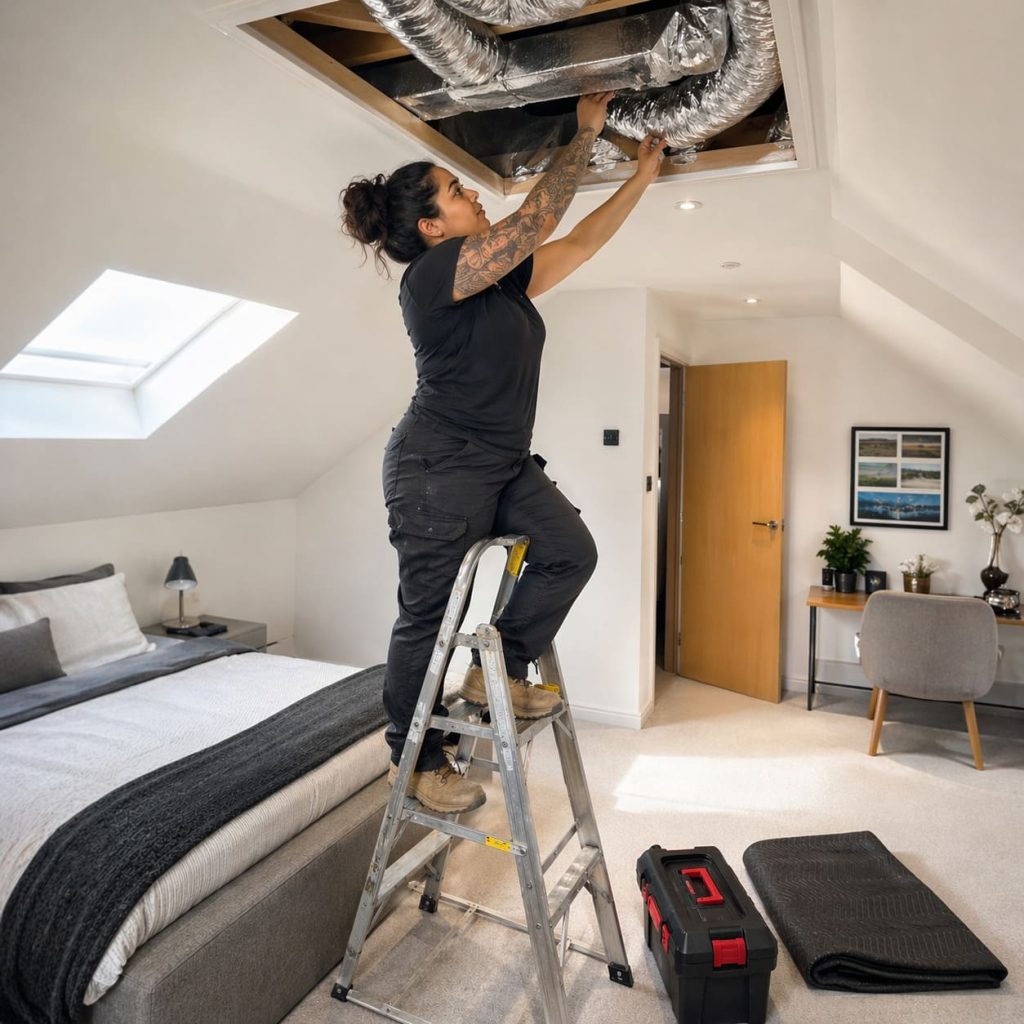
A ten-year budget starts with electricity and servicing
Air conditioning running costs make sense once you separate the bill into layers. The installation quote matters, but it does not tell you what the system will cost to live with across ten years.
For a practical modelling point, the Department for Energy Security and Net Zero put the average non-domestic electricity price, including Climate Change Levy, at 24.14p per kilowatt hour in Q1 2026. Your own London contract will depend on supplier, tariff, meter and usage band, so treat that figure as a benchmark, not a forecast.
At 24.14p per kilowatt hour, the electricity side alone looks like this: 1,000 kilowatt hours a year costs about £2,414 over ten years, 5,000 kilowatt hours costs about £12,070, and 10,000 kilowatt hours costs about £24,140. A small office, a multi-zone clinic and a technical cooling space can sit in very different places because their operating hours differ.
Use this order when you build a ten-year air conditioning budget:
- Start with likely annual kilowatt hours. Your contractor should estimate this from system size, use patterns, controls and occupied hours.
- Apply your business electricity tariff. Today’s price helps modelling, but contract renewals and tariff structure change the real total.
- Multiply by ten, then keep a margin for future tariff movement. A ten-year model should not pretend energy prices will sit still.
- Add commercial air conditioning maintenance. A simple one-off home or office service benchmark sits around £70 to £120 per unit, so one annual service for one unit would be about £700 to £1,200 over ten years before VAT treatment, repairs, access, parking, refrigerant or parts.
- Account for inspections, repairs and access. Larger commercial systems, roof plant, awkward external units and out-of-hours work can all change the final figure.
A maintenance agreement can make budgeting steadier, but it is not always cheaper than paying per visit. Published simple-unit guidance shows monthly cover starting from £40 per month, which would be at least £4,800 across ten years before any wider commercial scope or extras.
RightAir Solutions usually frames commercial air conditioning costs in London through this lifecycle lens because the long-term cost sits in use, maintenance and access as much as in the equipment itself. Once the layers are visible, you can judge the quote in front of you more fairly.
Cost per hour hides the real bill
Two similar air conditioning systems can produce very different ten-year bills if one cools an office for occupied hours and the other serves a server room for far longer periods. A headline air conditioning cost per hour only helps after you know how the space is used.
Systems do not draw the same amount of electricity every minute they are switched on. Cooling demand changes with occupancy, outside conditions, internal heat and the temperature set on the controller. Smart thermostats and timers matter because they decide whether the system runs for the business you actually have, or for empty rooms no one thought to exclude.
Zoning deserves special attention in commercial premises. An open-plan office, a treatment room, a retail floor and a store room rarely need the same cooling pattern. Poor zoning lets conditioned air go where it is not needed, and that waste repeats every working week.
Larger sites may use variable refrigerant volume or variable refrigerant flow systems, shortened to VRV or VRF after first mention. These systems use one outdoor arrangement to serve multiple indoor areas, which can suit multi-room premises, but the design still has to match how people use the building. Good controls cannot rescue a layout that was guessed.
Server room cooling sits in its own category. Comfort cooling is about people using a space; technical cooling protects equipment and can run on a different pattern. Put both into one rough hourly figure and the budget loses the distinction that matters most.
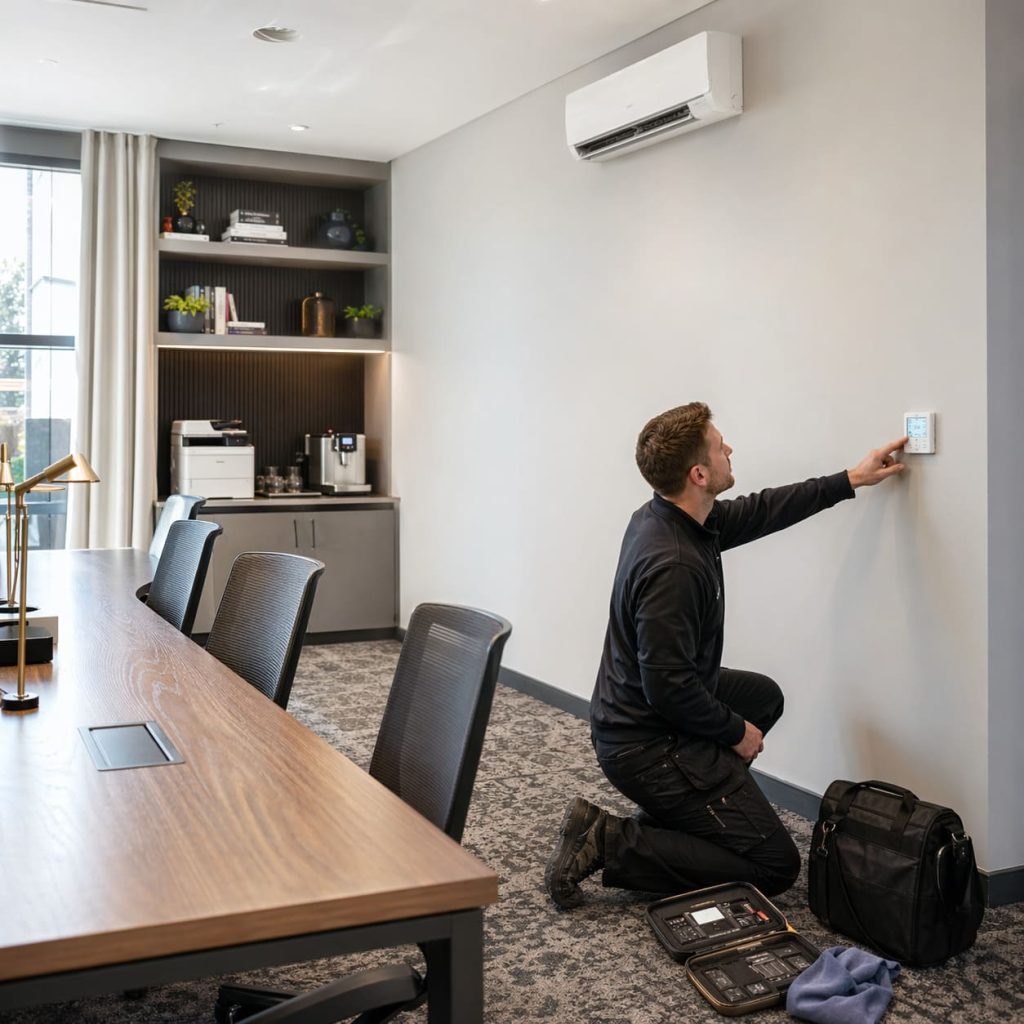
Build the budget around occupied hours, not installed capacity alone, because systems serving empty rooms can distort ten year running costs very quickly.

Servicing and compliance sit in separate budget lines
A service visit keeps the system working properly day to day, while a statutory air conditioning energy inspection assesses energy performance where the system falls within scope. Treating those as the same job leaves a gap in a ten-year budget.
Planned preventative maintenance, shortened to PPM after first use, covers practical tasks such as cleaning, checking operation, replacing filters where needed and dealing with refrigerant issues properly. F-gas regulations are the rules around refrigerant leak control, repairs and technician competence. They belong in the maintenance picture because poor refrigerant handling creates cost, risk and avoidable downtime.
Statutory inspection is different. GOV.UK guidance from the Ministry of Housing, Communities & Local Government says commercial air conditioning systems with an effective rated output of more than 12 kilowatts must be inspected by an energy assessor at intervals of no more than five years. Several smaller units can fall within that threshold where they are controlled by one person and their combined effective rated output is over 12 kilowatts.
Here is the clean way to separate the two in your budget:
| Budget item | What it covers | Why it matters over ten years |
|---|---|---|
| Routine servicing | Cleaning, checks, filter work and fault prevention through PPM | It keeps day-to-day performance manageable and gives faults a better chance of being found early |
| Statutory energy inspection | An assessment by an accredited air conditioning energy assessor where the system falls within scope | It may be needed during the ownership period and it sits outside ordinary servicing |
| Records and reports | Service history, asset details and the most recent Air Conditioning Inspection Report | Clear records make future maintenance, fault finding and responsibility changes simpler |
Chartered Institution of Building Services Engineers Technical Memorandum 44, shortened to CIBSE TM44, is commonly linked with these energy inspections. You do not need to become an expert in the standard, but you do need a budget that recognises the difference between maintenance visits and inspection duties.
A service contract can help you plan attendance and keep records in order. Pay-as-you-go visits can suit a simpler setup. The better choice depends on your equipment, access and use pattern, so the contract shape should follow the site rather than the other way round.
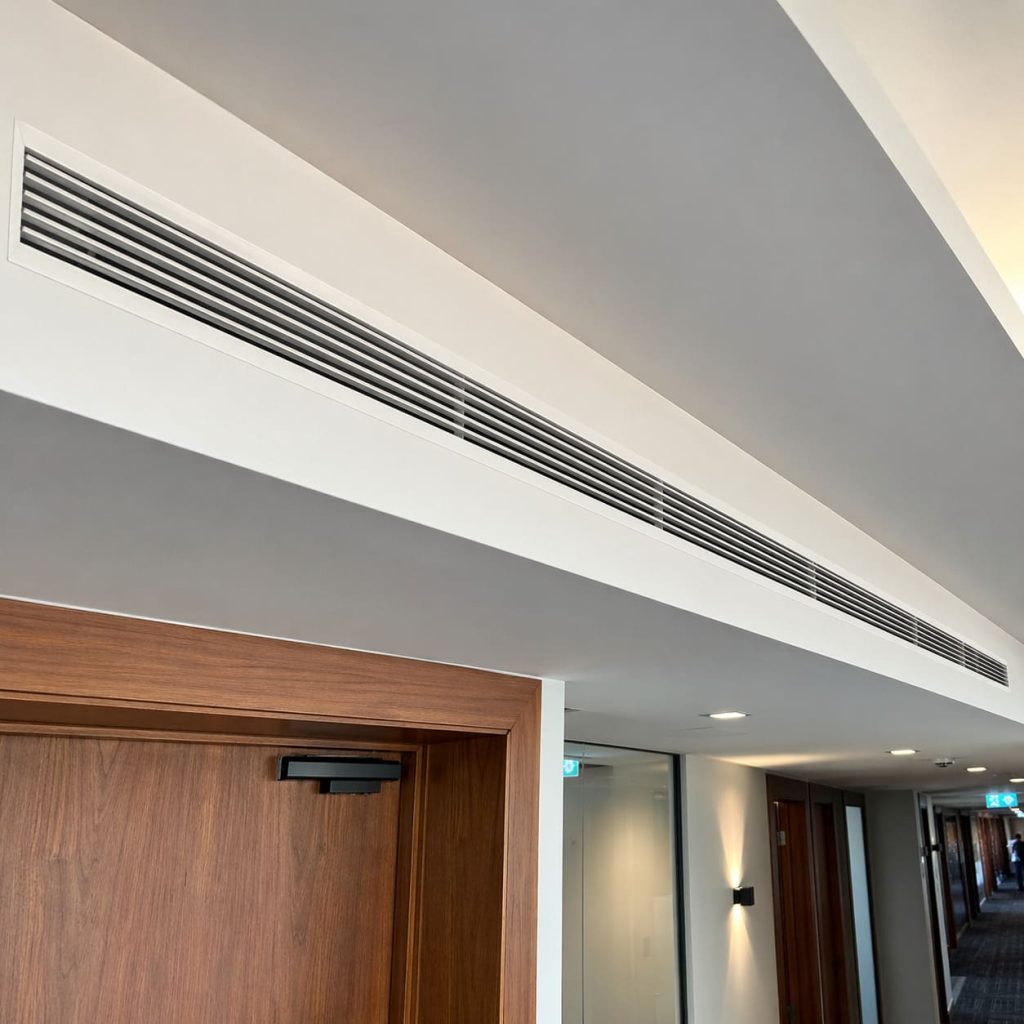
London access can change the maintenance cost
London air conditioning maintenance cost is shaped by more than the indoor unit on the wall. In West and North West London, older buildings, mixed-use premises and shared access can turn a simple service visit into a job that needs planning.
Possible cost factors include:
- Parking or travel constraints where engineer access is limited.
- Roof access, external condensers or plant in positions that need access equipment.
- Occupied offices, clinics or retail spaces where work has to fit around trading or appointments.
- Extra cleaning, antibacterial treatment, parts or refrigerant where the system condition calls for them.
- Noise considerations and shared areas where the route to the unit affects how the visit is planned.
None of these should be assumed as automatic extras. A survey should confirm which ones apply, because a unit above a suspended ceiling is a different maintenance proposition from plant that needs managed roof access.
RightAir Solutions sees this most clearly in commercial premises where the original installation made the equipment hard to reach. A lower first price can be undone by repeated access friction, especially where every visit needs tenant coordination or work outside normal hours.
Good maintenance planning turns vague London allowances into named budget items. That makes the ten-year air con maintenance cost easier to defend to a landlord, finance lead or property owner.
Treat access as a cost driver from the outset, especially where roof plant, shared areas or out of hours attendance may affect future servicing.

A designed system beats a cheap install over ten years
A ten-year view changes what counts as good value. The lowest installation price can look tidy on day one, then create running waste through weak zoning, awkward controls, poor plant positions or limited access for servicing.
Better commercial air conditioning design starts with the way the business uses the space. A clinic with private rooms needs a different controls strategy from a studio with changing occupancy. A mixed-use property needs plant positions that work for neighbours, maintenance and the building fabric. Those choices decide how easy the system is to manage after the installer has left.
Ten years should be treated as a budgeting horizon, not as a fixed replacement date. Some systems will need major work inside that period, and some will keep performing well with the right maintenance and records. The point is to budget for repair allowance and replacement risk without pretending the calendar alone decides the outcome.
One business buys the lowest first price and hopes the running cost stays acceptable. Another business checks likely energy use, maintenance access, controls and records before committing. The second approach gives a better long-term footing because the cost drivers are dealt with while they are still design choices, not recurring problems.
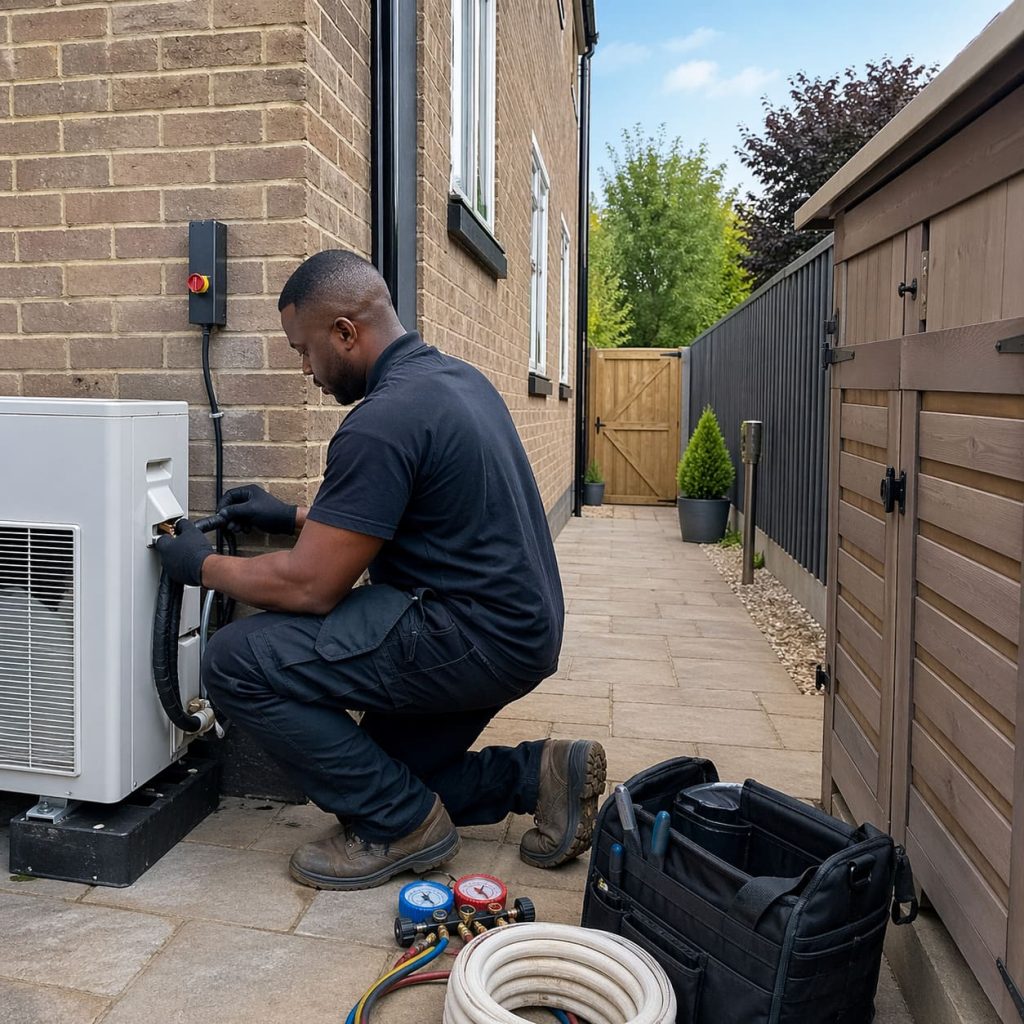
Common questions about London business air conditioning costs
Is it cheaper to leave office air conditioning on all day?
Leaving air conditioning on all day is rarely the right default for an office that has clear occupied hours. Timers, zoning and sensible set points usually give a better basis for control, but technical cooling spaces need separate assessment.
How often should office air conditioning be serviced?
The right service frequency depends on usage, environment, access and manufacturer requirements. A lightly used office unit and a system serving a busy commercial or technical space should not be budgeted in exactly the same way.
Do all businesses need a TM44 air conditioning inspection?
No. The inspection requirement applies where the effective rated output is more than 12 kilowatts, including certain combined systems controlled by one person. Smaller or separate systems need to be checked against the actual setup.
Why does a London air conditioning service cost more than a simple guide price?
A guide price usually assumes straightforward access and a limited scope. London premises can add parking, roof access, occupied-space planning, extra cleaning, parts or refrigerant, so the real maintenance cost should come from the site conditions.
What records should a business keep for air conditioning?
You should keep service history, asset details and any required Air Conditioning Inspection Report. Good records make future maintenance, fault diagnosis and responsibility changes much easier to handle.
This is general information, not professional advice.
