Is air conditioning safe in a baby’s room?
Air conditioning can be used carefully in a baby’s room when the room is kept steady, airflow is kept away from the cot, and the baby is checked as usual. NHS guidance says babies sleep most comfortably at 16C to 20C, so the aim is controlled cooling instead of a cold nursery.
Many people focus on whether air conditioning in a baby’s room is allowed at all. The better question is how the air moves, how stable the temperature stays, and whether the room set-up still follows normal baby heat guidance.
Cool air should never be treated as a fix for everything. Bedding, clothing, room temperature and hot-weather fluid guidance all still matter. A room thermometer gives you a reference point near where the baby sleeps, because the number on the air conditioning controller may not match the temperature beside the cot.
NHS guidance also says a fan can circulate air in a child’s bedroom, provided it is not aimed directly at the child. The same principle applies to air con for a nursery: movement of air is useful, direct airflow across a baby is the wrong target.
Closing blinds or curtains during the day can reduce heat gain before any mechanical cooling is used. A nursery needs a steady cooling pattern that supports the room instead of taking over it.
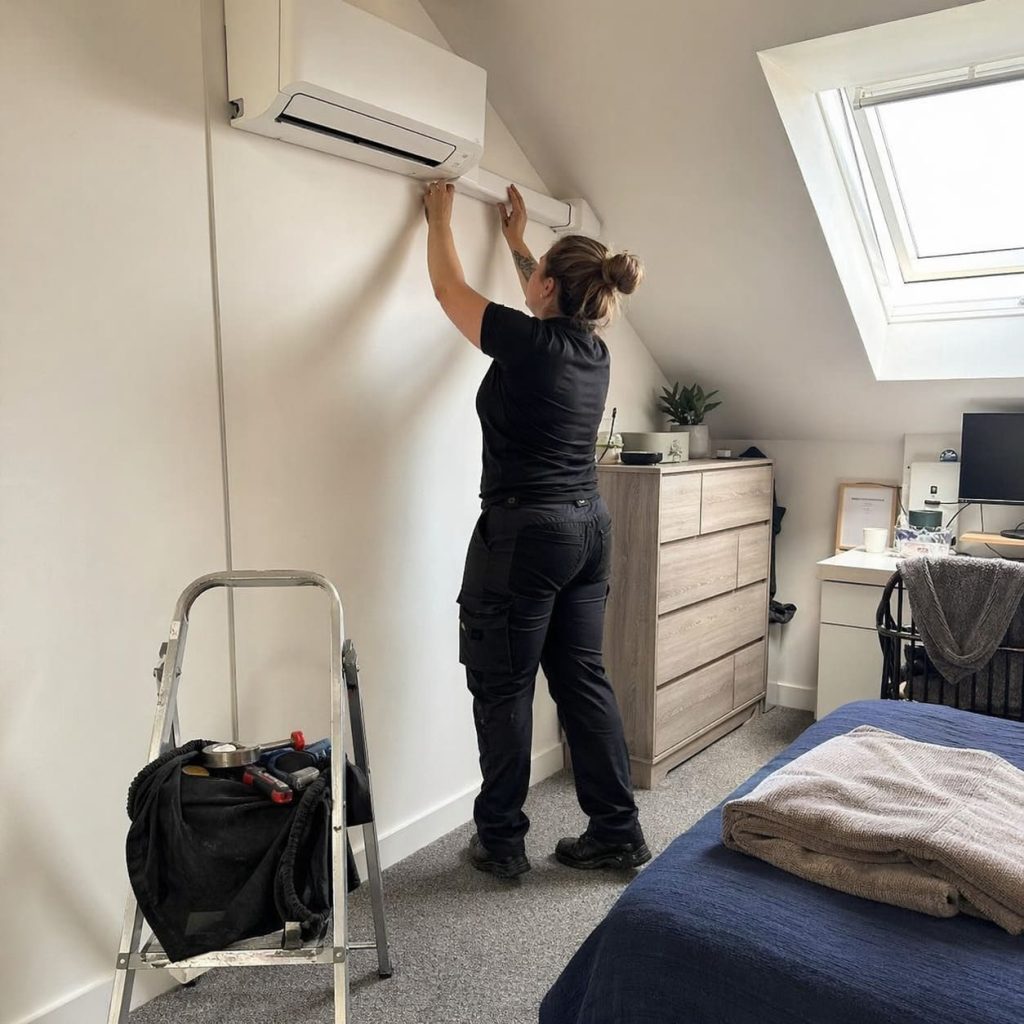
The right temperature is stable, not cold
A nursery temperature matters most at cot level, not at the unit on the wall. Stable cooling is the aim, not colder cooling, because sharp changes can leave you guessing whether the room is comfortable or simply being overcooled in bursts.
A common mistake is setting the air conditioning low before bedtime, letting the room chill, then switching the system off and allowing the space to warm again. That creates a swing. A better pattern is to reduce heat before sleep and then keep the room steady with a gentle setting if overnight cooling is needed.
Pre-cooling simply means cooling the room before the baby goes down, so the system is not working hard once the room is occupied. Low-output night running is different. It asks the unit to maintain conditions quietly, with fewer temperature jumps.
Thermostat position matters here. A controller on the far wall, an indoor unit sensor near the ceiling, and a room thermometer near the cot can all read slightly differently. In practice, the cot area is the place that deserves your attention, because that is where the baby actually sleeps.
Light bedding and regular checking still sit alongside any nursery air conditioning safety plan. The system helps manage heat, but it does not replace the ordinary judgement you already use at bedtime.
Airflow direction matters more than cooling output
A high-output wall unit facing a cot can be a worse nursery choice than a smaller fitted system positioned properly. In a baby’s room, comfort depends on where the air travels after it leaves the unit.
Direct airflow creates the wrong kind of cooling
Air should not blow across the cot, changing area or usual sleeping position. A wall-mounted indoor unit above a door may work well in one nursery, yet the same position can be poor in another room if the cot sits opposite it.
Room shape matters. Bay windows, wardrobes, alcoves and door openings all change how air moves. A louvre, which is the small moving flap that directs air from the unit, can help spread airflow, but it cannot fix a unit placed in the wrong spot.
Ducted air conditioning can be discreet in the right property because cool air enters through a grille rather than a visible wall unit. Even then, the grille position has to be planned around the cot and the return path for air. Furniture placed in the wrong place can interrupt that flow.
Correct sizing keeps the room even
Bigger capacity does not automatically mean better baby room cooling. An oversized system can cool in short bursts, then stop, which makes the room less even than it should be.
A professional room survey looks at the nursery layout before choosing the unit. The survey should consider where the cot sits, where the sun hits the room, how the door is used, and whether the unit can run gently for longer periods. That is the part of nursery air conditioning that product labels do not tell you.
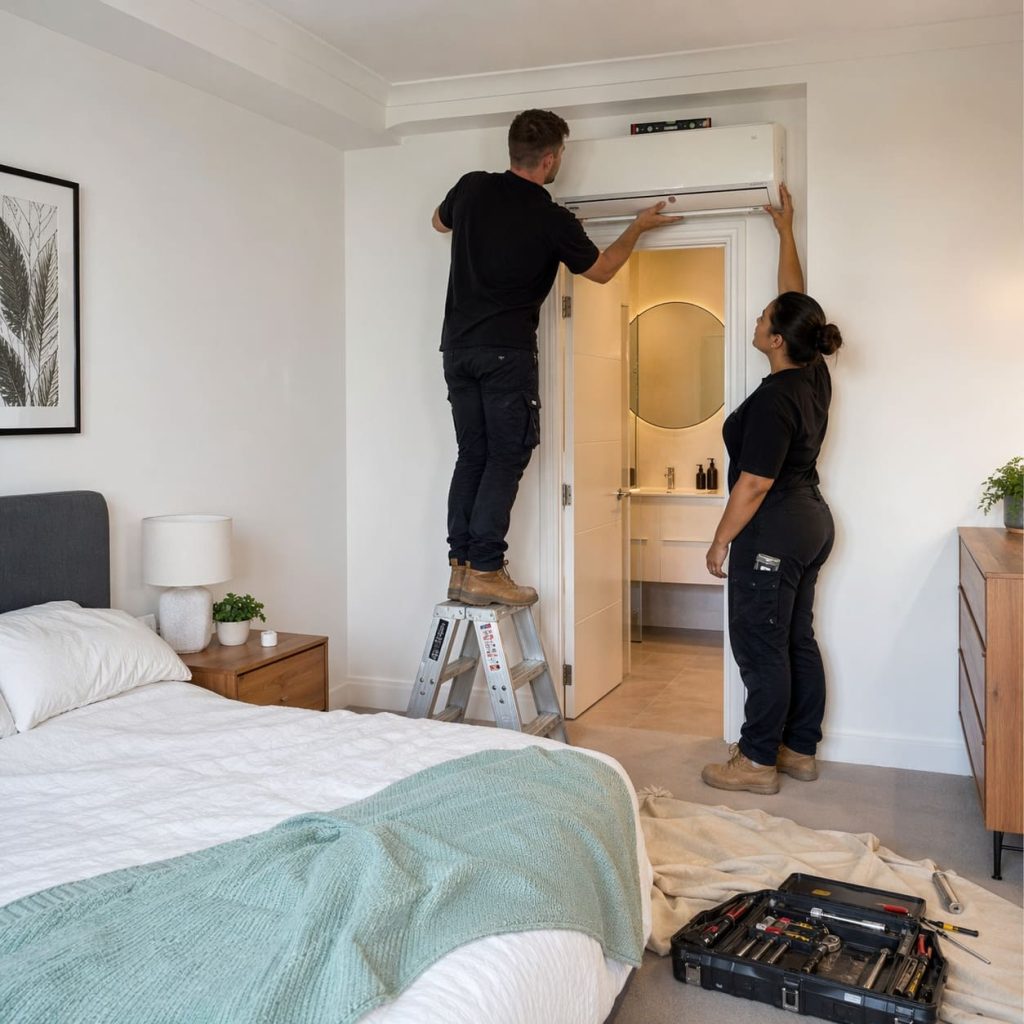
Keep the thermometer near the cot area, because controller readings and nursery temperatures often differ. That gives you a more reliable picture of how the room feels where the baby actually sleeps.

Quiet nursery cooling includes the outdoor unit
A quiet nursery is not only about the unit near the cot. The outdoor condenser, meaning the outside unit connected to a fitted system, can decide whether an installation is sensible in a London flat, terrace or shared-wall home.
Product pages can make “quiet” sound simple. In practice, nursery cooling needs two sound checks: what the baby hears indoors and what neighbours may hear outside. MCS 020 a), the sound calculation used for permitted development heat pump installations, uses a limit of 37 decibels, written in the standard as 37 dB LAeq,5mins, at assessment positions.
RightAir Solutions will usually assess indoor comfort and external noise together on West and North West London properties, because a nursery that works inside still has to be acceptable outside the room. Lightwells, shared elevations and balcony positions can change the answer.
| Option | What it does well | Main trade-off |
|---|---|---|
| Portable air conditioner | Can cool a room without a fixed outdoor condenser | The hose route, window opening and room noise can be awkward for night use |
| Split system | Gives fitted control with an indoor unit and outdoor condenser | Placement, sound and permissions need proper checking |
| Ducted system | Keeps the visible indoor fitting more discreet | Needs a suitable route for hidden ductwork and service access |
A portable unit may look like the simplest answer during a heatwave, yet the hose, open window arrangement and operating noise can be poor matches for a nursery. A split system can give better control, but only when the indoor unit and condenser are chosen together.
Ducted air conditioning suits some high-spec homes because the visible grille can be subtle. The design still has to fit the building, and the access for future servicing should be planned before finishes are disturbed. Survey-led selection gives you a clearer answer than choosing from a quiet label alone.

London homes add permission and placement checks
When the nursery is in a London flat or converted home, the outdoor unit may decide the design. The room itself may be simple to cool, yet the condenser position can be limited by neighbours, leasehold rules, appearance, access and planning.
West and North West London homes bring common constraints: converted houses, blocks of flats, conservation areas, shared elevations and lightwells. None of that makes nursery air conditioning impossible by default. It does mean the feasibility check should happen before anyone fixes a unit position on a drawing.
Under the 2025 Amendment Order, Class G rules for air source heat pumps include a condition that the system is not solely used for cooling. That detail matters because older generic guidance on air conditioning in London can miss the difference between heating-and-cooling systems and cooling-only equipment.
A sensible survey sequence keeps the legal and practical checks in the right order:
- Start with the condenser position. The outside unit needs a place where noise, appearance and maintenance access can be dealt with properly.
- Check the property constraints. Planning, leasehold consent, freeholder rules, listed status and conservation area limits can all affect the route.
- Confirm the service route into the nursery. Pipework and drainage need a route that does not create avoidable disruption.
- Finalise the indoor design after the external position is workable. A neat wall unit or discreet grille only helps if the whole system is feasible.
For fitted air conditioning in West London flats or North West London homes, RightAir Solutions treats those checks as part of the design work, not an afterthought. The useful question is where a unit can fit and where it can work without creating a new problem outside the room.
If a wall unit would send air towards the cot, ask for a design that changes the airflow path rather than increasing cooling output. A calmer air pattern usually matters more than a stronger setting in a nursery.

A nursery system should be designed for the long term
A quick appliance purchase can cool a nursery for one hot spell. A properly specified nursery system has to stay quiet, clean, controllable and unobtrusive over repeated use.
Maintenance matters more in a baby’s room than in a spare bedroom used now and again. Filters need access for cleaning or replacement. The water drain created by cooling needs a sensible route. Any anti-bacterial treatment or seasonal check should be possible without disturbing finishes or making a simple visit awkward.
Smart controls can help you manage timing and settings, but they cannot rescue poor placement. A well-positioned indoor unit, a suitable condenser location and clear service access do the heavier work. The controls then make daily use easier.
Two approaches are common. One treats nursery cooling as an urgent purchase once the room becomes uncomfortable. The other treats it as a small comfort system shaped around the baby, the room and the property. For a baby’s room, the better long-term choice is the system that stays steady, serviceable and easy to live with after the first hot week has passed.
Common questions about nursery air conditioning
Can a baby sleep with air conditioning on all night?
A baby can sleep in a room with air conditioning running if the room stays steady, the airflow is not aimed at the cot, and you keep checking bedding and temperature as normal. A gentle night setting is preferable to repeated blasts of cold air.
Where should a room thermometer go in a nursery?
Place the room thermometer close enough to reflect the cot area, without putting it inside the cot. The reading on the air conditioning controller may differ from the temperature where the baby sleeps.
Is a portable air conditioner a good choice for a baby’s room?
A portable air conditioner can cool a room, but the hose, window opening and operating noise need careful thought. In many London properties, a fitted system gives better control if permissions and placement are workable.
Should air conditioning point across the cot?
Air conditioning should not point directly across the cot. The aim is to cool the room evenly, with airflow spread away from the baby’s sleeping position.
Does nursery air conditioning need regular servicing?
Nursery air conditioning should be kept clean and easy to service because filters, airflow and drainage affect day-to-day performance. Access for maintenance should be considered during design, not left until the first service visit.
This is general information, not medical advice.
