Will air conditioning make your London home worth more?
Air conditioning can support a London home’s value when it solves a real comfort problem and is installed discreetly. Buyers notice cool bedrooms, quiet equipment and clean placement, but a poorly planned system can become an objection. The gain is usually strongest in appeal and saleability, rather than a guaranteed valuation uplift.

Air conditioning can add value, but not automatically
Most people ask for a fixed percentage uplift. That is the wrong starting point for a London property, because a buyer does not value the equipment on its own. A buyer values the way the home works.
Which? reported that estate agent Benham and Reeves estimated air conditioning can typically add around 2.5% to a home’s value. Treat that as an estate agent estimate, not a promise that every house with air conditioning value will rise by the same amount. The real question is whether the system removes a problem a buyer would otherwise notice.
Which? also reported that London had the highest share of property listings with air conditioning in the analysed dataset, yet only 2.3% of London listings had it fitted. That matters because fixed air conditioning still reads as a relatively rare feature in the local market. Rarity helps only when the installation looks deliberate and works well.
A clean system in the right rooms can improve buyer confidence. A noisy, visible or awkwardly placed system can do the opposite. London makes that distinction sharper because many properties have neighbours close by, limited external space and tighter permission issues than a detached house outside the capital.
London homes make comfort more valuable
London homes make air conditioning more persuasive when heat, noise or layout limits how the property can be used. In West and North West London, that often means older buildings, mansion flats, conversions, townhouses and premium apartments where comfort depends on solving a specific weak point.
Air conditioning is most likely to support resale appeal where it fixes a practical problem such as:
- Top-floor bedrooms that hold heat late into the evening, especially where roof space or flat layouts make natural cooling poor.
- South or west-facing flats with strong afternoon sun and limited cross-ventilation.
- Glazed rooms, including rear extensions, where the space looks good but becomes difficult to use in warm weather.
- Home offices where opening windows is impractical because of traffic noise, security or a shared access arrangement.
- Rental or sale properties where a landlord or owner wants a permanent feature, not a portable unit stored in a cupboard.
Portable air conditioners rarely carry the same resale weight. They can help for short periods, but buyers see them as appliances. A fixed split system, meaning an indoor unit connected to an outdoor unit, looks more like part of the property when it has been specified properly.
Relevance beats novelty. Air conditioning for London homes works best as an answer to a real room-by-room problem.
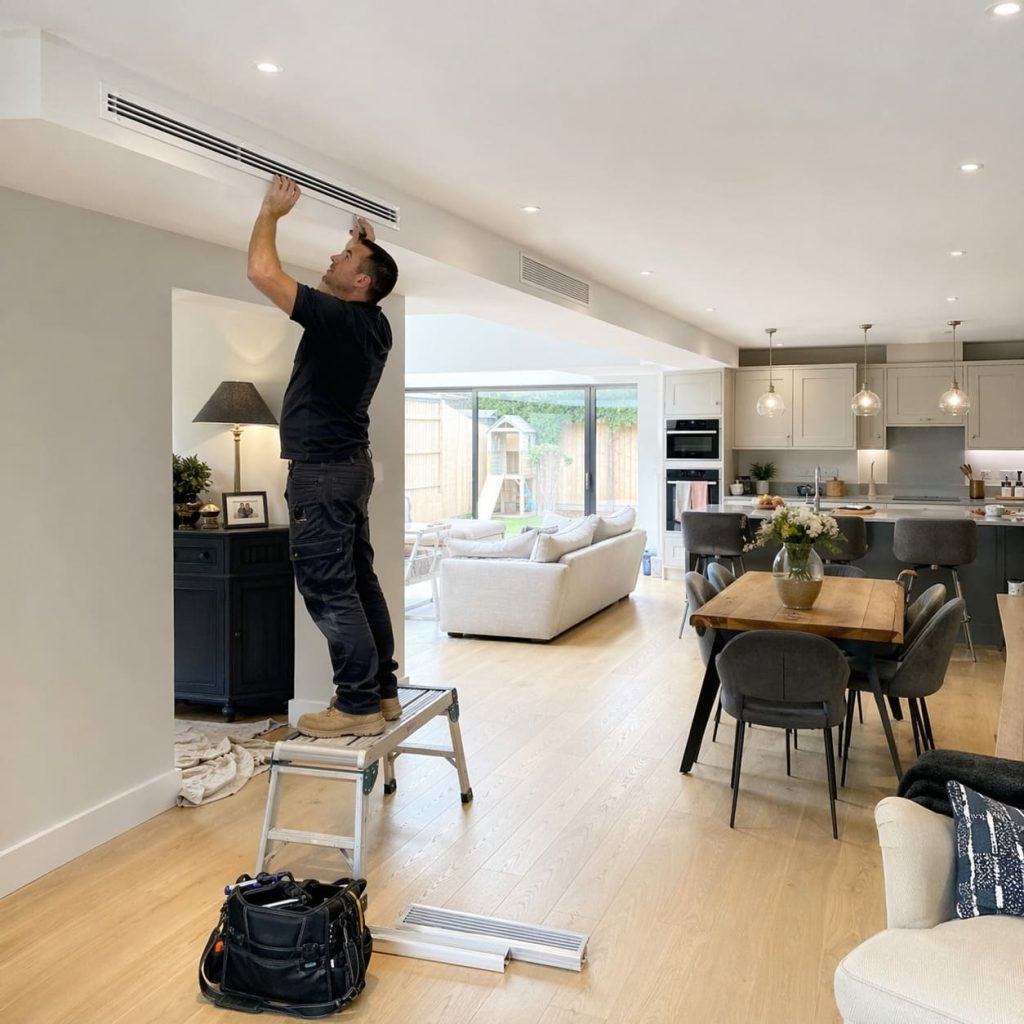
In a top floor bedroom or south facing room, the value case is stronger when the system solves a specific heat problem that a buyer will immediately understand.

Bad installation weakens the value case
Two identical rooms can leave very different impressions. In one, the indoor unit sits in a sensible position, pipe routes are neat and the outdoor unit has been placed with noise and access in mind. In the other, trunking cuts across a wall, the indoor unit fights the furniture layout and the condenser is in the first available outside spot.
That difference decides whether permanent air conditioning feels like a premium feature or a compromise. A buyer may not know the technical detail, but a poorly finished installation is easy to spot.
Indoor placement matters because it affects how the room reads. A unit above a doorway or in a balanced position can sit quietly in the scheme. A unit placed where artwork, wardrobes or curtains clearly had to give way looks like an afterthought.
Outdoor placement matters even more in many London homes. Close neighbours, narrow gardens, terraces, balconies and lightwells leave little room for error. A professional installer such as RightAir Solutions will normally survey the property before specifying a system, because access, pipe routes, service space and noise all affect whether the result protects the value case.
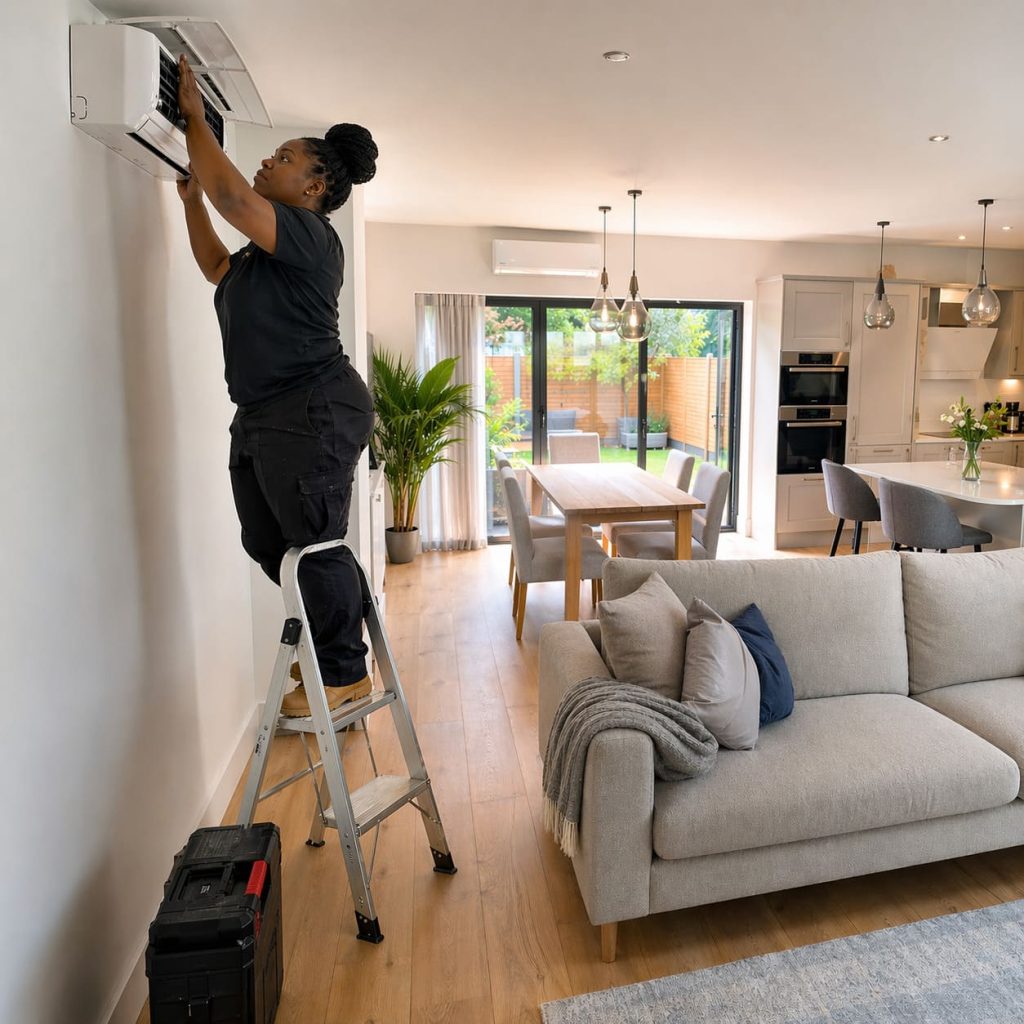
Maintenance also changes buyer perception. A clean, cared-for system with sensible service access feels like part of the home’s infrastructure. A neglected unit gives a buyer one more thing to question during viewing or survey.
Installed is a low bar. Integrated is the point.
Permissions and noise protect the upside
Air conditioning adds less confidence if a future buyer worries about whether it was allowed, whether neighbours objected or whether the outdoor unit meets the right noise standard. In London, permissions and sound are part of the value discussion because they affect whether the system feels settled into the property.
Planning status is part of specification
Planning permission is neither always required nor always avoidable. The Planning Portal states that adding air conditioning to a home may be permitted development only if the relevant limits and conditions are met, including the function, size, placement and number of units.
Function matters. The Planning Portal says permitted development rights only apply if the system provides heating, including systems that provide both heating and cooling. Cooling-only systems require a planning application. Protected locations also need care, because permission is required in a Conservation Area and listed building consent is required for a listed building.
Recent policy has made the position more flexible for some systems. The Department for Energy Security and Net Zero’s Warm Homes Plan says air-to-air heat pumps, which can provide heating and cooling, can benefit from the permitted development right where the conditions are met. The same plan states that air source heat pumps installed under permitted development must comply with the MCS 020a sound calculation and noise limit, which is the relevant noise test for these installations.
Leasehold consent is a separate check
Leasehold flats bring another layer. Even where planning is manageable, your lease, freeholder or managing agent may still control external units, pipe routes or work to shared parts of the building.
Good planning here is practical, not legalistic. For a mansion flat in Maida Vale or a converted property in Queen’s Park, the right installer needs to identify where the outdoor unit can sit, how pipework will pass through the property and what records the owner may need later. RightAir Solutions commonly treats these checks as part of the design stage, because resolving them early protects both the installation and the future sale conversation.
A buyer does not need a lecture on permissions. A buyer needs reassurance that the system will not become a neighbour dispute or a paperwork problem.
Keep installation records, maintenance history and any relevant permission documents together, because they help a buyer see the system as a settled part of the property.

The right system changes the buyer conversation
The practical test is simple: air conditioning is worth considering before selling, renting or refurbishing when it improves how the home functions without adding visual clutter, noise concerns or permission doubts.
| Value effect | What it means in practice | What to check |
|---|---|---|
| Adds value | The system is seen as a desirable fixed feature in the right property. | It cools the rooms buyers care about and looks planned into the home. |
| Protects value | The installation avoids creating objections during viewing or survey. | Noise, permissions, placement and maintenance have been handled properly. |
| Makes easier to sell | The home feels more usable in warm weather or noisy locations. | The system solves a clear problem, such as hot bedrooms or impractical window opening. |
A multi-room system can make sense in a larger London property, but only if the specification follows the building. One outdoor unit serving several rooms may be neater than separate visible units in the wrong places, although the right answer depends on access, layout and the rooms that genuinely need cooling.
Once you separate value from saleability, the decision becomes less vague. You are no longer guessing whether air conditioning always adds money. You are checking whether the system removes a real buyer objection, fits the property cleanly and leaves the paperwork and noise position in order. That is the difference between an uncertain upgrade and a feature you can present confidently.

Common questions about air conditioning and London property value
Is fixed air conditioning better than a portable unit for resale?
Fixed air conditioning has stronger resale appeal because it is part of the property rather than a temporary appliance. Buyers are more likely to treat it as a home improvement when it is quiet, discreet and installed in the rooms that need it.
Can air conditioning put buyers off?
Air conditioning can put buyers off if the installation looks untidy, sounds intrusive or raises permission concerns. Poorly placed indoor units and obvious pipework matter more in higher-value London homes, where presentation carries weight.
Does air conditioning make a London flat easier to sell?
Air conditioning can make a London flat easier to sell when it solves a clear comfort issue, such as hot bedrooms, strong sun or windows that cannot be left open. Leasehold permission and external unit placement need checking before the system can be treated as a settled benefit.
Should air conditioning be installed before a refurbishment is finished?
Air conditioning is easier to integrate during refurbishment planning because routes, unit positions and finishes can be considered before rooms are completed. Retrofitting can still work well, but it leaves less freedom over pipe routes and visual finish.
What records help when selling a home with air conditioning?
Installation details, permission records where relevant and maintenance history all help a buyer see the system as properly managed. Clear records reduce avoidable questions during survey and conveyancing.
This is general information, not professional advice.
