

RightAir Solutions is a company that specialises in commercial air conditioning services.

Why do air conditioning quotes often change after a site survey?

When you first receive an air conditioning quote, it is usually based on general assumptions such as photos, brief descriptions, or estimated measurements. It serves as a starting point rather than a final figure. A site survey shifts that. Once an engineer walks through the property, they can assess real-world conditions: structural layout, available access, drainage paths, and electrical load. These findings transform the quote into one based on actual installation needs. At companies like RightAir Solutions, this careful groundwork supports long-term performance, especially in complex London properties. This technical site inspection is what turns an early estimate into a property-specific design.

Understanding Why Your First AC Quote Is Only an Early Estimate

Installers work with the information they are given—often a few photos, rough room sizes, or a simple plan. However, these do not show what is behind walls, how the consumer unit is configured, or whether there is clearance for pipework above ceilings.

That first price acts as a placeholder until the engineer sees the space in person. The shift from assumption to measured detail is why initial AC pricing should always be viewed as a lead-in to a more accurate HVAC installation quote.

What an Engineer Actually Checks During a Site Survey?

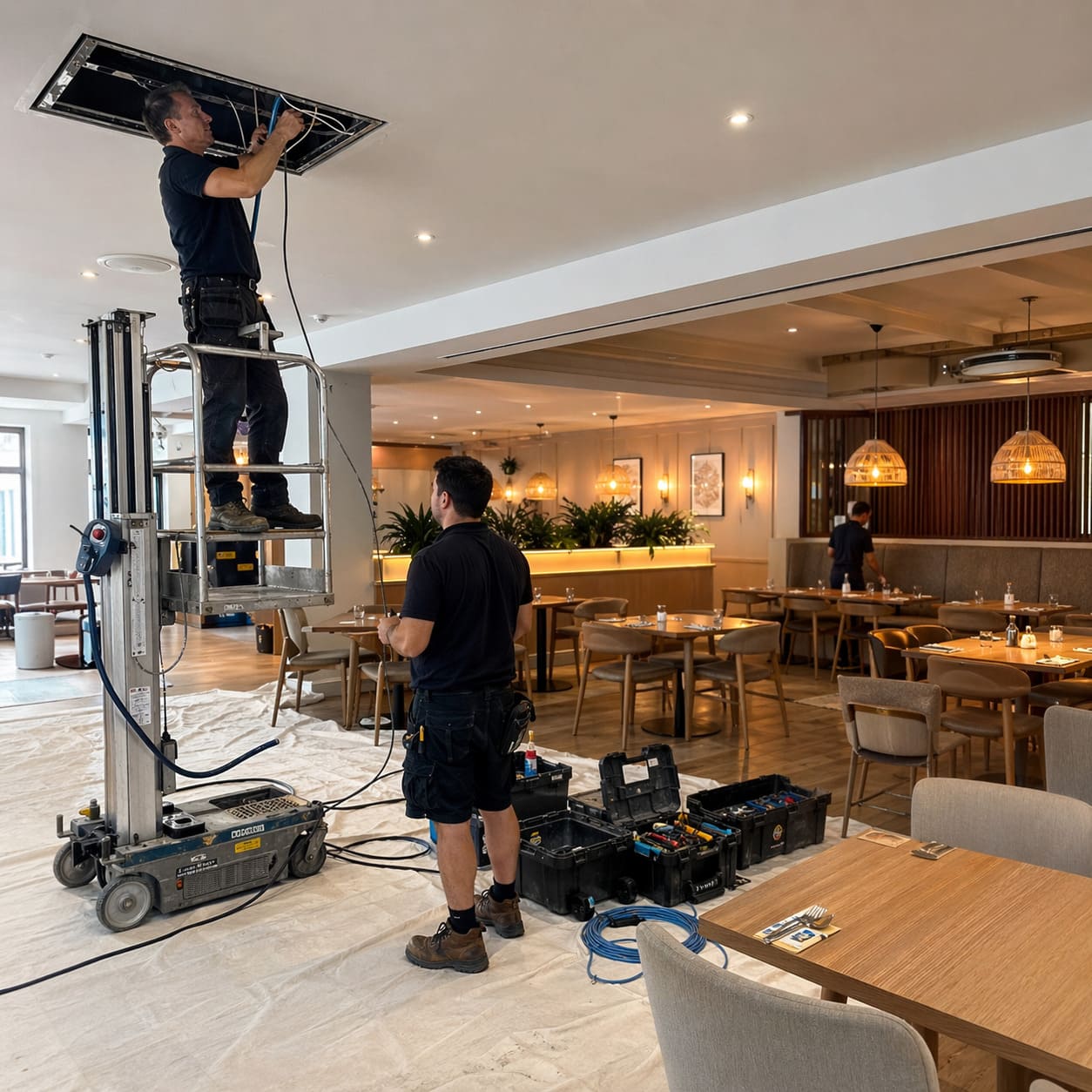
A survey is not a sales pitch. It is a technical review. The engineer moves room by room, observing airflow patterns, measuring available clearance, checking ceiling depths, and identifying potential obstacles. They assess structural strength, drainage viability, and viable pipework routes.

These checks define what is feasible and safe to install.

What they check typically includes:

  1. Room size and heat load

  2. Available fixing points for indoor units

  3. Access to ceiling or wall voids

  4. Drainage fall and options for pumps

  5. Noise exposure and regulatory clearance

  6. Existing electrics and circuit availability

These technical site inspections support a system that works well and stands up over time.

Pro Tip: Always clear access areas before your site survey to help engineers save time and spot potential issues.

How Building Structure and Hidden Details Affect the Final AC Design?

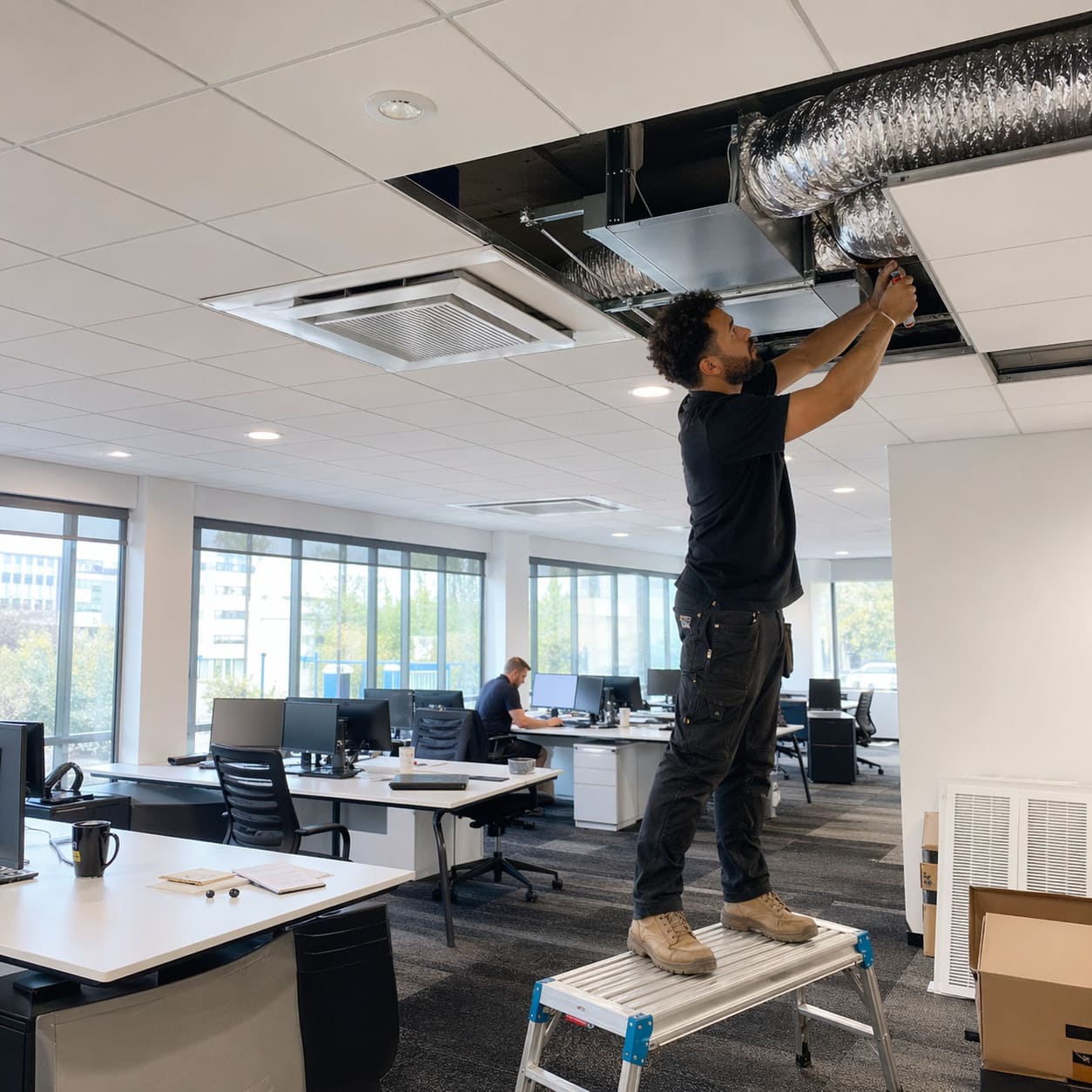
Hidden elements often shape the design. Joists, fire barriers, wall thickness these details dictate what can go where. A route that looks logical on paper might be blocked by a steel beam in practice.

Uncovering these details is what allows for a truly property-specific design.

The Real-World Limitations That Shape Indoor Unit Placement

A discreet wall might seem ideal for placing an indoor unit. In reality, other factors guide the final position.

The engineer has to check for airflow clearance, structural support, and nearby heat sources. If a location fails on any of these points, it will not be used.

Why Outdoor Unit Location Is One of the Biggest Factors in Quote Changes?

Outdoor units come with their own criteria. They must be quiet, have room for airflow, and attach securely. This is not always straightforward in older homes or urban flats.

Planning rules, limited access, or shared structures may require a different placement. Changes here often affect the overall installation cost.

Book Your Professional AC Survey

Get a real-world quote based on your property’s structure, not guesswork.

Pipework Routes and Condensate Drainage: The Most Common Survey Surprise

Routing pipework is rarely simple. Drainage depends on gravity unless a pump is used.

When gravity is not an option or the run is longer than expected, installation becomes more involved. These two issues, pipe routing and drainage, are frequent reasons for quote changes.

How Electrical Capacity Influences Your Installation Requirements?

Without reviewing your consumer unit, no one can confirm whether it can handle the added load of an air conditioning system.

The engineer checks for spare ways, reviews circuit protection, and runs basic load calculations. If the system requires a dedicated feed or fuse board upgrade, this will influence the design and cost.

This forms a key part of any well-considered HVAC installation quote.

Access, Working Conditions and Installation Difficulty Revealed on Inspection

Some installations are straightforward. Others involve tight corners, long climbs, or delicate interiors.

If engineers must carry equipment up several flights of stairs or protect old flooring, the job becomes more time-consuming. Building layout and access logistics directly influence the quote.

Pro Tip: Ask about electrical capacity upfront if your property is older, as upgrades may affect both design and timing.

Regulations and Safety Rules That Affect What Can Be Installed

Every part of the system must comply with safety and legal requirements. These include fire barriers, clearance zones, energy efficiency targets, and sound limitations.

Installers follow these not by choice but by law. They are in place to protect both property and occupants.

A good engineer sees your property not just as rooms but as a connected system. Each installation decision is informed by standards, safety, and experience. That is how systems remain reliable long after installation.

How Engineers Refine Your AC System Design After Seeing the Property?

After assessing all variables, structure, wiring, access, and obstructions, the engineer updates your design plan.

They may change the system type, move a unit, or reroute drainage. These are logical refinements, not guesswork.

After the survey, most installers walk you through the adjustments. They often use diagrams or revised layouts to explain their approach. This kind of installation plan review ensures you understand the outcome. For clients working with RightAir Solutions, this clarity is part of what makes the service feel considered rather than transactional.

Upgrade Your AC with Confidence

Discover what’s possible with a custom-designed system built for your home.

Checklist: How to Prepare for an AC Site Survey

  1. Provide clear, up-to-date photos of the rooms.

  2. Share floor plans if you have them.

  3. Let the installer know about any known structural issues.

  4. Highlight your preferred locations for the units.

  5. Ensure the surveyor has full access on the day.

While not every quote change can be prevented, these steps give the surveyor better insight and help align expectations from the start.

In some cases, the survey may even reduce costs. Discovering an easier installation route or simpler fixings can result in a smaller final figure.

A Survey Doesn’t Increase the Cost Arbitrarily; It Clarifies What’s Possible

The survey is where the plan becomes real. Assumptions give way to specifics. Measurements replace estimates.

The engineer translates what they find into a practical solution that fits your property. The revised quote reflects what is actually required.

This is the foundation of accurate AC pricing and long-term performance.

Speak to an HVAC Specialist

Not sure why your quote changed? We’ll walk you through it calmly and clearly.

Share

Read Similar Blogs

RightAir Solutions

32 Donnington Rd, London NW10 3QU
 
020 3886 2326
 
GQRC+JX London