Why can a new-build flat feel hotter than expected in summer?
A new-build flat can feel very hot in summer because modern construction often keeps heat in effectively, large windows can let in strong sun, and many flats have limited natural airflow. In London, warm urban surroundings and dense building layouts can add to the problem. The result is a home that performs well in winter but can become uncomfortable during hot weather unless shading, ventilation, and cooling are managed carefully.
You move into a new flat expecting comfort all year, then the first hot spell arrives and the living room feels stuffy by late morning. Bedrooms stay warm well into the night, windows do not seem to help much, and the whole place feels hotter than an older home nearby.
That experience is common, especially in modern apartment buildings. New-build overheating does not automatically mean anything is wrong with the property, and it does not mean you are using it badly. Very often, it comes from a mix of efficient construction, design choices, and the way heat builds up in a city.
Table of Contents
Understanding why new-build flats retain heat
Current standards, including Building Regulations Part L, aim to improve energy efficiency. That usually means better insulation and a tighter thermal envelope, which is excellent for reducing heat loss in winter. Summer can be different. Once heat gets in, the flat may hold onto it for longer.
Large areas of glazing are another frequent factor. Contemporary schemes often use generous windows to bring in daylight and create a sense of space. South and west-facing glazing can also increase passive solar gain, especially in upper-floor flats where there is little external shade.
Cross-ventilation is often limited in apartment layouts. A flat with windows on only one side has fewer effective ventilation pathways, so warm air can linger indoors. In dense developments, nearby buildings can also reduce breeze and trap warmth around the block.
London adds its own pressure. Hard surfaces, traffic, and tightly packed streets contribute to the urban heat island effect, which means that the city can stay warmer than surrounding areas, particularly after sunset. Night-time relief is often weaker than people expect.
A few common contributors often overlap:
- Airtight construction that slows heat loss
- High glazing ratios that increase solar gain
- Single-aspect layouts with restricted airflow
- Warm external conditions in built-up neighbourhoods
- Upper floors and roof exposure
Guidance from the London Plan, local planning authorities, NHBC requirements, and overheating assessments has increased attention on these issues, but modern flats can still feel uncomfortably warm in certain conditions. New does not always mean naturally cool.
How building materials and design choices affect summer temperatures
Summer comfort is shaped by more than the weather outside. The materials, orientation, and overall design of a flat all affect how quickly heat enters, where it builds up, and how slowly it leaves.
Insulation and airtightness
Good insulation is beneficial for energy use, but it can work a bit like a thermos flask in hot weather if internal heat and solar gain are not managed well. Once sun, appliances, cooking, and body heat raise the indoor temperature, an airtight home may release that heat more slowly.
SAP calculations focus strongly on energy performance, and organisations such as BRE, RIBA, and the UK Green Building Council have all contributed to wider discussion about balancing efficiency with comfort. An energy-efficient flat is not necessarily a cool flat in August.
Thermal mass and lightweight elements
Some buildings use materials that absorb heat and release it gradually. Thermal mass can help moderate temperature swings if night-time cooling is possible. In a flat that cannot purge heat overnight, that stored warmth may still be noticeable by the next day.
Lightweight construction can behave differently. It may heat up quickly, but it may also cool more quickly if ventilation and shading are effective. The exact experience depends on the whole design, not one material in isolation.
Window orientation and shading
Orientation matters a great deal. East-facing rooms heat up earlier in the day, west-facing rooms can stay hot into the evening, and south-facing glazing can receive prolonged direct sun. Without shading devices, solar gain through glass can dominate summer conditions.
External shading usually performs better than internal coverings because it stops some of the sun before it passes through the glazing. Inside the flat, blinds and curtains still help, but they are dealing with heat that has already entered.
Roofs, façades, and exposed flats
Top-floor flats often feel warmer because the roof absorbs solar energy throughout the day. Flat roofs can contribute to heat build-up, depending on their construction and exposure. Corner units and flats with long sun-exposed façades can face similar issues.
Reflective coatings, thoughtful façade design, and shading details can influence comfort, although residents do not always control those features after purchase. That is one reason two flats in the same building can feel quite different in summer.
Pro Tip: Close blinds or curtains before any direct sun enters the room, not just after the space feels hot, for noticeably better heat control.
The role of ventilation in managing indoor heat
Many residents assume ventilation and cooling are the same thing. They are not. Ventilation moves air and helps remove stale air, moisture, and internal pollutants. Cooling lowers air temperature.
Imagine air moving from one side of a home to the other. In a house with windows front and back, that flow can be quite effective. In a single-aspect flat with one main façade, the route for fresh air may be much weaker.
Approved Document F sets out ventilation expectations, but compliance does not guarantee a flat will feel cool during a heatwave. A system can meet ventilation requirements and still leave occupants feeling overheated.
Trickle vents illustrate the point well. They support background ventilation, but they are not a substitute for strong purge ventilation on a hot day. If the outdoor air is already warm, a small vent opening is unlikely to make the room feel comfortable.
Mechanical systems can also be misunderstood. MVHR, or mechanical ventilation with heat recovery, is designed mainly to provide fresh air efficiently. Some systems have summer bypass functions, but they do not perform like air conditioning. CIBSE guidance often separates the question of ventilation from the question of thermal comfort for exactly this reason.
A few practical distinctions help:
- Natural ventilation depends on window opening, wind, and layout
- Mechanical ventilation supports air changes but may not reduce temperature enough
- Purge ventilation means opening windows or vents enough to flush out heat quickly
- Air conditioning actively removes heat from indoor spaces
Night-time cooling is often overlooked. If outside temperatures drop, opening windows at suitable times can help release built-up warmth. In some London locations, outdoor noise, safety concerns, pollution, or very warm night air limit how useful that strategy will be. Bedrooms in particular can stay uncomfortable if daytime heat was trapped and the flat has nowhere for it to escape.
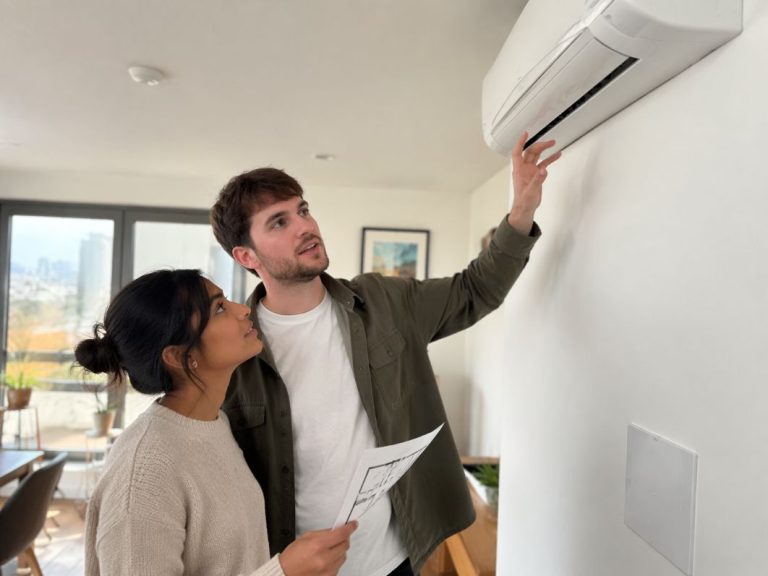
Book a Home Cooling Assessment
Arrange a professional evaluation to identify the best cooling options for your new-build flat.
Practical steps to reduce heat in your flat
You may not be able to change the building itself, but you can still reduce heat gain and improve comfort with a few well-timed habits. The biggest gains usually come from blocking sun early and using cooler outdoor air wisely.
- Keep blinds or curtains closed before direct sun hits the room. South and west-facing spaces benefit most from early action, especially on bright afternoons.
- Open windows during cooler periods, usually late evening, overnight where practical, and early morning. Close them again before outdoor temperatures climb.
- Reduce internal heat from cooking, tumble drying, halogen lighting, and large electronics during the hottest part of the day. Even small appliances add to the room temperature in a well-sealed flat.
- Use fans to move air across the body, which improves comfort even if the air itself is still warm. A fan cools people rather than rooms, so placement matters.
- Keep internal doors open or closed strategically depending on the layout. In some flats, that encourages airflow. In others, it helps isolate the hottest room.
- Consider removable solar-control film or landlord-approved shading solutions if the flat is rented and the windows receive intense direct sun.
Mistiming is one of the most common problems. Opening every window at 2 pm during a hot afternoon can bring in more heat, particularly if the flat faces a sunlit road or courtyard. Using the Met Office forecast to spot cooler overnight periods can make ventilation more effective.
Portable air conditioning units can offer some relief, though they have trade-offs. They can be noisy, they need somewhere to exhaust warm air, and their appearance does not suit every room. Even so, in a flat with persistent overheating, a temporary unit may be more useful than a fan alone during short hot spells.
Pro Tip: If you use a portable air conditioning unit, ensure the exhaust is vented efficiently and any gaps are sealed to maximise performance.
When to consider professional climate control solutions
If blinds, fan use, and night ventilation still leave the flat uncomfortable for long periods, a professional cooling system may become a practical option. Bedrooms that remain too warm for sleep, home offices with heat from equipment, and top-floor apartments with strong afternoon sun often fall into that category.
In those cases, the aim is usually not to turn the home into a chilled box. The better objective is steady, quiet, controllable comfort that suits the layout and the way the flat is actually used.
Some homes can take a discreet wall-mounted split system. Others are better suited to a ducted approach, a ceiling-mounted unit, or a multi-room arrangement. Acoustic performance, condensate drainage, access routes, and the appearance of any external equipment all matter in apartment buildings.
A proper assessment usually considers:
- Which rooms overheat and at what time of day
- Window orientation, glazing area, and shading
- Occupancy patterns and internal heat from appliances
- Outdoor unit location, noise, and building constraints
- Ongoing maintenance and filter cleaning
Specialist firms such as RightAir Solutions typically assess cooling as part of a wider system lifecycle, including design, installation, performance, and upkeep, instead of treating the unit as a simple add-on. That matters in London flats, where access restrictions, neighbour considerations, and façade rules can shape what is feasible from the outset.
F-Gas regulations, Building Regulations requirements, and manufacturer guidance all play a part in system selection and installation. A well-specified system should suit the room size and layout, because oversizing or poor placement can create noise, draughts, and uneven temperatures.
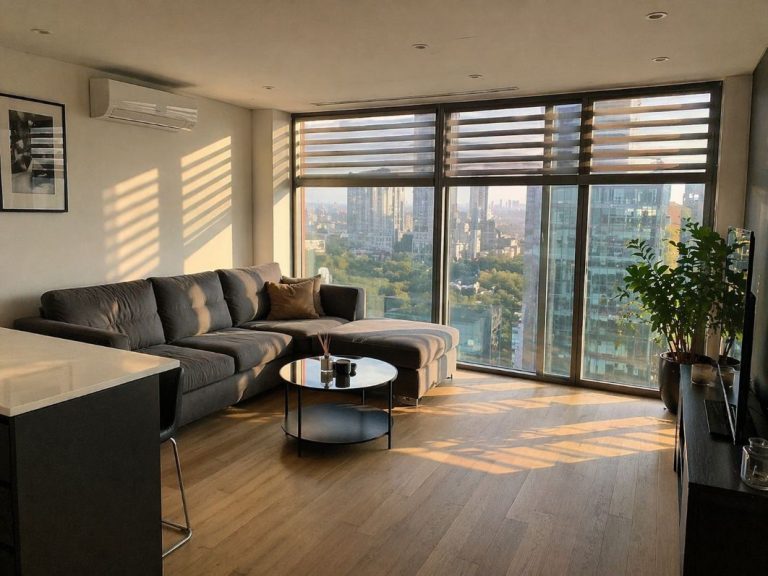
Speak to a Climate Control Specialist
Get expert advice on managing heat and improving comfort in your London flat.
Working through building management and permissions
Even if a cooling system seems sensible, approval can take time. Many new-build flats are leasehold, and the lease may restrict changes to the exterior, internal services, or any equipment that affects the building façade.
Managing agents and freeholders often want detailed information before they consider consent. They may ask for drawings, product details, acoustic information, condensate arrangements, and confirmation that the installation will not affect communal systems or neighbouring flats.
A typical route looks like this:
- Review the lease and any house rules for alterations.
- Ask the managing agent what documents are required.
- Check whether landlord consent, freeholder approval, or planning input is needed.
- Prepare technical details that address appearance, noise, and installation method.
- Wait for written approval before any work begins.
Planning permission is not always required, but local planning departments may still become relevant in certain buildings or conservation areas. Listed status, external grilles, visible condensers, and façade changes can all affect the position. Noise restrictions are also common, especially where outdoor units are near neighbouring windows or terraces.
Clear documentation can make a noticeable difference. A proposal that explains equipment location, sound levels, cable routes, and visual impact is easier for building management to assess than a vague request for air conditioning. Some specialist installers, including RightAir Solutions in suitable cases, prepare this kind of information as part of the design stage because apartment approvals often depend on detail rather than broad intent.
Consent is never automatic, and some buildings remain restrictive. Even so, a carefully prepared application has a much better chance of moving forward than an informal request with no supporting material.
Looking ahead: rethinking comfort in modern London flats
Summer discomfort in a new-build flat is part of a wider change in how people think about housing. For a long time, energy efficiency focused mainly on keeping warmth in during colder months. That priority still matters, but hotter summers have pushed liveability higher up the agenda.
Greater London Authority policy, CIBSE guidance, RIBA thinking, and broader discussion around UK Climate Projections have all pointed in the same direction. Urban homes need to be judged by how they perform in heat as well as in cold. Residents are noticing that balance more clearly now, especially in dense parts of London where warm nights can linger.
Modern design can deliver excellent daylight, low winter heat loss, and efficient use of space. Those strengths do not always guarantee summer comfort. A flat can be well built, energy-conscious, and still need better shading, better ventilation strategy, or active cooling to stay pleasant in a heatwave.
That is why the most useful question is often not whether a new-build flat should get hot, but how well it adapts when it does. Homes that combine efficiency with practical ways to limit solar gain, release stored heat, and support sleep during warm nights are likely to feel far better over time.
For residents, that shift can be reassuring. If your flat feels too hot in summer, you are not imagining it, and you are not alone. Comfort in modern urban housing now depends on thoughtful adaptation as much as on the building’s age, and that is becoming a standard part of living well in London.
Download a Summer Comfort Checklist
Access our free guide with tips for reducing overheating in modern flats during summer.
Read Similar Blogs
Air conditioning in a conservation area: what you can and can’t do without approval
Learn how to install air conditioning in a conservation area, when approval is needed, and practical steps for planning compliant, discreet solutions.
Whole-life cost of air conditioning in London: what nobody tells you about the first five years
Discover the real five-year costs of air conditioning in London, from installation to maintenance, energy bills, and comfort tips unique to local properties.
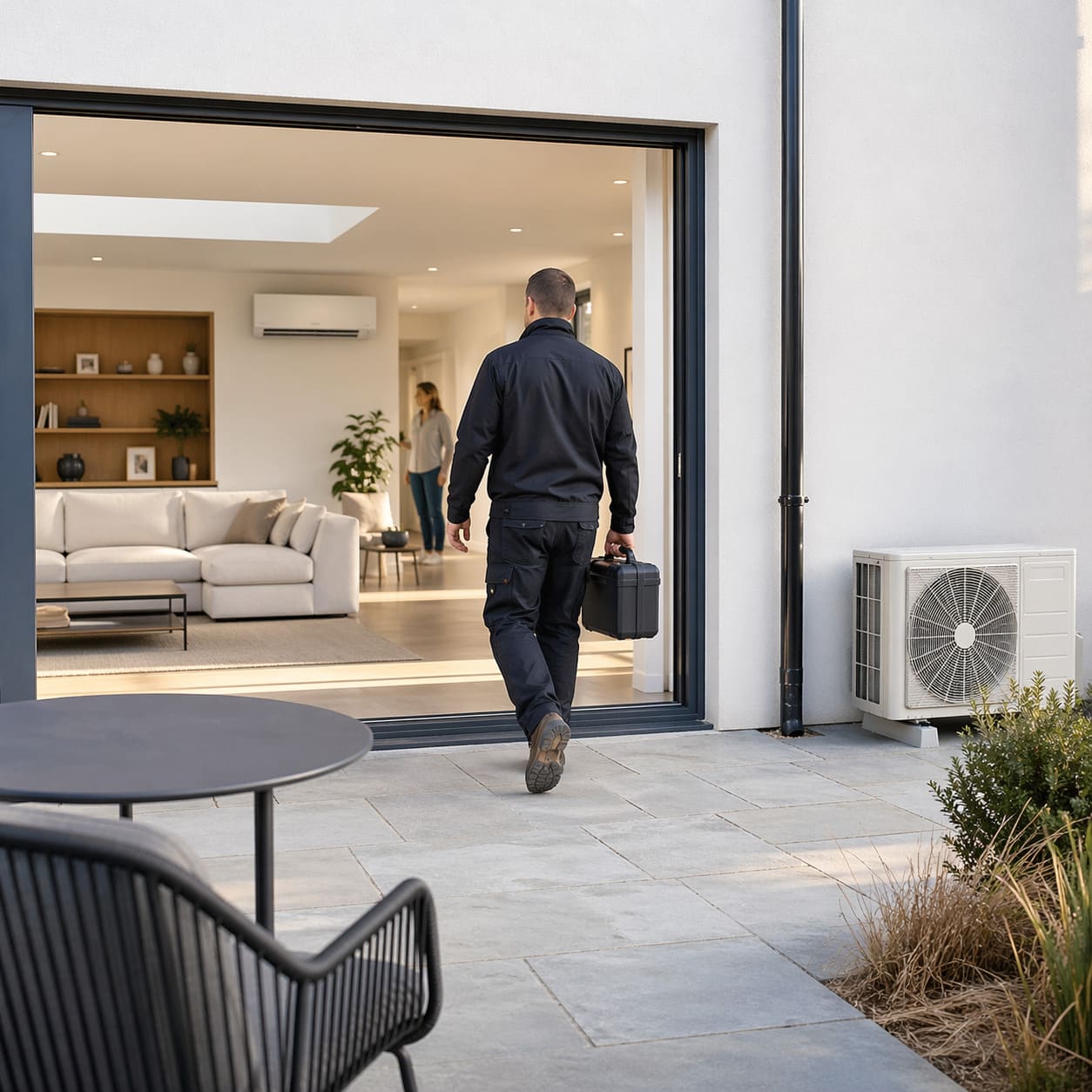
Get your air conditioning ready for summer with this practical pre-season checklist. Avoid breakdowns and enjoy reliable cooling even on the hottest days.

RightAir Solutions