How do rising refrigerant costs change air conditioning servicing bills?
Rising refrigerant costs can increase the price of some air conditioning service visits, especially if a system needs a top-up, leak repair, or full recharge. The effect is usually greater on older equipment or systems that use refrigerants facing tighter supply and stricter environmental controls, whereas routine maintenance with no gas loss may be affected far less.

The changing landscape of refrigerant pricing
Air conditioning servicing has always involved more than labour alone. Refrigerant, which is the working fluid that moves heat through the system, has become a more sensitive cost factor because supply, regulation, and product choice are all shifting at once.
A simple way to think about it is this: if a service visit includes a part that is harder to source, more tightly regulated, or being phased down, that part starts to influence the whole job. Refrigerant is increasingly in that position.
Several pressures sit behind refrigerant price increases:
- Phase-down schedules linked to F-Gas Regulation, which limit the use of higher impact refrigerants over time.
- Supply chain pressure, including manufacturing constraints, import restrictions, and uneven availability.
- Environmental compliance requirements, which affect handling, storage, certification, and recovery.
- Refrigerant types themselves, because older gases and newer alternatives do not move through the market in the same way.
Across London, these shifts can be felt differently depending on the property and system installed. A newer split system in a modern flat may face a very different servicing profile from an older setup in a period building with awkward access and long pipe runs.
The UK Government and the Environment Agency shape the regulatory backdrop, while refrigerant manufacturers and HVAC industry bodies influence what reaches the market and how quickly alternatives are adopted. For property owners, the practical point is straightforward: air conditioning gas costs are no longer a hidden technical detail, particularly once a system develops a leak or requires corrective work.
Schedule a routine inspection to address minor issues before they escalate. Ensure your system is efficient and future-proof by booking a professional check today.
Book Your ServiceWhy refrigerant costs influence servicing charges
A standard service visit usually covers inspection, cleaning, performance checks, and safety-related observations. Engineers may assess airflow, electrical connections, coil condition, drainage, controls, and general system operation before deciding whether any further work is needed.
Refrigerant sits within that wider servicing breakdown, but it matters most when the system is not holding charge as it should. If there is no evidence of loss, a routine maintenance appointment may involve little or no refrigerant cost at all. If a leak is present, the visit can become more involved because the engineer may need to trace the fault, recover remaining gas, repair the issue, pressure test, and recharge the system correctly.
That difference is why air conditioning service costs can vary in ways that are not obvious from the outside. A clean, well-maintained unit and a leaking system may look similar to the owner, yet the technical work required is very different.
A useful way to break it down is as follows:
- Routine maintenance usually covers cleaning, inspection, testing, and performance checks.
- Reactive repair work may include leak detection, component replacement, pressure testing, and a refrigerant top-up or recharge.
- System recovery and recharge can add further cost because refrigerant handling must follow specific rules and manufacturer guidance.
Maintenance contracts can smooth some of this out by setting a regular servicing schedule, but they do not remove the underlying effect of refrigerant supply issues. If a system needs gas, and that gas is expensive or less available, AC maintenance charges are likely to reflect it in some form. The real distinction is between paying for prevention early and paying for fault-led intervention later.

Keep a dedicated folder for all your air conditioning service records so any engineer can quickly review maintenance and refrigerant history on the spot.

The impact on older versus modern air conditioning systems
If you are unsure what your system uses, age is often the first clue. Older air conditioning units are more likely to rely on refrigerants that are harder to source, subject to tighter controls, or no longer suitable for straightforward servicing in the way they once were.
R22 is the example many owners have heard of, and with good reason. Systems designed around phased-out refrigerants can become awkward to maintain because refrigerant compatibility matters. An engineer cannot simply substitute any available gas without checking whether the system design, components, oil, and operating characteristics allow it.
Modern systems are not immune to refrigerant price changes, but they often place owners in a better position. Current equipment is generally built around refrigerants that remain supported in the market, and newer units may also run more efficiently and give clearer performance data during servicing.
Imagine two buildings in London. One has an older cassette system that cools unevenly and has required several small top-ups over the years. The other has a more recent multi-split installation with stable performance and regular maintenance records. The first owner may face rising costs tied to refrigerant phase-out and uncertain parts compatibility. The second owner may still see changes in servicing charges, although the cost pressure is more likely to come through normal maintenance and any future regulation instead of scarcity alone.
That is why the repair, retrofit, or upgrade decision is rarely about a single invoice. It is about whether the system remains practical to maintain over the next few years, given refrigerant phase-out rules, efficiency, and the likelihood of repeat faults.

How service providers respond to rising refrigerant prices
Service providers cannot absorb every market change indefinitely, so their response tends to show up in structure rather than in headline statements. Some review service pricing, some place more emphasis on scheduled maintenance, and some spend more time explaining what is included when refrigerant work becomes necessary.
For clients, the most useful sign of a professional approach is transparency. A reputable contractor should be able to separate routine servicing from fault-led refrigerant work and explain why one visit remains straightforward while another becomes more involved.
In practice, service providers often respond in a few clear ways:
- They tighten maintenance planning so minor issues are picked up before refrigerant loss becomes severe.
- They document system condition more carefully, including signs of leaks, worn insulation, or declining performance.
- They explain refrigerant-related work in plain terms, including whether the issue is a top-up, a repair, or a full recharge after leak rectification.
In London properties, that approach matters even more because installations can be unusually varied. A concealed ducted system in a refurbished townhouse is a different servicing proposition from a wall-mounted split in a small office. Access, noise sensitivity, occupied rooms, and building fabric all influence how refrigerant work is carried out and how much time it takes.
Specialist firms such as RightAir Solutions are often brought into these situations because complex homes and commercial spaces need a more site-specific maintenance approach. The main value in that setting is not drama or sales language. It is the ability to explain why a refrigerant issue has arisen and what sort of servicing path makes sense for that particular system.
When arranging a repair or recharge, clarify whether the quoted price includes refrigerant costs to avoid surprises on your final invoice.

What property owners can do to manage costs
Most owners cannot influence market-wide refrigerant prices, but they can reduce the chance of avoidable refrigerant-related bills. The best results usually come from regular oversight instead of waiting for cooling performance to drop sharply.
- Find out which refrigerant your system uses. An engineer can usually confirm this during a service visit, and that information helps you understand whether your system may be more exposed to supply or phase-out pressure.
- Keep to a sensible maintenance schedule. Regular servicing can reveal early signs of leakage, dirty coils, blocked drains, or stressed components before they trigger larger repairs.
- Pay attention to small changes in performance. Longer run times, weaker cooling, unusual noise, or ice build-up can all justify an earlier inspection.
- Keep service records together. A clear maintenance log gives any future engineer a better picture of recurring faults, previous refrigerant work, and the overall condition of the equipment.
- Discuss longer-term planning if the system is older. In some cases, a repair remains reasonable. In others, upgrade planning may be more sensible than repeated reactive work on ageing equipment.
No single step removes every risk, and older systems in particular can still become expensive to maintain. Even so, owners who treat servicing as an ongoing part of building care usually have a stronger grip on managing refrigerant expenses than those who wait until cooling fails in the middle of heavy use.
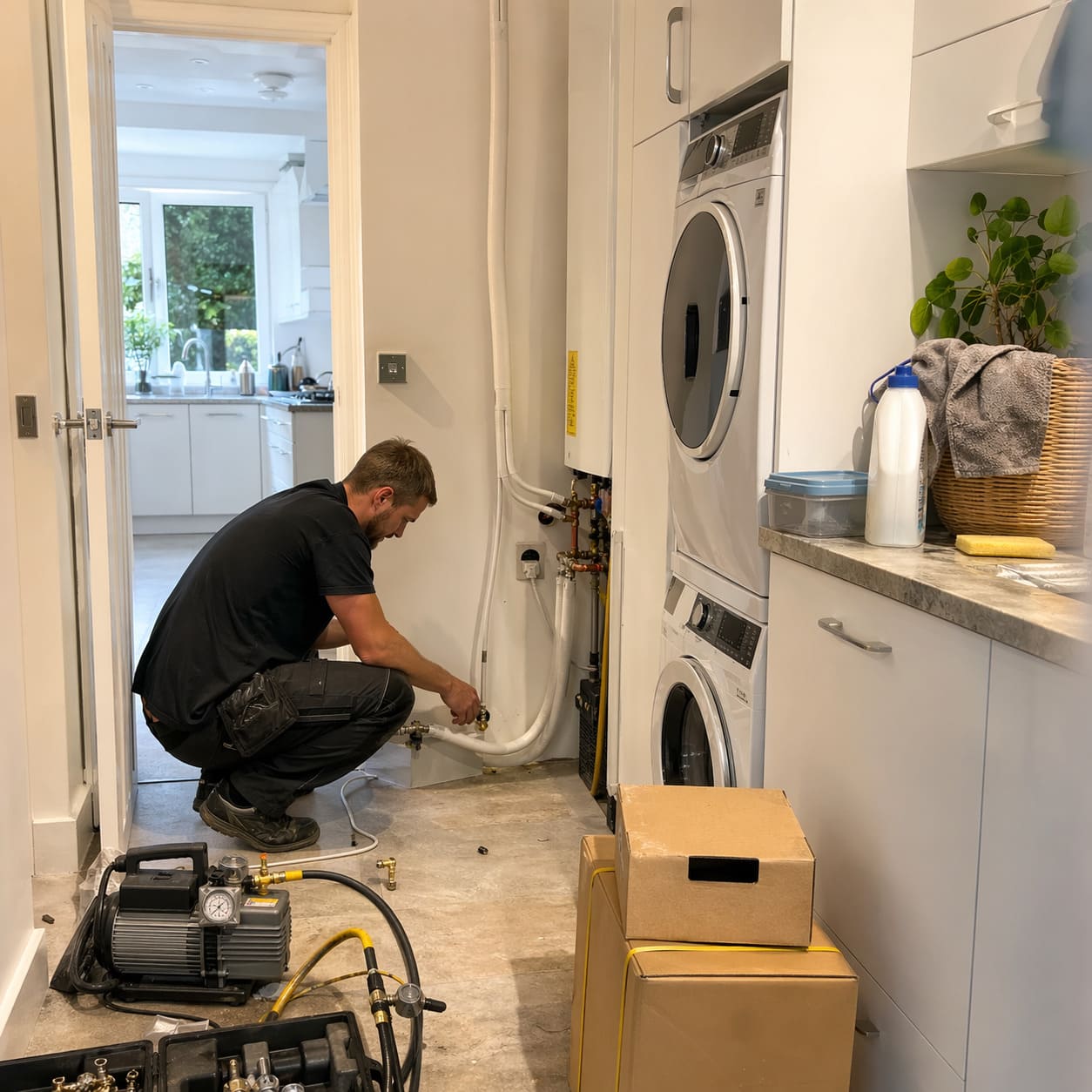
Get advice on whether to repair, retrofit, or upgrade your ageing air conditioning system. Our experts will provide a clear and practical roadmap for your property.
Request AssessmentLooking ahead: what to expect as refrigerant costs evolve
Refrigerant pricing is part of a wider shift in air conditioning, shaped by environmental policy, product availability, and system design. That wider picture suggests continued movement rather than a return to a simple, stable market.
One common misconception is that a quick top-up is always the easiest answer. In reality, repeated gas loss points to a fault that should be investigated properly. Refrigerant does not get “used up” in normal operation, so topping up without addressing the cause can turn a manageable issue into a pattern of repeat service visits.
A few points are worth watching over the coming years:
- Further regulatory adjustments may continue to favour lower impact refrigerants.
- System selection and maintenance planning are likely to matter more at the point of replacement.
- Professional handling and record keeping will remain central because environmental compliance is part of the job, not an optional extra.
Industry bodies, the UK Government, and the Environment Agency will continue to influence how refrigerants are used and managed. For property owners, the most sensible response is calm attention to system condition, refrigerant type, and maintenance history. That approach does not remove every future cost, but it does make those costs easier to understand and easier to manage.
