How should London employers manage office air quality in summer?
Treat summer office air quality as a ventilation and cooling issue, not temperature alone. A cooler office can still lack fresh air if cooled indoor air is mainly being recirculated. Good management means checking airflow, maintenance, controls, occupancy, and how the building behaves in hot weather.
Cooling alone does not fix air quality
Cooler air is not automatically better air. Cooling lowers temperature, while ventilation brings in fresh outdoor air and dilutes stale indoor air. In a busy office, those two jobs overlap, but they are not the same.
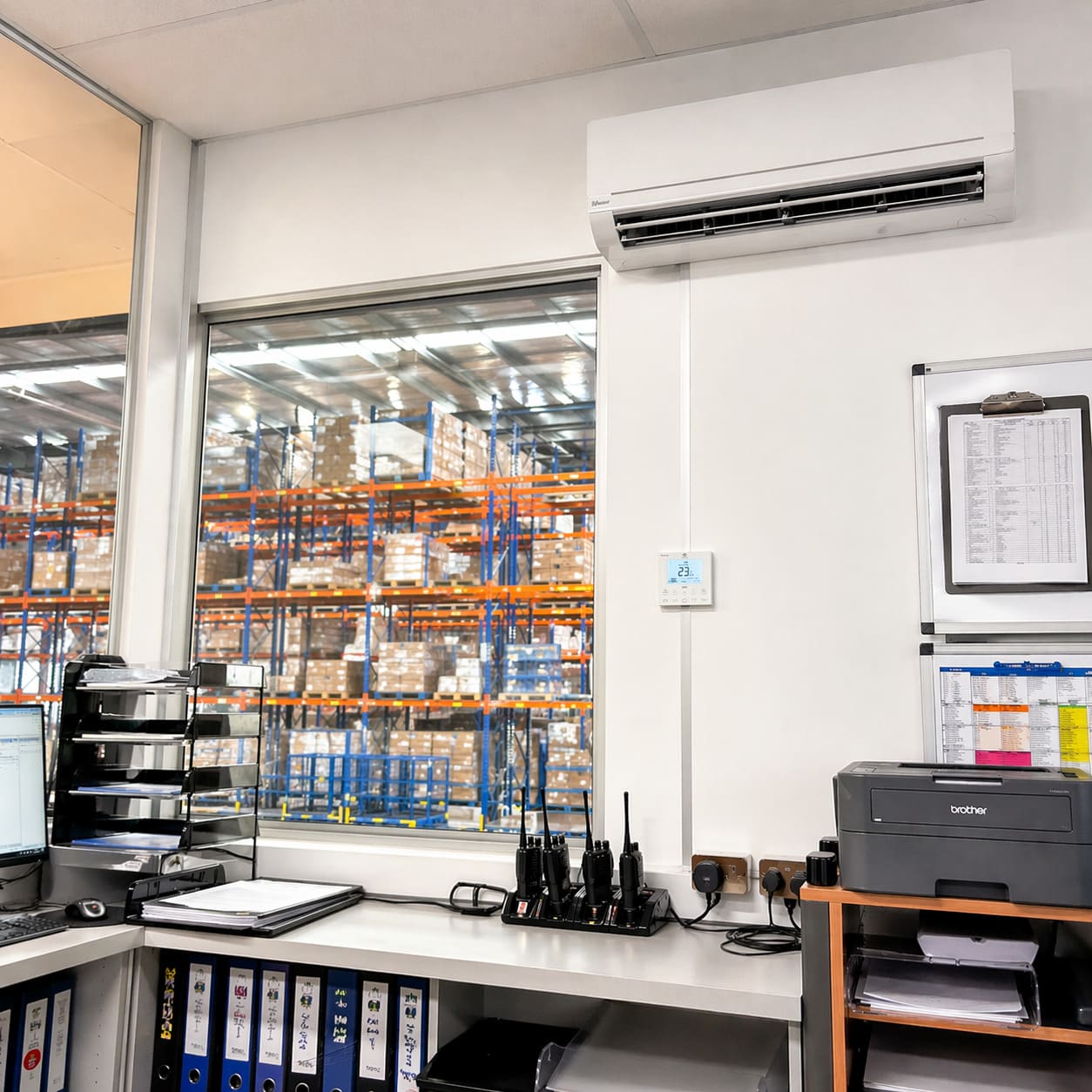
Heating, ventilation and air conditioning, often shortened to HVAC, should be judged as a system. A wall-mounted air conditioning unit might make a room feel less hot, yet the office can still feel stuffy if fresh air is not being brought in and stale air is not being removed.
Recirculated air is not automatically a fault. HSE guidance says recirculated air should be properly filtered, with some fresh air added before it is returned to the room, and fresh-air inlets should be kept open. That matters because a lower temperature set point will not solve an airflow problem.
Staff may describe the same issue in different ways. One person says the room is too warm, another says the air feels stale, and someone else complains that meeting rooms become unpleasant by late afternoon. Those comments point to different causes, so the response should not be limited to turning the cooling down.
A better first question is whether the occupied space is getting enough fresh air for the number of people using it. That question leads directly to the employer’s duty to manage both comfort and ventilation.
Ventilation systems designed around your space, for fresher, healthier indoor air at home or work.
Request a QuoteEmployers still need a reasonable summer workplace
No legal maximum office temperature exists in the UK, but that does not remove the employer’s responsibility. The Health and Safety Executive says employers must keep workplace temperature at a comfortable level and provide clean, fresh air.
Practical management matters more than arguing over a single number. Under the Workplace Health, Safety and Welfare Regulations 1992, the issue is whether the working environment is being kept reasonable for the work being done, the people using the space, and the conditions inside the building.
Air temperature is only part of comfort. The HSE treats thermal comfort as a wider issue that includes radiant heat, air movement, humidity, clothing or protective equipment, and the heat generated by the work itself. In a London office, a glass-fronted meeting room with poor air movement can become uncomfortable even when the thermostat looks acceptable.
Staff concerns about refusing work or discomfort should be handled through normal workplace processes, with conditions assessed rather than dismissed. Repeated complaints, especially from the same rooms at the same times of day, are useful evidence for an office manager who needs to decide what to check next.
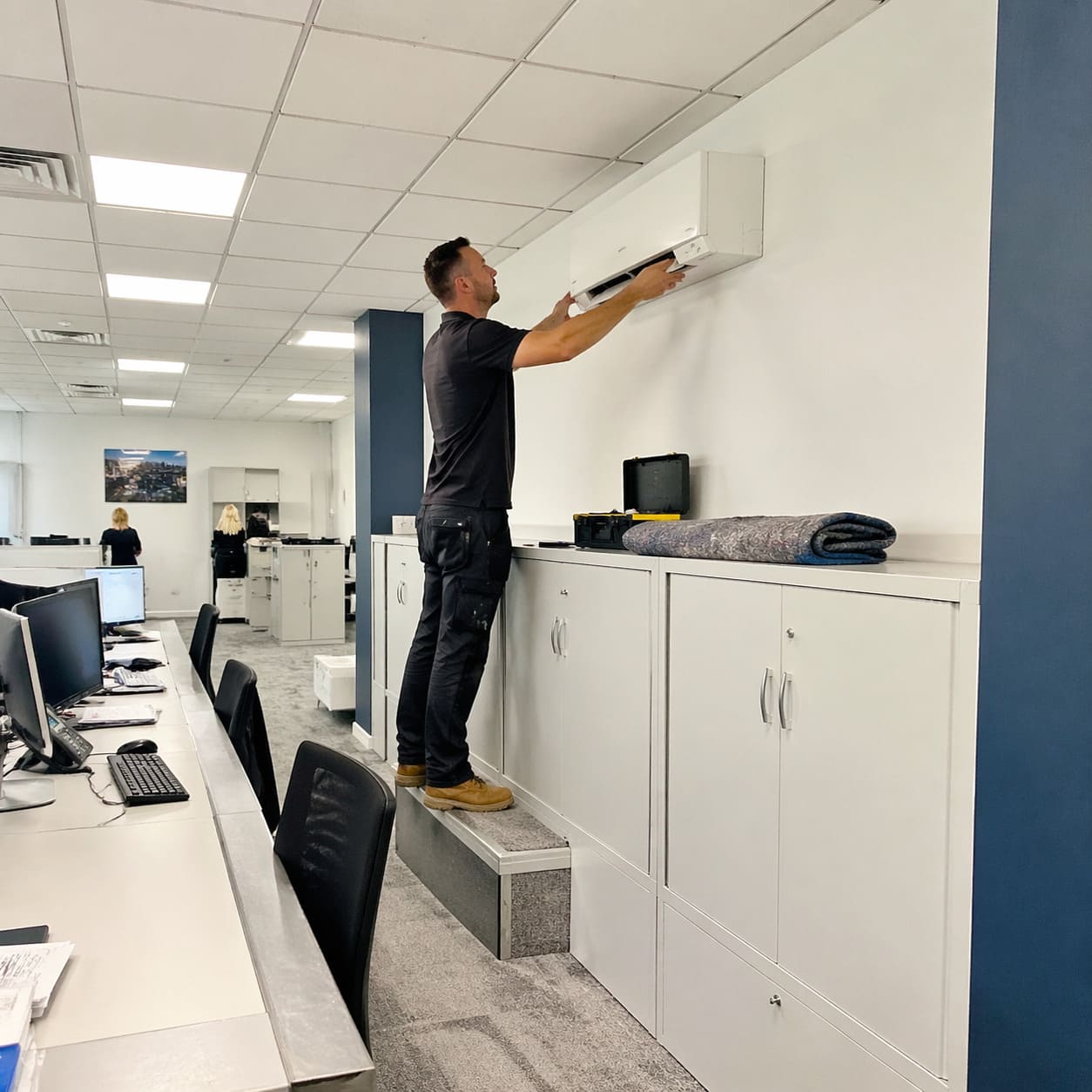
Carbon dioxide readings are most useful when they are taken in occupied rooms at head height, away from windows and supply grilles. Poor monitor placement can hide a ventilation problem or make a good room look worse than it is.

London offices make open windows a weak answer
A London office can have opening windows and still lack a workable summer ventilation strategy. During peak heat, those windows may bring in traffic pollution, noise, security issues, or warmer outdoor air, so the simple instruction to open them becomes thin advice.
Common London constraints change the decision:
- Older office layouts can leave meeting rooms and internal areas with weak airflow, even where perimeter windows open.
- Sealed or restricted windows mean fresh air has to come from mechanical ventilation rather than occupant habits.
- Traffic noise can make open windows impractical during calls or client meetings.
- Shared buildings can limit what each tenant controls, especially on mixed-use floors.
- Strong solar gain through east, south, or west-facing glazing can push cooling demand beyond what a basic setup can handle.
CIBSE, the Chartered Institution of Building Services Engineers, links higher temperatures in towns and cities to the urban heat island effect, where dense development, dark surfaces, and limited vegetation trap heat. That is why office cooling in London needs building-specific thinking rather than a generic heatwave checklist.
Good overheating control starts before mechanical cooling does all the work. The practical order is to keep heat out where possible, remove heat that gets in where safe and workable, then use mechanical cooling such as air conditioning. RightAir Solutions sees this most clearly in older West and North West London offices, where glazing, noise limits, and access constraints shape what will work in practice.
A site-specific plan beats advice that assumes every office has quiet, clean air outside the window.
CO2 readings expose poor ventilation faster than guesswork
Complaints about stuffiness, odour, or end-of-day discomfort are useful clues, but they do not show how much fresh air is reaching an occupied room. Carbon dioxide monitoring gives employers a firmer basis for deciding whether ventilation needs attention.
CO2 monitors are useful, not absolute
People breathe out carbon dioxide, so a build-up can indicate that ventilation is not keeping pace with occupancy. For portable workplace checks, HSE guidance identifies non-dispersive infrared carbon dioxide monitors, known as NDIR monitors, as the most suitable type.
A reading is only useful if the monitor is placed properly. Guidance says monitors should sit at head height, away from windows, doors, and air supply openings, and more than 50 cm from people. Put one beside an open window or directly under an air supply grille, and the reading may tell you more about the monitor position than the room.
The HSE says carbon dioxide levels consistently above 1500 parts per million in an occupied room indicate poor ventilation and should prompt action. That does not make the reading a full air quality test, because carbon dioxide is a broad guide. It does, however, give a facilities manager better evidence than another round of thermostat changes.
Fans do not replace fresh air
Desk fans and ceiling fans move air across people, which can make a hot room more bearable. They do not add fresh air.
That distinction matters in small offices and meeting rooms. A fan may reduce discomfort where ventilation is already adequate, but it should not be used as the answer in a poorly ventilated space. If the air is stale, the office needs fresh-air supply checked, not just air movement at desk level.
Meeting rooms often expose ventilation weaknesses before the open office does because occupancy changes quickly. If complaints appear after longer meetings, check the fresh air supply to that room separately.

Summer maintenance decides whether systems cope
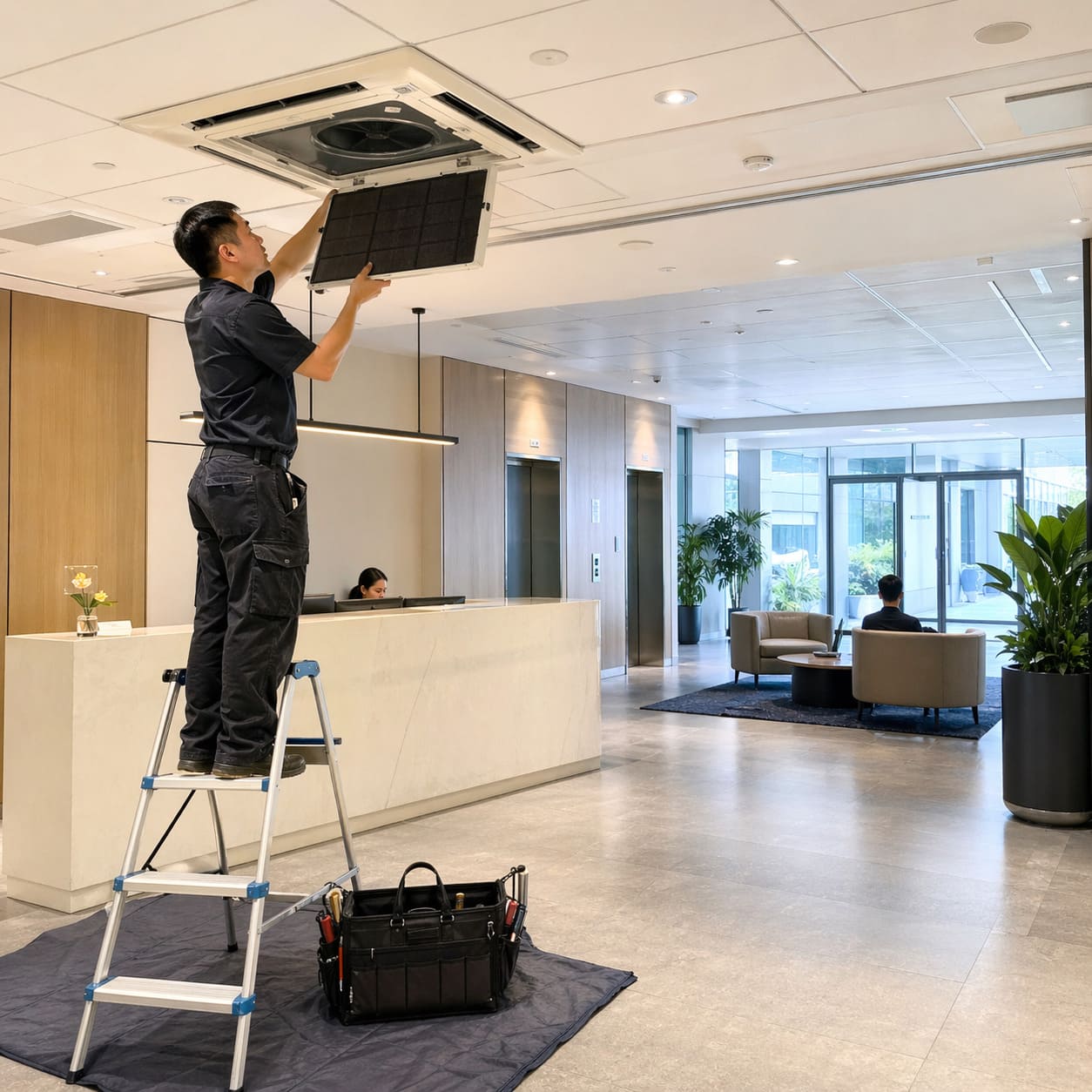
If an office air conditioning system struggles during the first sustained hot spell, the fault may have been present for months. Summer exposes weak maintenance, poor setup, blocked airflow, tired controls, and fresh-air supply problems that were easy to miss in cooler weather.
A sensible check starts with the existing system before assuming a new installation is needed. The person responsible for the mechanical ventilation should understand how the system operates, confirm how much fresh air it supplies, and make sure maintenance follows the manufacturer’s instructions. For general workplace ventilation, HSE guidance cites fresh-air supply that should not normally fall below 5 to 8 litres per second per person, with 10 litres per second per person recommended in many guides for most commercial buildings.
The right route depends on what the problem actually is:
| What you are seeing | Likely route to consider | What to check first |
|---|---|---|
| A room feels stale but not especially hot | Ventilation improvement | Fresh-air supply, occupancy, and airflow path |
| Cooling works in some areas but not others | Zoning or control review | Thermostat positions and room use patterns |
| Air conditioning underperforms during hot spells | Servicing or setup correction | Filters, coils, drainage, and control settings |
| Meeting rooms become uncomfortable when full | Occupancy and ventilation review | Fresh-air rate and how long rooms stay occupied |
| Old equipment is noisy or poorly controlled | Designed HVAC upgrade | Layout, outdoor unit position, controls, and fresh-air strategy |
RightAir Solutions approaches these issues as a system question rather than a product question. In commercial offices, that means looking at the building, the rooms that overheat, how fresh air enters, how cooling is controlled, and whether servicing will restore performance before any upgrade is proposed.
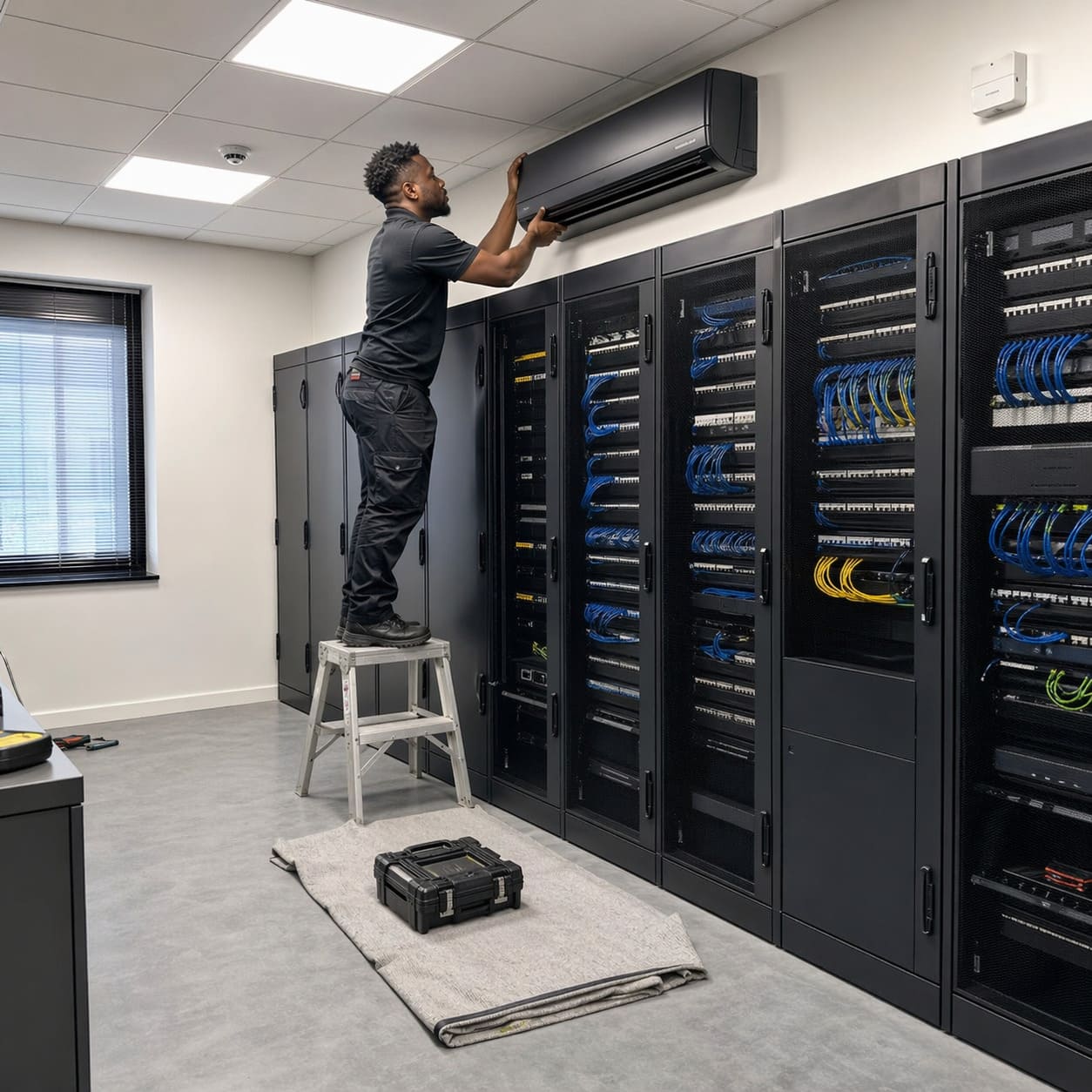
Server rooms and densely occupied meeting rooms deserve special attention because they can have very different heat loads from the open-plan office. A single setting for the whole workplace rarely deals well with that difference. Poor zoning leaves one area overcooled while another remains stuffy, which creates complaints and wastes the chance to run the system properly.
The priority is verified fresh air with controlled cooling, because colder settings can hide a ventilation problem without fixing it.
Get expert advice on the right solution for your property, layout and occupancy.
Speak to an ExpertCommon questions about summer office ventilation and cooling
Does air conditioning count as ventilation?
Air conditioning only counts as ventilation if the system brings in fresh outdoor air or works alongside a separate ventilation system. Some systems mainly recirculate indoor air, so cooling and fresh-air supply should be checked separately.
Are desk fans enough for a hot office?
Desk fans can improve comfort by moving air, but they do not improve fresh-air ventilation. In a poorly ventilated office, fans may make people feel cooler while the fresh-air problem remains.
What should an employer do if office windows do not open?
A workplace with sealed or restricted windows needs a mechanical way to supply fresh air. The practical check is whether the existing ventilation system is working, maintained, and suitable for the number of people using the space.
Can a portable air cleaner replace ventilation?
A portable air cleaner can be a supplementary measure in some situations, but it does not replace the need for enough fresh or properly purified air. Fresh-air ventilation remains the main issue to assess.
Should meeting rooms be treated separately from the main office?
Meeting rooms should be checked separately because occupancy can change quickly and fresh air can fall behind when the room is full. Complaints that appear after longer meetings are a strong reason to review airflow and carbon dioxide readings in that specific space.
This is general information, not professional advice.
