Is an air conditioning leak inside ever normal?
Air conditioning creates water as it cools the air, but that water should be collected and drained away. If water is actively leaking inside, stop using the unit, protect flooring or furniture below it, and check whether the drain is working before running it again.
Most people notice the drip first and assume the water itself is the problem. In most split, multi-split, ducted or ceiling cassette systems, the visible water is condensate, which is moisture removed from indoor air during cooling.
Indoor leakage is different from normal drainage. Normal drainage sends that water outside or into a suitable waste route. Abnormal indoor leakage means the water has left the planned route and is now reaching the indoor air outlet, front panel, wall, ceiling void or finished surface.
Manufacturer troubleshooting guidance says an indoor air conditioner leaking water should not keep running, because water leakage can damage floors, walls, furnishings and other parts of the home. Collect the water with a bucket or floor cloth until the leak stops, then work out whether the fault is visible and simple, or hidden and better left to an engineer.
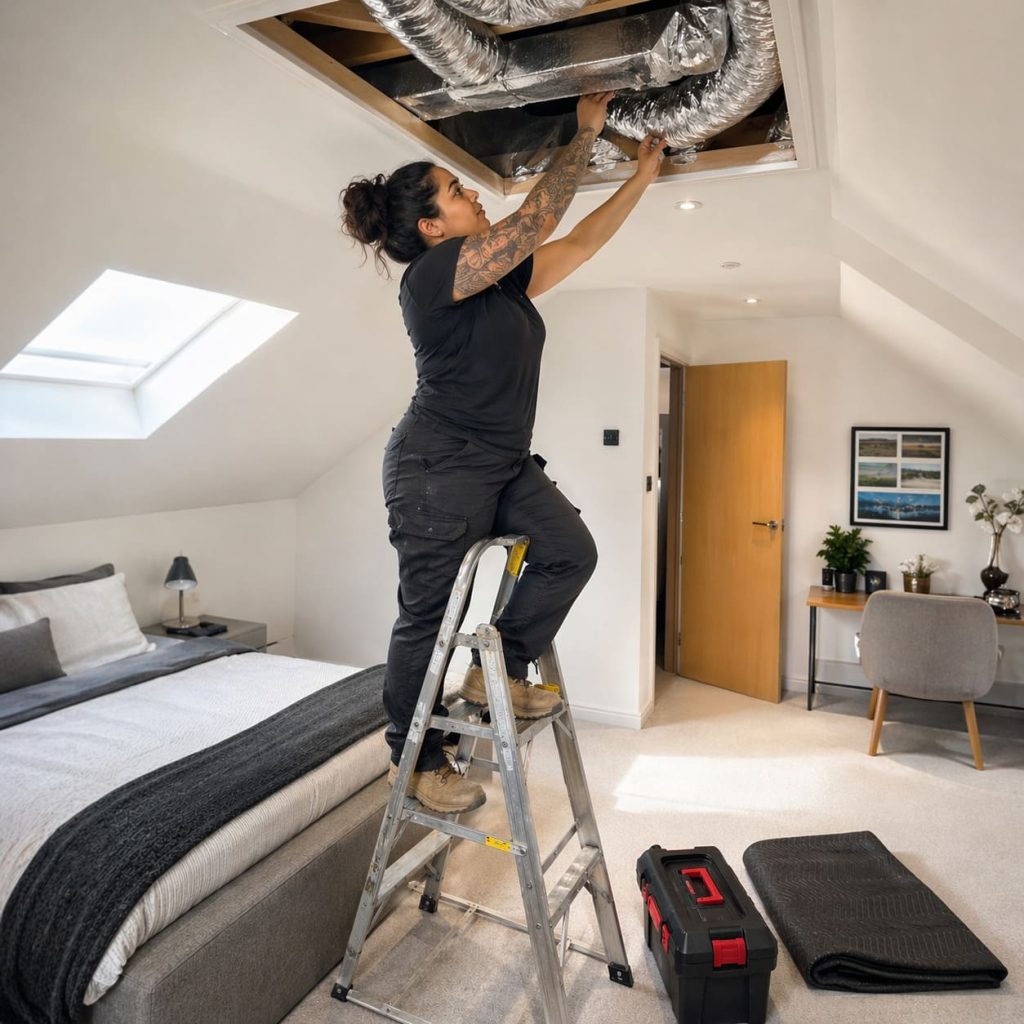
Air conditioning creates condensate during cooling
Air conditioning removes moisture as well as heat, so water production is part of normal operation. Leakage inside the room is the fault, and water should not be there.
Warm indoor air passes across the evaporator coil, which is the cold part inside the indoor unit. Moisture in that air condenses on the coil, then runs into a drain pan. From there, it should leave through a condensate drain line or drain hose.
Gravity drainage works where the pipe can fall continuously to a suitable outlet. Pumped drainage is used where water has to travel upwards or across a longer concealed route. A condensate pump then moves the water away instead of relying on gravity.
London properties complicate that route. In a West or North West London flat, office or refurbished house, the drain line may run through joinery, cupboards, risers or a ceiling void. A leak at the indoor AC unit can therefore start with a problem some distance from the visible drip.
Larger systems use the same basic water path. Ducted air conditioning, ceiling cassette units and variable refrigerant flow or variable refrigerant volume systems, known as VRF or VRV systems, still need collected condensate to leave cleanly. Once that path fails, water finds the weakest exit point.
Several faults can produce the same indoor drip
A split AC leaking water from the front, a cassette dripping at one corner and a ducted vent marking a ceiling can all look like separate problems. In practice, the cause usually sits in one of two groups: drainage and pump faults, or airflow and cooling faults.
Drainage and pump faults
A blocked or bent condensate drain hose is a common practical cause of water dripping from an indoor AC unit. If the drain cannot move water away, the pan fills and the unit starts leaking from the indoor outlet, front edge or surrounding trim.
Dust inside the drain pan can also clog the drain piping and cause leakage. Operating an air conditioner without filters lets dust build up inside the unit, which makes that problem more likely over time. Drain pans are not decorative trays; they are part of the water management system and need proper access for cleaning.
Pumped systems add another failure point. Where a condensate pump stops working, water that cannot drain by gravity has nowhere useful to go. Ceiling cassette units and ducted systems often depend on this arrangement, so a small drip can be the first visible sign of a hidden drainage issue.
Poor fall on the drain line, a unit that is not sitting correctly, or inaccessible pipework can make the same leak come back. That does not prove the original installation was poor, but repeated leakage deserves a wider look than clearing the nearest visible outlet.
Airflow and cooling faults
A dirty indoor air filter restricts airflow across the evaporator coil. Manufacturer guidance links continued leaking from the indoor air outlet, where water is still draining outside, with a dirty indoor filter and the need to keep the filter maintained.
Coil icing can also end in an indoor water leak. Ice forms on or around the evaporator coil, then melts after shutdown or during operation, sending more water into a drain system that may already be struggling. The visible drip is still condensate, not refrigerant.
Refrigerant faults sit in a different category. Low refrigerant or another cooling fault can contribute to icing, but visible water is not gas leaking out. Any work on the refrigerant side belongs with a qualified air conditioning engineer, because the sealed circuit is not a homeowner maintenance task.
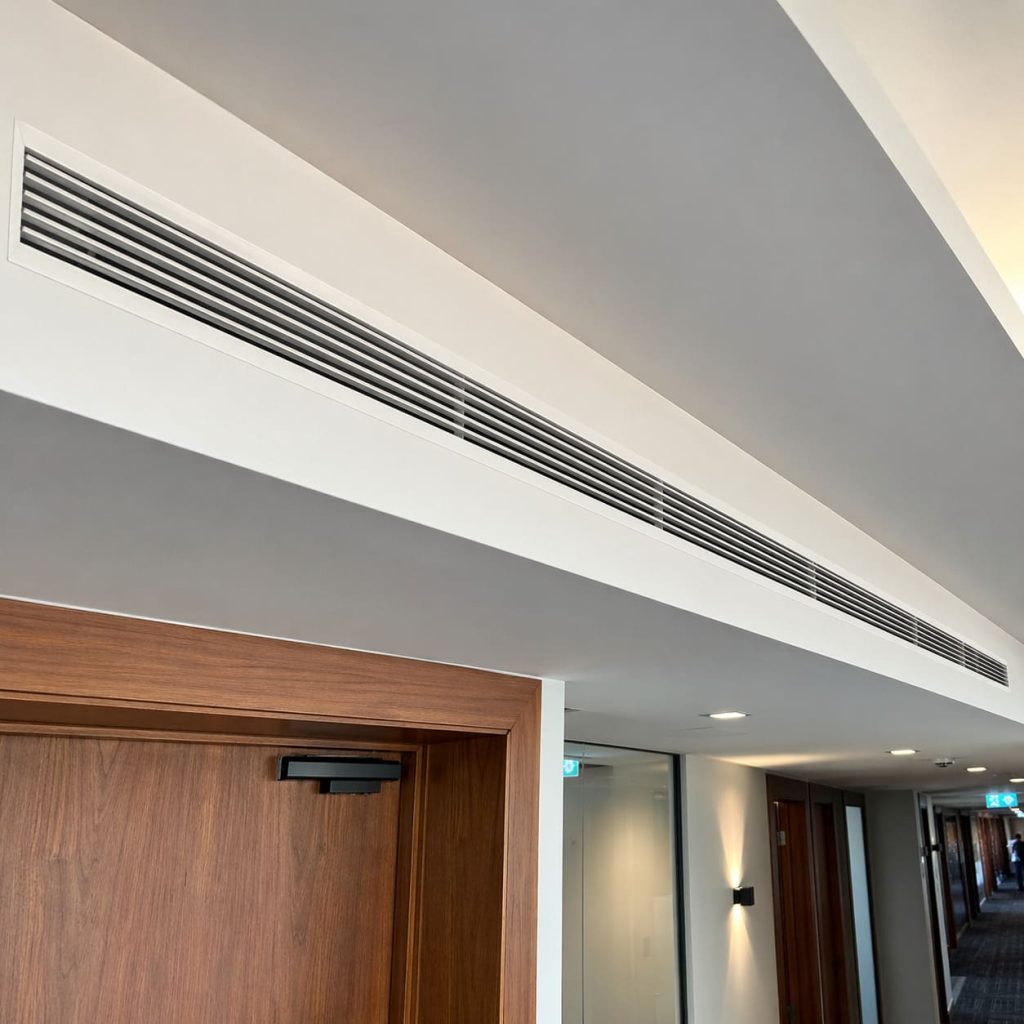
If the leak appears only after shutdown, note the timing before the unit is switched off again. That detail can help distinguish delayed condensate movement from a live drainage problem.

Safe checks come before dismantling anything
Useful checks are observation, not repair. You can learn a lot without opening ceiling voids, dismantling a pump or interfering with wiring.
- Look for water leaving the drain hose outside, if the outlet is visible and safe to reach. No discharge during cooling points attention back to the drainage path.
- Check the end of the drain hose for an obvious obstruction. Remove only what is clearly blocking the outlet, without pushing tools into concealed pipework.
- Inspect the indoor air filter if the manufacturer’s instructions show how to access it safely. A visibly dirty filter supports an airflow-related cause, especially if water is still leaving the outside drain.
- Note when the leak appears. Dripping during cooling, after shutdown, or from a ducted vent gives an engineer useful fault information.
- Record where the water appears. A front panel leak on a wall-mounted split system tells a different story from staining around a ceiling cassette or ducted grille.
For a London specialist such as RightAir Solutions, diagnosis is rarely limited to the drip itself. The drain route, pump arrangement, access constraints and maintenance condition all matter, particularly in finished homes and commercial spaces where pipework can disappear behind expensive surfaces.
Stop at the point where access panels, electrics, pumps or refrigerant pipework become involved. GOV.UK F-gas guidance from September 2024 says technicians working on equipment containing F-gas, which means fluorinated greenhouse gas, need the relevant qualifications for tasks such as installation, servicing, repair, leak checking and recovery.
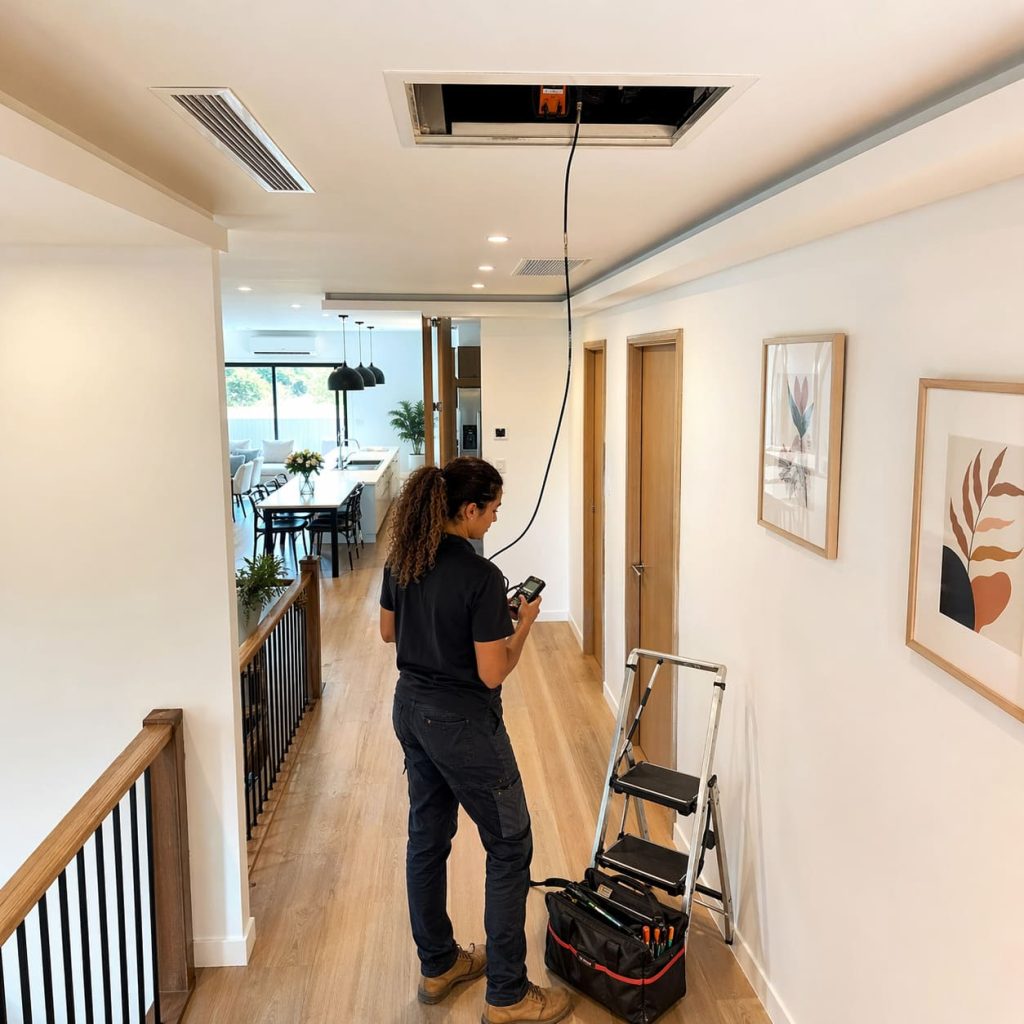
Certain leak signs call for professional diagnosis
A ceiling cassette leaking into a finished ceiling deserves faster attention than a small drip into a clear plastic tray below a visible wall unit. Water inside a ceiling void can travel before anyone sees the full extent of the damage.
| Monitor briefly after safe checks | Arrange professional diagnosis |
|---|---|
| Water stops after the unit is switched off and the area is protected | Water is near electrical components or controls |
| The outside drain outlet had a clear, removable obstruction | Water stains plaster, flooring, joinery or decorative finishes |
| The filter is visibly dirty and manufacturer cleaning guidance is clear | Leakage comes from a ceiling cassette, ducted vent or concealed unit |
| The leak is a first-time issue with no sign of spreading | Dripping repeats after the obvious checks have been made |
Cooling performance is not the only test. An air conditioner can still cool a room while water damages plaster, cabinetry, flooring, stock or equipment below. Property managers in West and North West London should treat recurring leaks as a building-risk issue as well as an air conditioning fault.
Concealed systems deserve particular care. Ducted air conditioning and cassette units hide much of the condensate route above ceilings or within voids, so the visible mark may be some distance from the actual restriction. Once water has reached a finished surface, guessing from below is a poor substitute for checking the route properly.
In concealed systems, check whether the stain is directly below the unit or offset from it. Water often travels before it shows on a finished ceiling or wall.

Recurring leaks are prevented by looking at the whole condensate path
Longer-term prevention starts with the parts that handle water every time the system cools: the indoor air filter, drain pan, condensate drain line and condensate pump. Planned maintenance keeps those parts clean, easy to reach and working together.
Concealed installations need a practical service plan. If a drain line runs behind joinery or above a decorated ceiling, the design should allow for future inspection and cleaning. A system that cannot be accessed properly will be harder to keep dry inside the property.
Repeated mopping treats the symptom. Proper diagnosis asks why the water left its planned route, whether the filter and drain pan are being maintained, whether the pump is suited to the route, and whether the installation gives enough access for servicing.
One approach waits for the next drip, protects the floor again and clears whatever is easiest to reach. The better long-term approach treats the condensate path as part of the system’s design, with maintenance and service access considered together. That is the difference between a leak that keeps returning and a system that is built to stay dry where it matters.
Common questions about air conditioning water leaks
Why does the leak appear after the air conditioner has been turned off?
Water can appear after shutdown if condensate or melted ice continues to run into a drain route that is restricted or overwhelmed. The timing is useful information because it can point to coil icing, drainage delay or pump issues.
Can a dirty filter really make an AC unit leak water?
A dirty indoor air filter can restrict airflow and contribute to condensate problems at the indoor unit. If the manufacturer’s instructions allow safe access, checking the filter is a sensible early observation.
Does a water leak mean refrigerant is leaking?
Visible water from an indoor air conditioner is normally condensate, not refrigerant. Refrigerant is part of a sealed circuit, and refrigerant-side checks or repairs need a suitably qualified technician.
Why does a ceiling cassette leak need quicker attention?
A ceiling cassette leak can send water into a ceiling void before the damage is fully visible. Staining around the cassette or nearby ceiling should be treated as a sign that the hidden drain route or pump needs checking.
Should a landlord or managing agent keep the system running if tenants report dripping?
A system that is actively dripping indoors should be switched off while the area is protected and the cause is assessed. Continuing to run it because the room still feels cool risks avoidable damage to finishes and nearby materials.
This is general information, not professional advice.
