How should your London gym or fitness studio be cooled?
Your gym or studio needs a system planned around peak use, activity type, fresh air, noise and service access. A standard wall unit chosen by room size alone can leave busy classes hot, stale or unevenly cooled, especially in London premises with tight plant positions and shared neighbours.
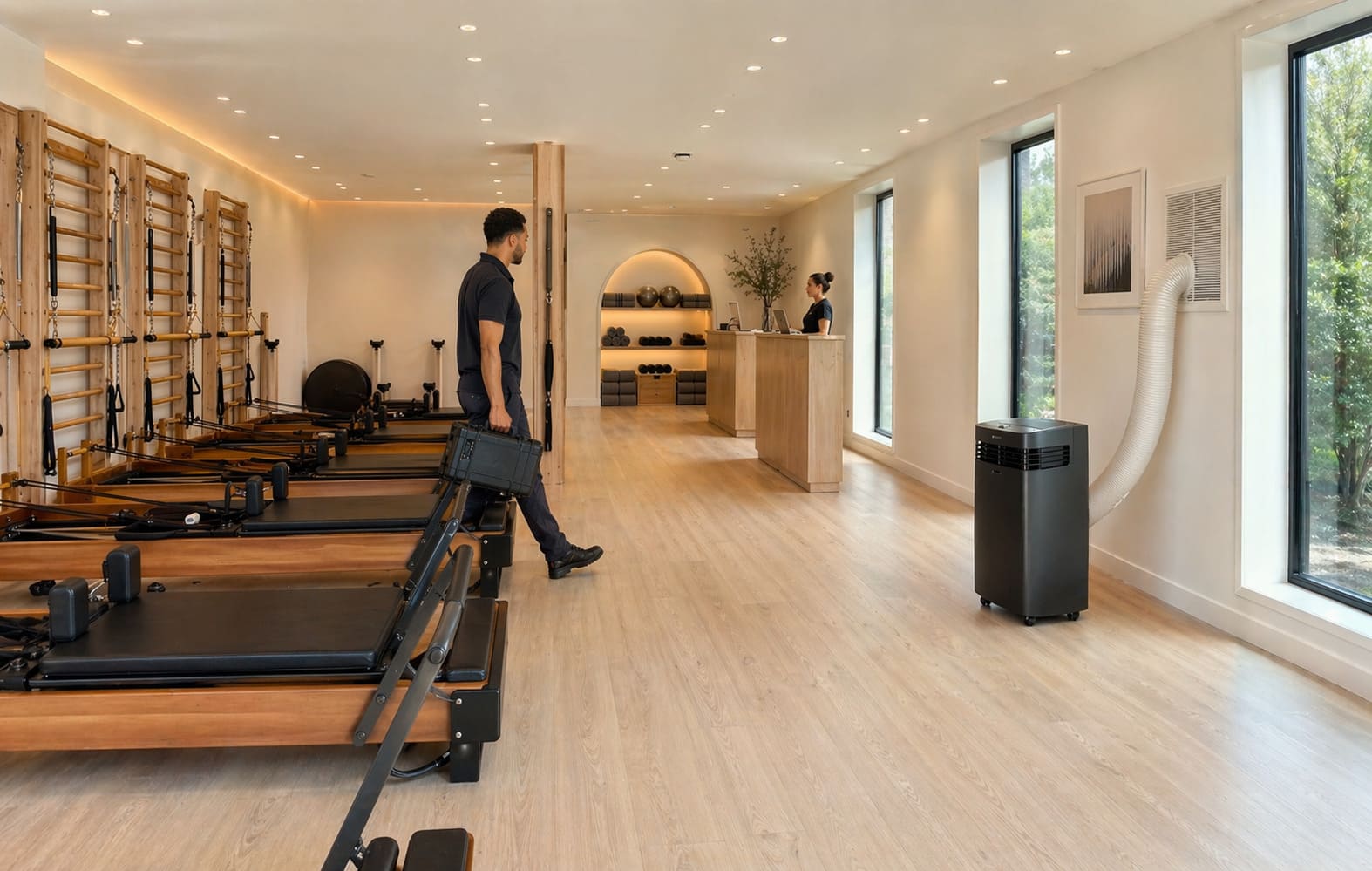
A wall unit alone rarely suits fitness spaces
A compact training studio installs a wall-mounted unit sized like a small office. Mid-morning personal training sessions feel acceptable, but the evening class still overheats. The unit runs hard, one side of the room gets a draught, and the far corner remains uncomfortable.
That pattern is common because fitness spaces are driven by people, movement and airflow. Room size matters, but peak class load and exercise intensity often decide what the system has to handle. Equipment, lighting and poor air movement add to the heat gain, so a simple cooling calculation based on floor area misses the real use of the room.
Sport England’s fitness guidance gives a useful reference point: it recommends 16 to 18°C for a fitness gym and 18°C for studios. Those figures are guidance rather than a single rule for every class, but they show why air conditioning for gyms needs a tighter brief than ordinary office cooling.
Cooler air is not the same as a controlled training space. A poorly placed unit can make one reformer Pilates bed too cold, while a high-intensity training zone still feels stale. The first specification question is how your space is used at its busiest, then the equipment can follow.
Free consultation on air conditioning, ventilation and refrigeration, tailored to your property.
Book a Free ConsultationCooling and ventilation do different jobs
Air conditioning controls temperature, while ventilation supplies and removes air. A gym can have cold air moving around and still feel stale if the system is mainly recirculating the same indoor air.
| Job | What it helps with | What it does not solve alone |
|---|---|---|
| Cooling | Heat from people, equipment and busy sessions | Stale air if no fresh-air strategy is in place |
| Ventilation | Fresh-air supply, extract air and indoor air quality | Overheating if the cooling system is undersized |
| Humidity control | Moisture build-up during classes | Poor zoning or bad unit placement |
Many air conditioning systems cool room air and send it back into the same space. That can be entirely normal, but it means gym ventilation must be considered separately. In a basement studio, sealed shopfront unit or no-window training room, fresh-air ventilation for studios is often the missing part of the design.
Sport England recommends a minimum fresh-air ventilation rate of 20 litres per second per person for both fitness gyms and studios, based on peak occupancy. The same guidance also recommends relative humidity preferably below 60%, provided good fresh air and comfort cooling are supplied. Those two points matter because odour complaints and stuffiness usually come from air change, humidity and occupancy, rather than cooling alone.
Approved Document F, Volume 2 covers ventilation guidance for buildings other than dwellings and Part F of the Building Regulations. For spaces where aerobic exercise is likely, indoor air quality monitoring can also form part of the picture. Where carbon dioxide monitoring is used, the right type and position matter because a monitor in the wrong place gives staff poor information.
A specialist installer such as RightAir Solutions would usually survey occupancy, use patterns, plant location and ventilation before specifying a system. That avoids the common mistake of quoting air con for fitness spaces without checking whether the fresh-air side is doing enough work.
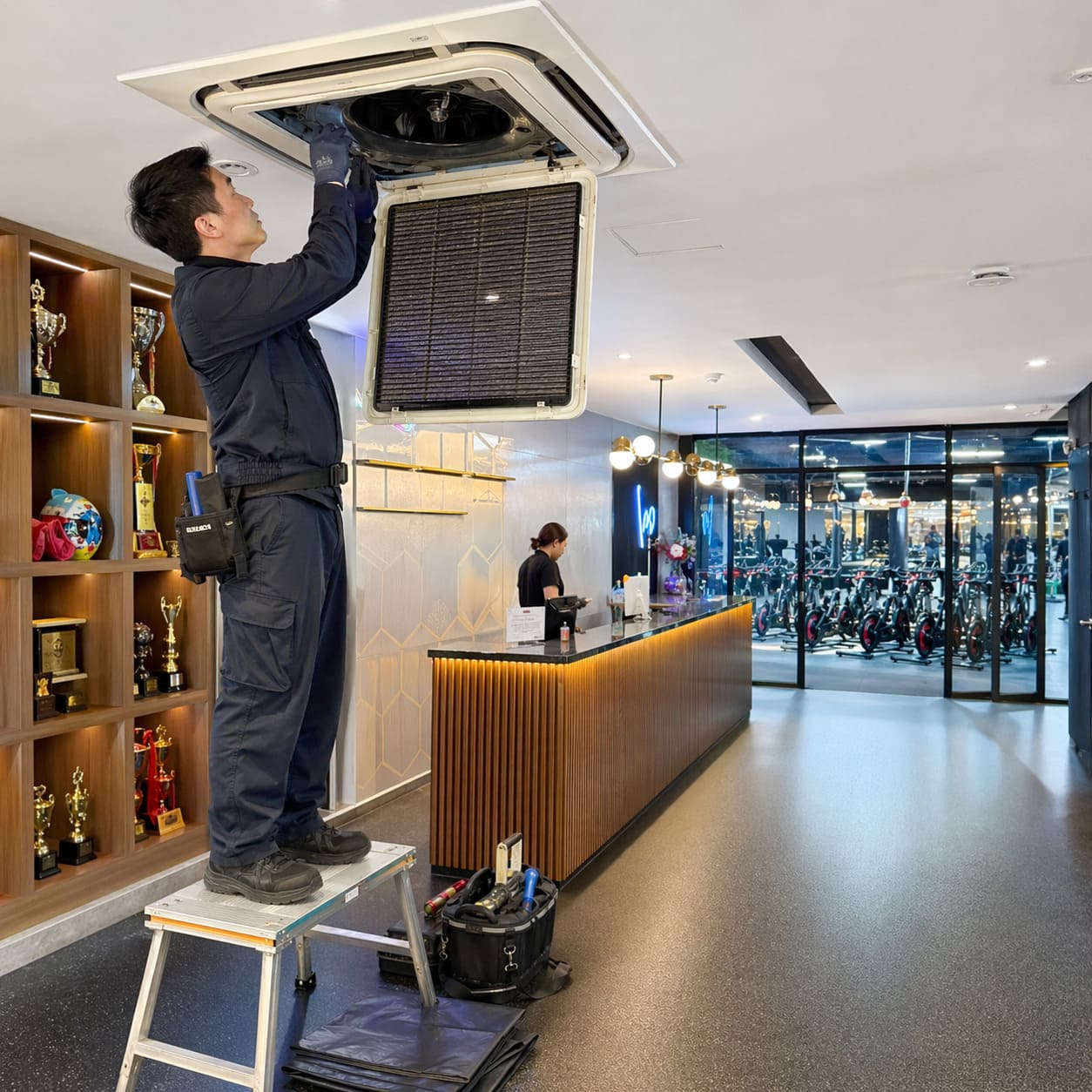
In a gym or studio, check the route for condensate drainage before finalising the unit position. A difficult drain route often creates more disruption later than the cooling equipment itself.

The layout should choose the system
The right gym air conditioning system comes from the floor plan, the class timetable and the practical routes through the building. Product names matter less than whether each area can be cooled, controlled and serviced without one zone compromising another.
A gym floor, spin room, yoga studio, reception and changing area do different jobs. Treating them as one open space can overcool low-activity areas and still leave high-intensity rooms behind during peak sessions. Zoning allows each part of the premises to be matched to its use.
Common options include split air conditioning, where one outdoor unit serves one indoor unit, and multi-split systems, where one outdoor unit serves several indoor units. Ducted air conditioning can suit premises where grilles and concealed routes work with the building. Ceiling cassette units can suit open areas with suitable ceiling space. A variable refrigerant volume system, often shortened to VRV or VRF, can serve several zones from a larger shared outdoor system, which suits some commercial layouts but needs proper design.
A professional design sequence usually runs in this order:
- Map the zones. Separate the gym floor, class rooms, reception, changing areas and staff spaces before choosing equipment.
- Check peak occupancy and activity type. A calm studio session and a packed high-intensity class do not place the same demand on the system.
- Identify indoor and outdoor unit positions. Pipe routes, ceiling voids, drains and plant space all shape what will work in practice.
- Plan controls and access. Staff need simple controls they can use during the working day, not a confusing panel that gets overridden.
- Match the system type to the constraints. The selected unit style should follow the building and use pattern, rather than leading the brief.
For studio air con installation in London, this order saves time later. It stops the design being driven by the neatest product brochure and keeps the focus on how members, staff and maintenance engineers will actually use the space.
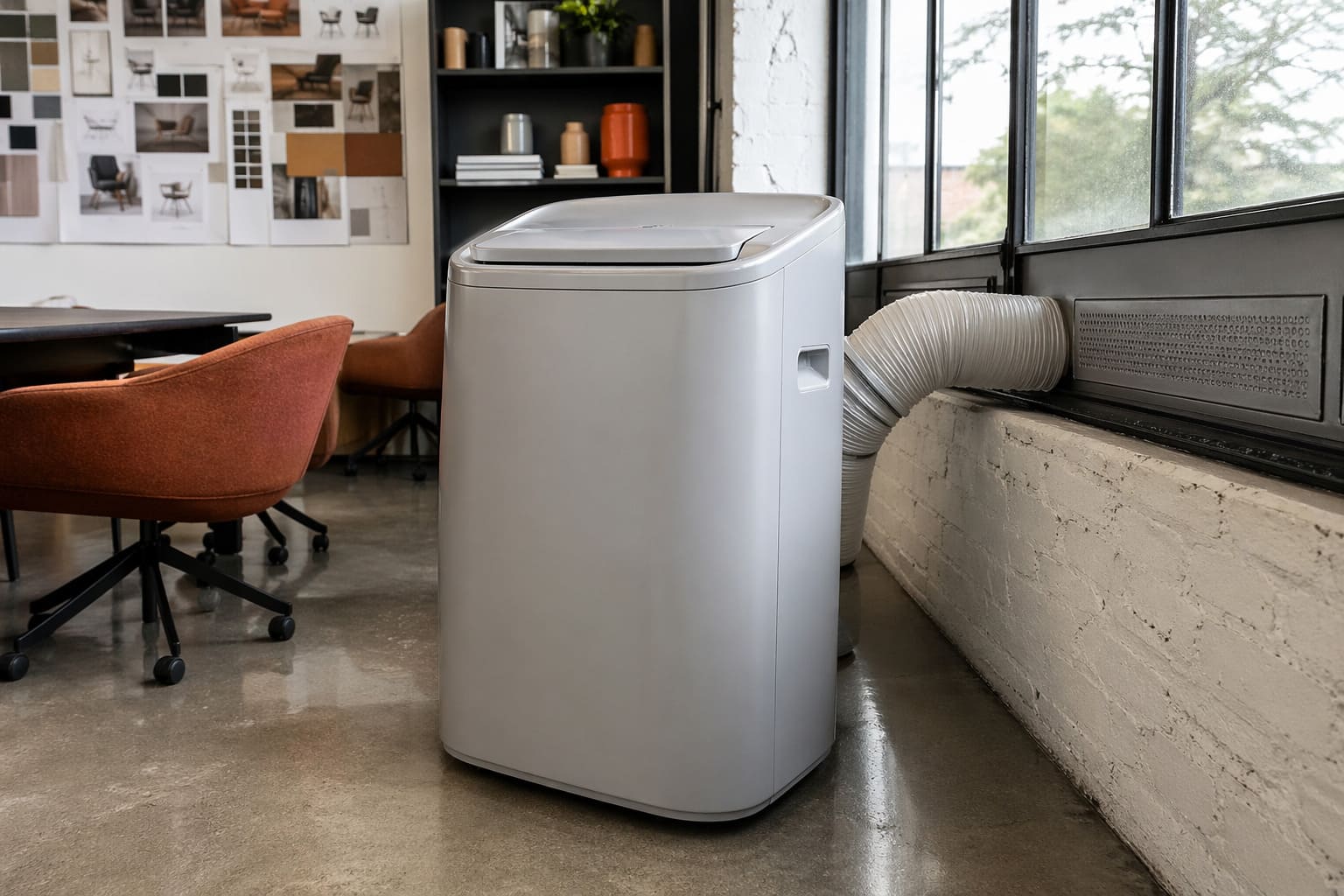
London buildings often decide the detail
In London, the constraint is often placement. Commercial gym cooling can be technically straightforward on paper, then become more complicated once outdoor condensers, shared walls, roof access and lease limits are considered.
Noise and neighbour sensitivity
The quietest indoor unit will not help if the outdoor plant irritates a neighbour. Mixed-use buildings across West and North West London often place studios below flats, beside offices or behind residential elevations, so vibration and fan noise need attention before equipment is selected.
Approved Document F says mechanical ventilation systems should be designed and installed to minimise noise, with attention to duct sizing, secure fixing and resilient mountings where structure-borne noise could be a problem. In plain terms, the system needs to be fixed, routed and supported properly, because noise problems rarely come from the indoor controller alone.
Outdoor plant and visible services
Outdoor unit positions can be limited by rear elevations, flat roofs, visible services, landlord consent or local planning sensitivity. The question is whether a condenser can sit in a position that works acoustically, visually and practically for the property.
Air intakes also deserve more thought in dense city locations. Approved Document F advises that, for buildings next to busy urban roads, air intakes should be as high as possible and on the less polluted side of the building. That point matters for London gym air conditioning because fresh-air design can be weakened by a poor intake position.
Access for installation and servicing
Older buildings and converted commercial units often limit pipework routes, condensate drains and ceiling access. A clean installation still needs panels, safe access to filters and sensible routes for engineers, especially where the studio cannot afford disruption during trading hours.
Planning, lease and building-control checks are normal parts of a proper survey. They should not become your guessing game, and they should not be left until the system has already been chosen.
If the building has mixed use or shared neighbours, treat outdoor unit noise as part of the specification from the start. A quieter installation depends on location, mounting and access as much as on the model chosen.

Service access protects performance
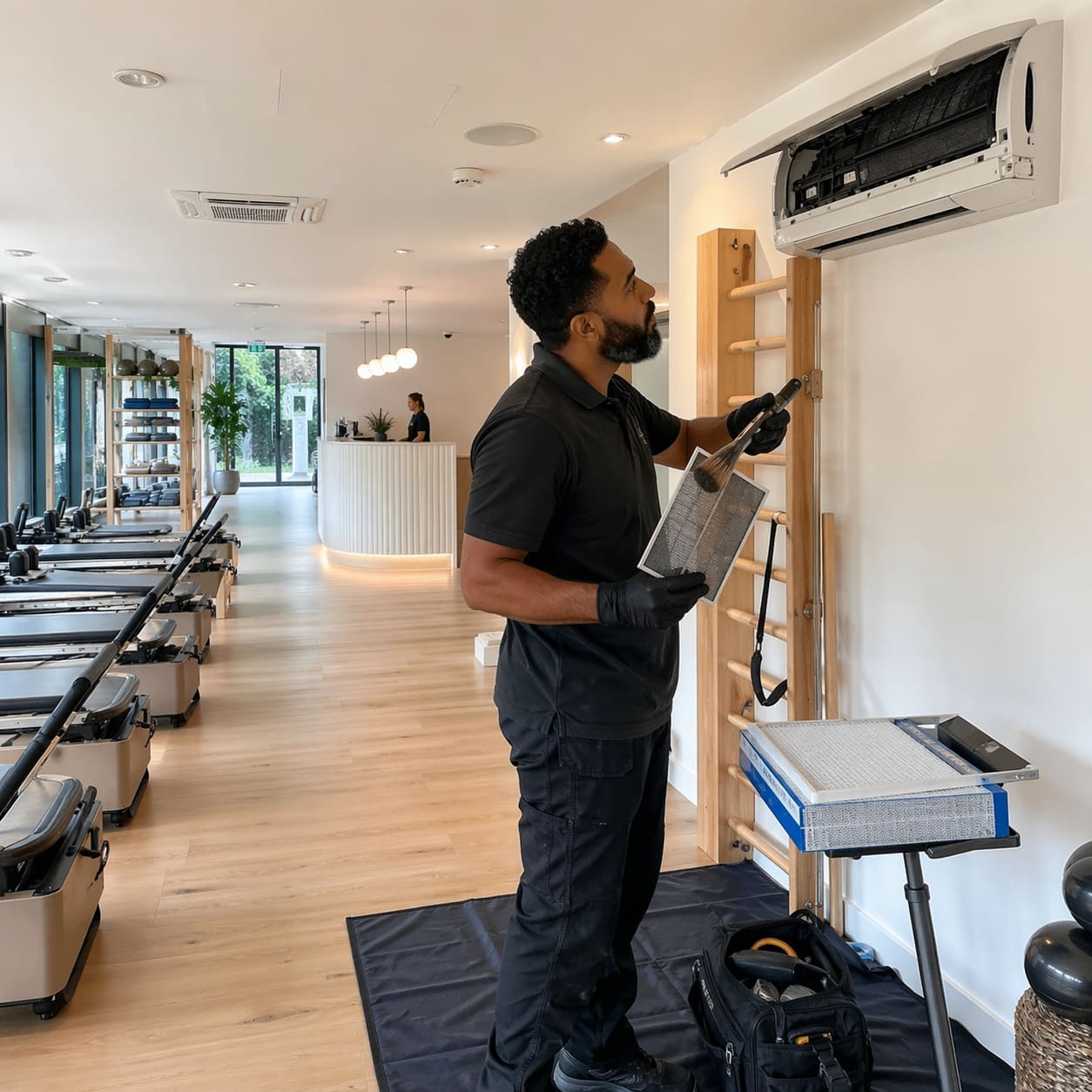
When a studio is in daily use, the system starts working harder than it would in a quiet office. Filters load, coils need cleaning, drains need checking, and controls need to stay simple enough for staff to use correctly.
Fitness studio air con servicing begins before installation, because maintenance access has to be designed into the job. If a filter sits above a finished ceiling with no sensible access panel, every future service visit becomes harder than it needed to be. If an outdoor unit can only be reached awkwardly, routine checks become a bigger interruption.
Commercial operators also need to know when formal inspection duties apply. GOV.UK guidance says that in England and Wales, air conditioning systems with an effective rated output of more than 12kW must be inspected by an energy assessor at intervals of no more than five years, and smaller units count together if their combined output passes that threshold.
Maintenance should cover the working parts that affect airflow, hygiene and reliability. Filters, coils, condensate drains, outdoor units and controls all influence how the system performs during busy sessions. RightAir Solutions treats this as part of the system lifecycle, so design, installation and servicing are considered together rather than as separate decisions.
A gym system stays reliable because engineers can reach the parts that need attention, not because the equipment looked tidy on installation day.
Clear pricing, realistic timelines and honest advice from an experienced London installer.
Request a QuoteCommon questions about gym and studio air conditioning
Do UK gyms legally need air conditioning?
UK gyms do not have a blanket legal requirement to install air conditioning. In practice, many fitness spaces need comfort cooling and proper ventilation to keep conditions workable during busy use.
Why does a gym feel stuffy even when the air con is on?
A gym can feel stuffy because the air conditioning may be cooling recirculated indoor air without bringing in enough fresh air. Ventilation, humidity control and extract air need to be planned alongside cooling.
Can air conditioning help with gym smells?
Air conditioning can help indirectly by controlling temperature and humidity, but odour control depends heavily on fresh-air supply, extract air and cleaning. A cooling-only unit will not solve stale air by itself.
Does a London gym need planning permission for external air conditioning units?
Planning depends on the premises, local authority, plant position, noise, visibility, building status and lease terms. A proper survey should flag those constraints before equipment is selected.
What matters most when choosing air conditioning for a small fitness studio?
The main priority is matching the system to peak class use, ventilation needs, noise limits and service access. A compact studio can still need a carefully planned system if it runs busy sessions in a sealed or mixed-use London building.
This is general information, not professional advice.
