What should your commercial air conditioning maintenance contract include?
A proper commercial air conditioning maintenance contract should state which equipment is covered, how often visits happen, what work is done, what records you receive, how faults are handled and what costs sit outside the agreement. Vague wording like “full maintenance” leaves too much room for argument.
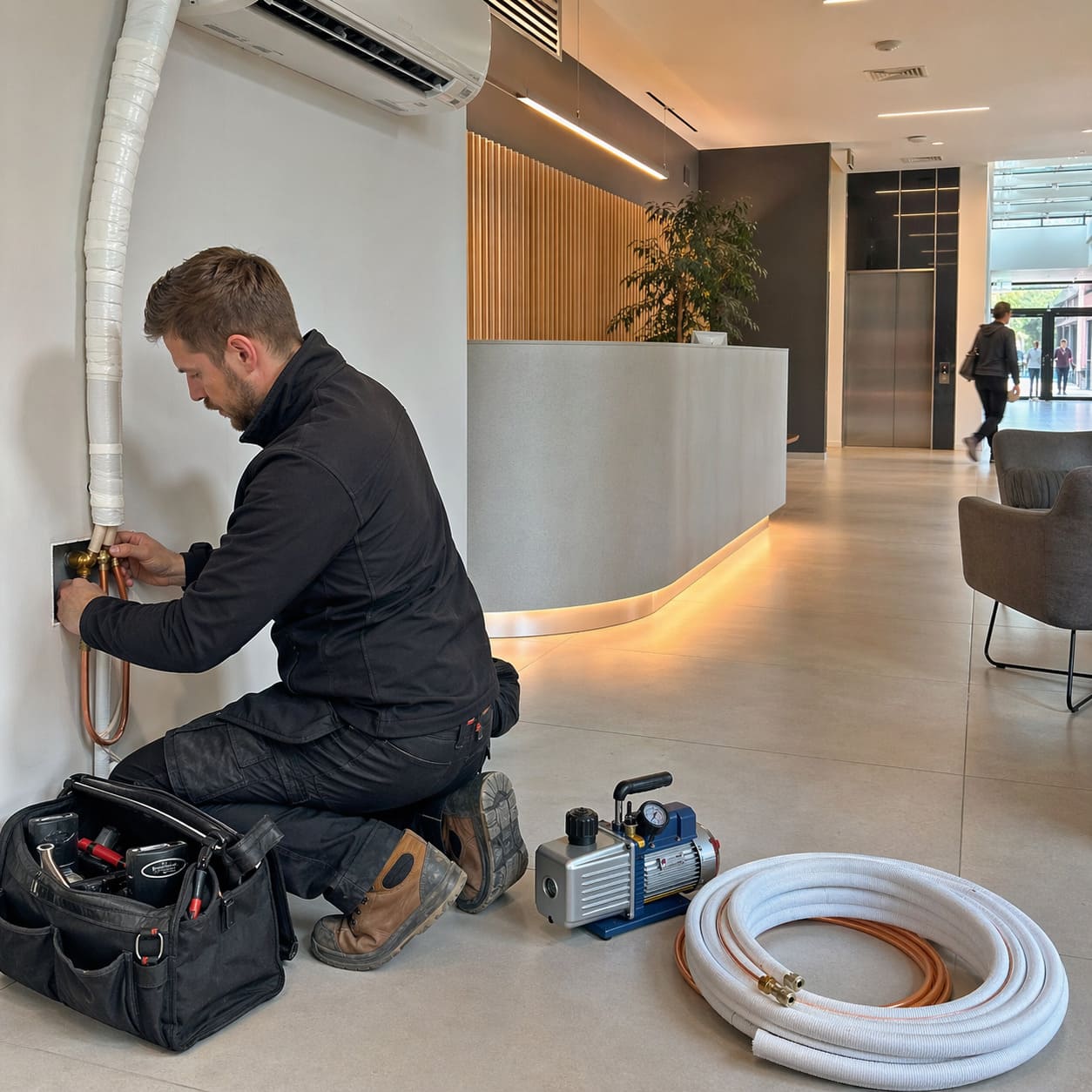
The contract should name exactly what is covered
A contract that says “all air conditioning covered” can look reassuring until a condensate pump fails above a tenant area, a control panel stops responding, or an outdoor unit serving one office is missing from the paperwork. Broad wording does not tell you whether that component was ever part of the air conditioning maintenance agreement.
Asset-level detail matters because commercial buildings rarely have one simple system. You might have wall-mounted indoor units in offices, outdoor condensers on a roof, ceiling cassette systems in meeting rooms, ducted systems above corridors, and controls spread across tenant areas. Larger sites might also use variable refrigerant volume or variable refrigerant flow systems, known as VRV or VRF systems, where one outdoor system serves multiple indoor areas.
A sound HVAC maintenance contract starts with an asset register. That register should identify indoor units, outdoor units, controls, condensate pumps, plant location, unit references, access points and any specialist cooling equipment, such as server room cooling. Serial numbers help, but the practical test is simpler: can someone walk around the building with the schedule and know what the contractor is responsible for maintaining?
Unclear scope creates avoidable disputes. If a fault appears on an unnamed pump, control device or remote outdoor condenser, both sides can spend time arguing about the contract instead of sorting the fault. Good scope is plain, specific and tied to your actual building.
The service schedule should match the building
Planned preventative maintenance, often called PPM, means scheduled visits intended to keep the system clean, checked and working as it should. Visit frequency should follow the equipment, its use and the site conditions, because a fixed pattern copied from another building says little about your own risk.
Useful commercial air conditioning servicing covers the work that keeps faults visible before they become disruptive. A contract should set out the main service tasks in language you can understand, such as:
- Filter cleaning or replacement where the system and setting call for it.
- Coil checks, drain checks and condensate pump checks, especially where water damage would affect tenants or trading.
- Control testing, including time settings, sensors and user controls that staff actually use.
- Electrical checks and operating observations, written clearly enough that a non-engineer can see what was checked.
- Refrigerant-related checks, with leak investigation handled properly where readings or system behaviour point to a problem.
More visits do not rescue a weak task list. A frequent air conditioning service visit that says little more than “inspect system” still leaves you guessing. By contrast, a clear air conditioning maintenance schedule lets you see why an occupied office, clinic, hospitality space or technical room has been treated differently from a lightly used area.
West and North West London properties add their own practical layer. Roof access, basement plant, shared risers, landlord permissions, restricted working hours and presentation-sensitive interiors all affect how maintenance is planned. RightAir Solutions commonly approaches this through survey-led, asset-specific maintenance, because older layouts and occupied premium spaces rarely fit a generic servicing template.

Planned preventative maintenance protects your investment, lowers running costs and keeps the warranty valid.
Request a QuoteWhy maintenance, F-gas and TM44 stay separate
Routine maintenance, F-gas checks and TM44 inspections are often bundled together in contract wording, but they are different obligations and tasks. Your contract should name each one separately if you expect it to be included.
Here is the clean distinction to look for before you sign.
| Item | What it is | What the contract should say |
|---|---|---|
| Routine maintenance | Planned servicing to check, clean and test the system as agreed. | Which assets are covered, visit pattern, task scope, reporting format and exclusions. |
| F-gas checks | Leak checks for equipment containing F-gas, meaning fluorinated greenhouse gas, where the rules apply. | Whether checks are included, how records are produced, and how leaks or refrigerant-related faults are handled. |
| TM44 inspection | An energy inspection under Chartered Institution of Building Services Engineers TM44 guidance, usually called CIBSE TM44, carried out by an accredited air conditioning energy assessor. | Whether arranging or supporting the inspection is included, and how the report is kept separate from maintenance reports. |
GOV.UK states that in England and Wales, air conditioning systems with an effective rated output of more than 12 kW must be inspected by an accredited energy assessor at intervals of no more than five years. Separate individual units can also count together where the combined effective rated output controlled by one person is more than 12 kW, so small units should not be dismissed without checking how control is organised.
F-gas checks need the same clarity. The frequency depends on the amount of F-gas in the equipment and the gas’s global warming potential, measured as CO2 equivalent. A maintenance contract can include F-gas leak checks and leak check records, but the wording must say so. “Compliance support” is not enough on its own.
CIBSE TM44 inspection is separate again. It looks at matters such as system efficiency, controls, system size in relation to cooling load and maintenance adequacy. It is not the same as an engineer cleaning filters or adjusting controls during a service visit.
Responsibility can sit with different parties depending on control, ownership, lease terms and contract wording. For you, the practical point is simple: the contract should say what the contractor does, what records are supplied and what remains for the landlord, tenant or operator to manage.
Keep the asset register aligned with the actual plant in the building, including controls and condensate pumps, because unnamed items are where contract disputes often start.

The response terms should be measurable
What does “priority” actually mean on a hot trading day or during a server room fault? A useful commercial air conditioning repair response separates planned visits, reactive callouts and emergency response instead of treating them as one vague promise.
A planned service visit is scheduled maintenance. A reactive callout happens after a fault has been reported. An emergency response is reserved for situations where disruption is immediate or the affected area needs faster escalation, such as specialist cooling serving technical equipment.
Response time, attendance time and repair time are different things. A contractor might acknowledge a fault quickly, attend later, diagnose the issue on site and then need approval for parts or access equipment before completing the repair. Your service level agreement, meaning the written response commitment, should make those stages clear.
Chargeable items need the same plain treatment. Replacement parts, refrigerant, access equipment, out-of-hours labour, a replacement condensate pump and remedial repairs should be marked as included, excluded or quoted separately. That wording is not negativity. It is how a commercial contract stops operational decisions becoming invoice arguments.
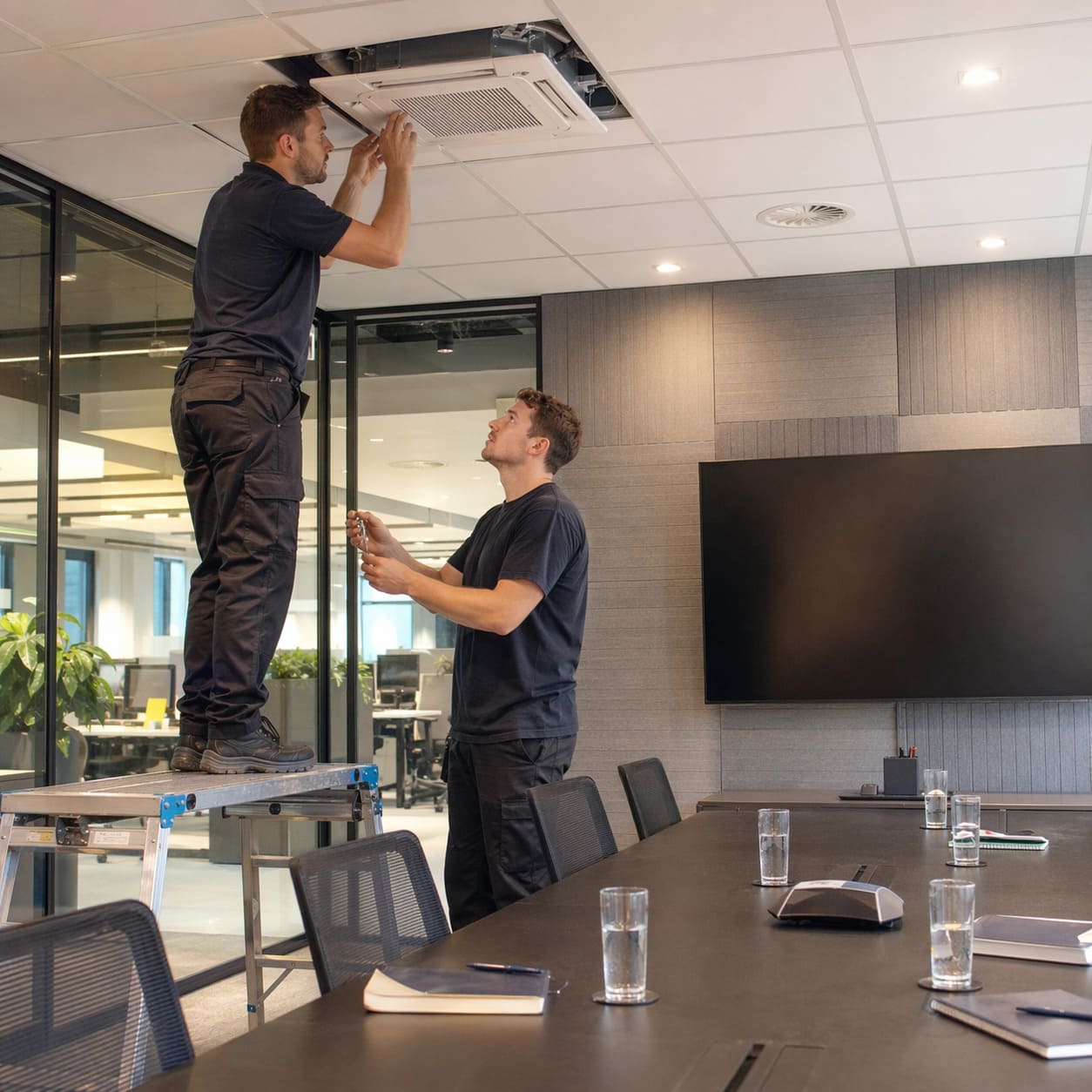
Separate routine maintenance, F gas checks and TM44 inspection in the paperwork, since each one has a different purpose, record trail and compliance implication.

The paperwork should prove the work
The value of a maintenance visit often becomes clear weeks later, when a managing agent needs evidence for a handover, a tenant asks what was found, or a recurring fault appears on the same unit. A useful air conditioning service report gives you more than a tick-box sheet.
Clear reporting should tell you which assets were attended, what the engineer found and what needs further action. Engineer notes matter when they explain a fault observation in plain language, separate completed maintenance from recommended repair work, and flag recurring issues without burying them in jargon.
F-gas records deserve particular care where they apply. GOV.UK says records for relevant equipment should include the quantity and type of gas in the equipment when installed, gas added during maintenance, the dates and results of mandatory leak checks, and what was done to recover and dispose of gas. That record is part of your audit trail, not a spare document for the contractor’s file.
Commercial lease arrangements can make documentation even more useful. A landlord, tenant, owner or managing agent might need to show what was maintained, when a defect was raised and whether a recommendation was accepted. In the West and North West London properties RightAir Solutions is built to serve, that clarity matters because responsibility and access can sit across several parties in the same building.
Records turn maintenance from a promise into evidence.
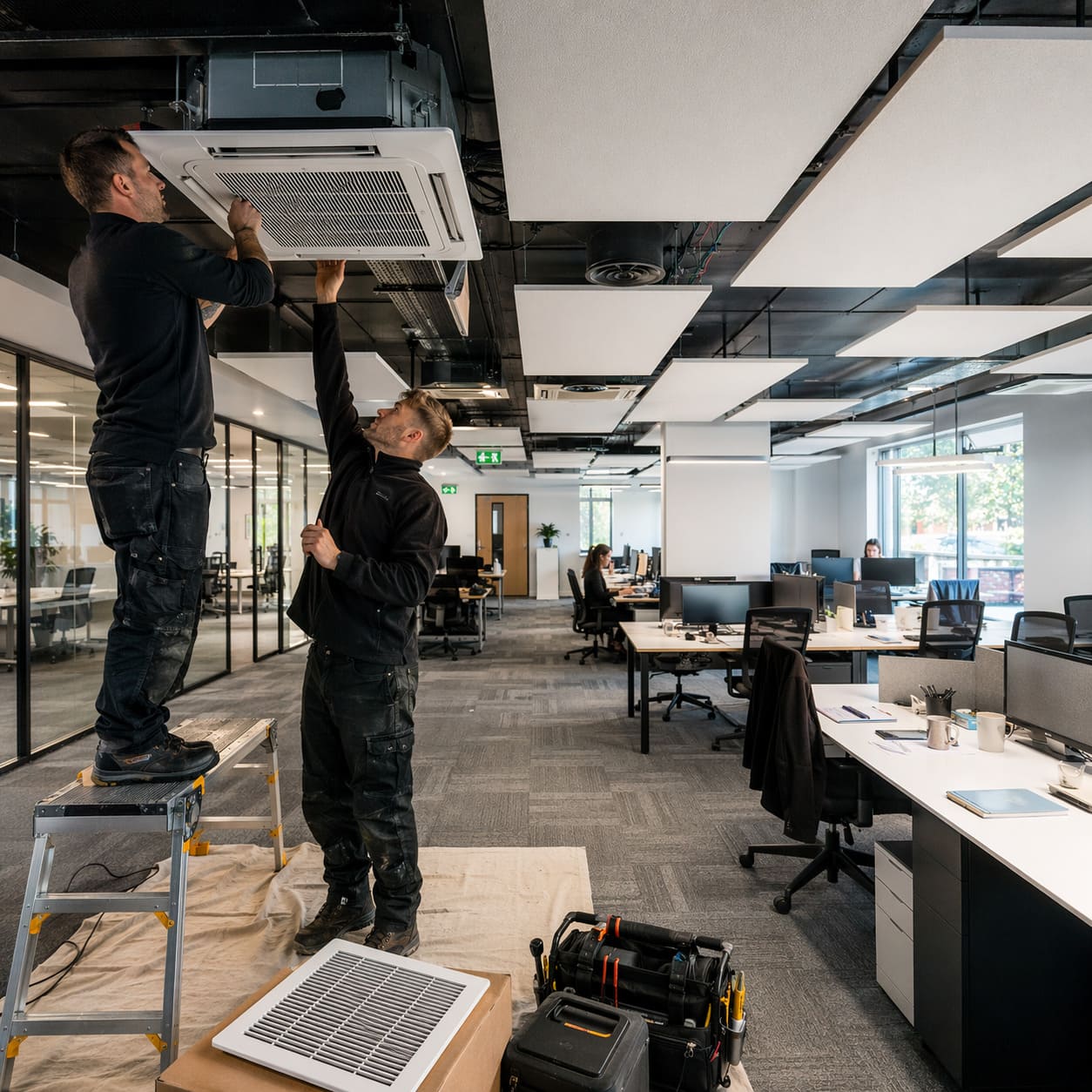
The best contracts are built for change
Over the next 12 to 24 months, many commercial spaces will keep changing how rooms are used. Teams move, tenants change, meeting rooms become video rooms, server loads increase, and controls get adjusted to suit new working patterns. A static contract will drift out of shape if nobody reviews the asset register and response arrangements.
Review points keep the maintenance contract accurate. They give you a moment to check whether the visit pattern still fits the building, whether VRV or VRF systems are serving different loads, whether smart thermostat technology has changed how people use the space, and whether specialist cooling needs a tighter fault route.
Ageing equipment also changes the conversation. A service report might start to show repeated faults on one part of the system, poor control settings or noise issues that affect occupied areas. A good maintenance review separates routine upkeep from upgrade recommendations, so you can plan work without turning every service visit into a sales discussion.
Commercial climate control maintenance will matter more as buildings become less fixed in their use. The contract that protects you best is the one that stays accurate as the building changes.
F-Gas certified servicing, filter changes, refrigerant checks and TM44 inspections, arranged around your schedule.
Book a ConsultationCommon questions about commercial air conditioning maintenance contracts
Are parts included in an air conditioning service contract?
Parts are included only if the contract says they are included. Many agreements treat replacement parts, access equipment and remedial repairs as separate chargeable items, so the wording should be checked before you rely on it.
Does a maintenance contract include refrigerant?
Refrigerant should never be treated as a routine top-up item without investigation. If refrigerant is needed, the contract should explain how leak checks, repairs, records and charges are handled.
Who keeps the air conditioning maintenance records?
Your contract should say what records the contractor supplies and how they are shared with the person responsible for the system. In commercial buildings, owners, tenants, landlords and managing agents may all need access to service history at different points.
Is TM44 the same as a normal service visit?
TM44 inspection is not the same as routine servicing. A TM44 inspection is an energy inspection by an accredited air conditioning energy assessor, while a service visit deals with maintenance tasks agreed in the contract.
What is the biggest warning sign in a vague HVAC maintenance contract?
The biggest warning sign is wording that promises maintenance without naming the assets, visits, records, response terms and exclusions. A contract that does not spell those out leaves you guessing when a fault appears.
This is general information, not professional advice.
