Should your London business repair or replace its air conditioning?
Repair is sensible when a fault is isolated, explainable, and the rest of the system still performs reliably. Replacement becomes the better business decision when faults repeat, comfort slips, noise or leak concerns grow, parts are hard to source, or every repair causes fresh disruption to your premises.
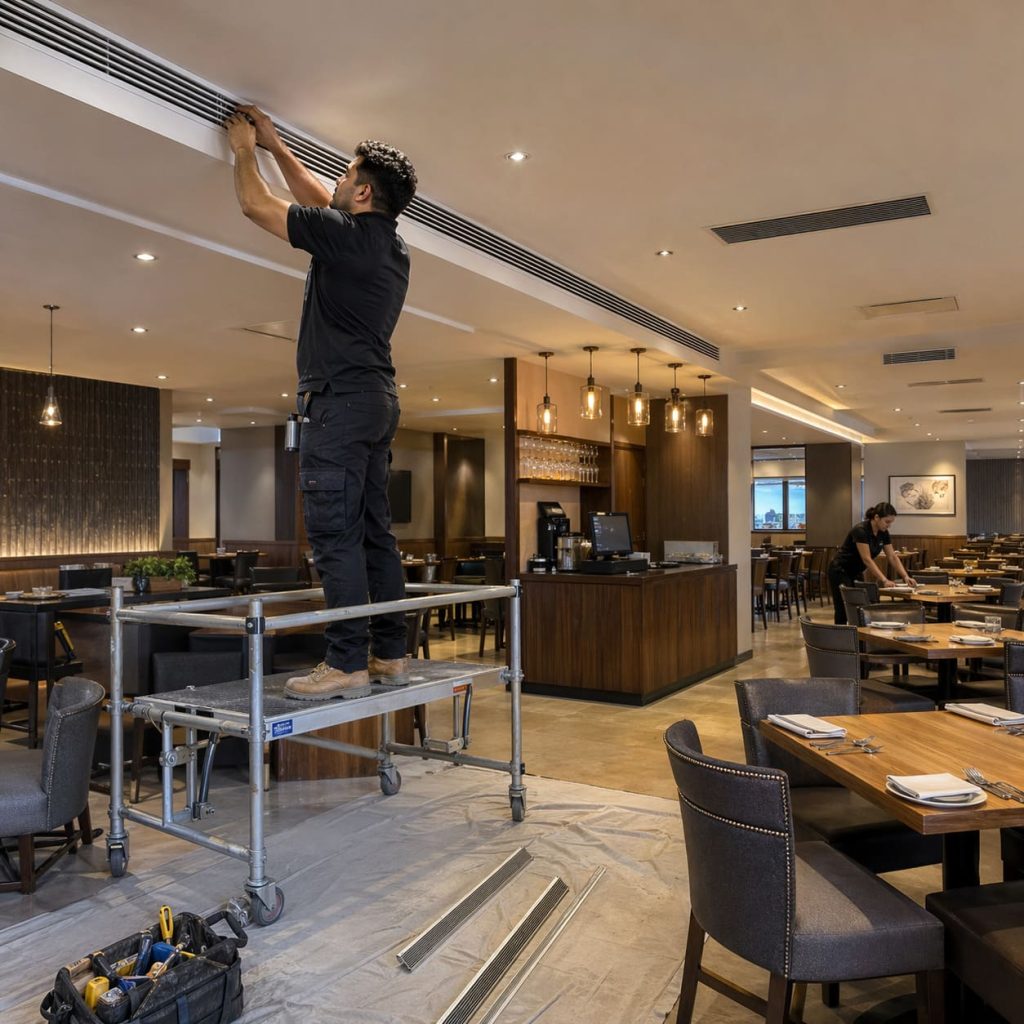
The useful split is a one-off fault versus a pattern
Another callout changes the conversation. A single failed part in an otherwise stable system is one thing; repeated callouts across the same commercial air conditioning system point to a different problem, especially when staff, tenants, customers, or equipment keep being affected.
Repair fixes a fault; replacement solves a pattern. That distinction matters because a system can still be repairable without being a good business asset. If every repair buys a short run of relief before poor cooling, weak airflow, noise, or controls trouble comes back, the issue has moved beyond the part that failed that week.
No UK rule says a commercial air conditioning system must be replaced after a fixed age. Age helps frame the decision, but evidence carries more weight: maintenance records, fault history, refrigerant type, parts availability, inspection reports, operating hours, and the way your building is used.
Repair still has a place
A good repair decision has evidence behind it. If the diagnosis is clear, the rest of the system is stable, and the work does not create serious business interruption, repairing an old air conditioning unit can still be sensible.
The comparison below is a practical way to separate a contained fault from a system that deserves a replacement plan.
| Repair is more defensible | Replacement deserves attention |
|---|---|
| A single part has failed and the cause is clear. | Different faults keep appearing after previous visits. |
| Cooling and airflow remain consistent elsewhere. | Rooms stay uneven after repairs and adjustments. |
| Parts can still be sourced without long delays. | Obsolete or hard-to-source parts keep extending downtime. |
| Maintenance records show regular care and few faults. | Logs show repeat callouts, leak work, or recurring control issues. |
| A short repair avoids disruption during a busy trading period. | Repairs themselves now disrupt trading, tenants, clinics, or office use. |
Timing has a legitimate place in the decision. A retail unit in a busy trading period or an occupied practice in West London may choose a targeted repair as a bridge, provided everyone is clear that the repair is buying time rather than resetting the system’s life.
Repairs need diagnosis and records, not hope dressed up as thrift.
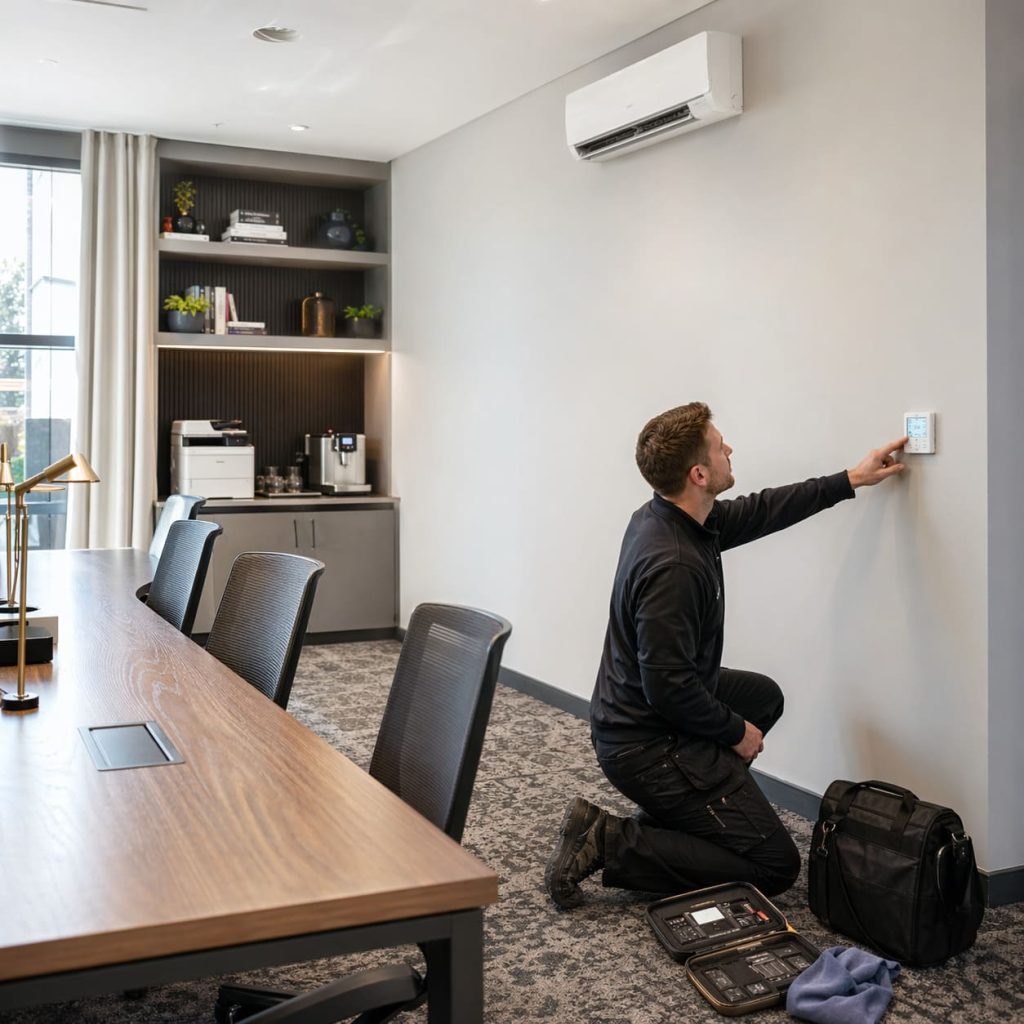
Replacement signs appear when faults start affecting the business
One fault gives you information. Repeated faults give you evidence. The warning signs that matter most are the ones that affect comfort, continuity, access, noise, and confidence in the system.
Fault patterns matter more than age
Older equipment is not automatically finished. A well-maintained system with a contained fault, clear service history, and available parts can carry on doing useful work. By contrast, a system with repeated compressor issues, failing controls, inconsistent airflow, or worsening noise is no longer giving you a simple repair question.
Commercial air conditioning replacement signs often show up as operational irritation before total failure. Staff move desks because one area is too warm. A server room needs extra attention because cooling is no longer dependable. Tenants complain that a repair has made little difference. Those problems are not solved by asking whether the unit can be made to run again for now.
Controls matter here. If zoning no longer suits the way the premises are used, another part replacement may restore operation without fixing comfort. A system installed for a previous layout can be a poor fit after a fit-out, a new tenancy, or a change in operating hours.
Refrigerant issues change the calculation
Refrigerant concerns are different from a weak fan or a faulty controller because they carry service, performance, and record implications. Fluorinated greenhouse gas, commonly called F gas, is used in some air conditioning equipment, and leaks cannot be treated as a routine top-up matter.
GOV.UK F gas guidance says that if an F gas leak is found during a check, it must be repaired as soon as possible and the test must be repeated within one month to confirm the repair worked. That single point changes the way you judge repeated leak-related work. If the same system keeps needing attention around refrigerant, another repair may be a poor way to manage risk.
Refrigerant type also needs checking on the actual equipment. Older systems using refrigerants that are being phased out, or whose use and supply are restricted, can lead an energy assessor to advise adaptation to other refrigerants or complete replacement. That does not mean every old unit has the same issue; it means the label, service record, and inspection evidence matter.
Keep the last three fault reports together with the most recent maintenance visit notes. That combination often shows whether a system has a single issue or a repeating pattern.

London buildings make the same fault lead to different decisions
Where the system sits matters. In West and North West London, a small technical fault can become a larger business problem if the outdoor unit is hard to reach, the condenser sits near flats, or access runs through finished interiors.
Roof plant changes the economics of repeated repair without needing a simple price rule. If each visit needs awkward access, coordination with a landlord, or work around an occupied building, the burden is not just the failed component. A managing agent in Hampstead or a practice manager in Maida Vale may care more about disturbance and planning than the part itself.
External plant position can be just as important. Older condensers near shared courtyards, neighbouring flats, or sensitive façades create noise and placement issues that a like-for-like repair may leave untouched. In Kensington, Fulham, Queen’s Park, and Notting Hill, the surrounding building often decides whether replacement is straightforward or needs a more careful installation route.
Building rules also sit in the background. GOV.UK makes clear that building regulations approval is different from planning permission, and a fixed air conditioning system is listed among alteration projects where approval might be needed. The practical point is simple: replacement advice should account for the property, not just the indoor unit on the wall.
RightAir Solutions would typically assess the building before advising because London air conditioning decisions often depend on plant location, occupancy, controls, and the route for new pipework or cabling. A phone description of the fault rarely captures those constraints well enough.
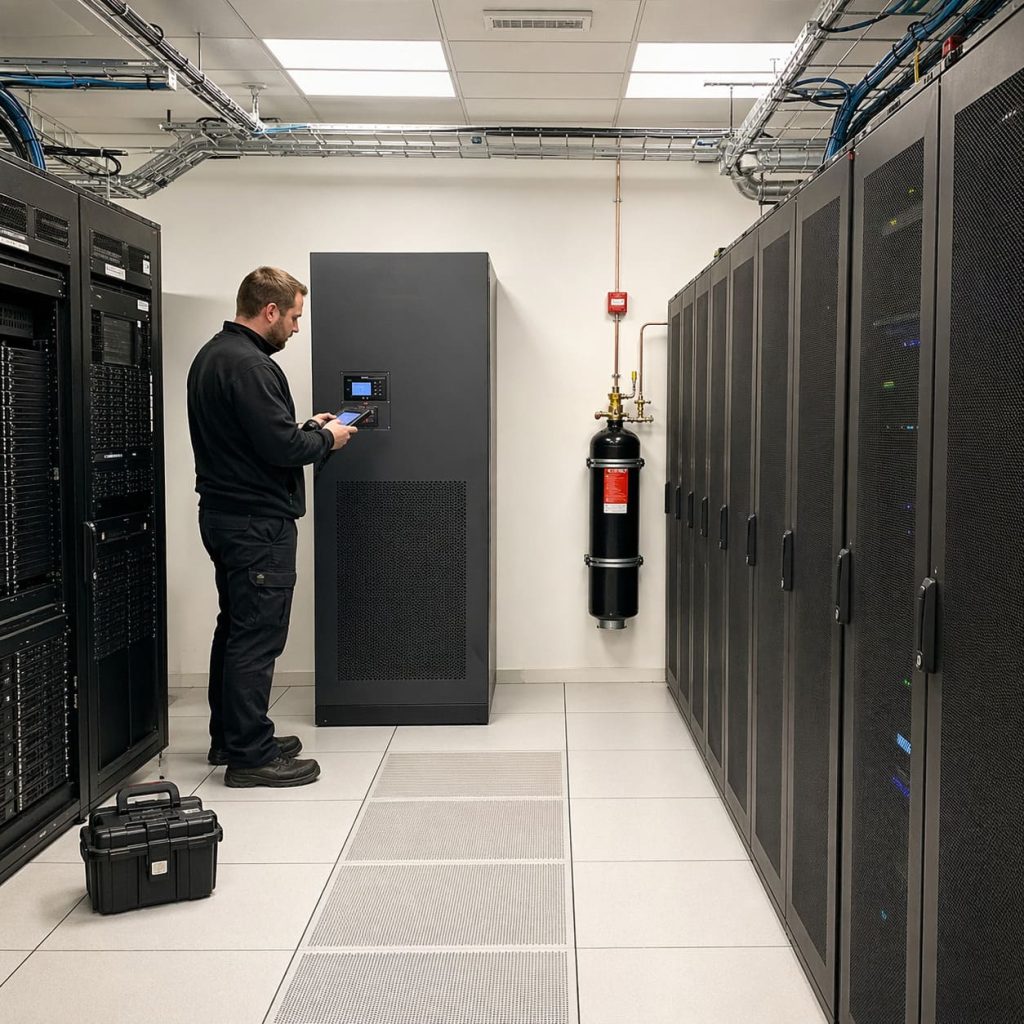
If noise, access, or shared building constraints are part of the problem, include them in the decision early. Those factors can make a technically repairable system a poor fit for the premises.

Records turn the decision from opinion into evidence
Before approving another London business air conditioning repair, gather the paperwork that shows whether the system is declining or suffering an isolated fault. The strongest repair-or-replace decision comes from reading the records beside the building conditions.
Use this sequence to make the evidence usable:
- Start with the fault log. Look for repeat callouts, repeated symptoms, and whether different parts of the system are now failing in turn.
- Read the maintenance records beside the current diagnosis. Regular planned preventative maintenance supports a repair case when the new fault is genuinely separate from past issues.
- Check the asset list and refrigerant information. The actual equipment label and service record matter more than assumptions based on age.
- Add the inspection report where one exists. An air conditioning inspection is not the same as a service visit; it looks at efficiency and gives advice to building owners or managers on improvements, energy saving opportunities, carbon reduction, and operating costs.
- Match the system to how the premises now work. Changed occupancy, longer running hours, new partitions, or poor zoning can make a repaired system still feel wrong.
For compliance, one figure is worth knowing. In England and Wales, air conditioning systems with an effective rated output of more than 12 kW must be inspected by an accredited energy assessor at intervals of no more than five years, and several smaller units can count together if their combined effective rated output exceeds that threshold under single control.
Inspection reports under the Energy Performance of Buildings Regulations, commonly associated with Chartered Institution of Building Services Engineers technical memorandum TM44, can identify poor maintenance, inefficient design, oversized systems, and possible replacement opportunities. Reports are lodged on the Energy Performance of Buildings Register, and enforcement duties sit with Trading Standards or the Local Weights and Measures Authority.
For a facilities manager or landlord, the point is practical rather than procedural. If the records, inspection report, and day-to-day disruption all point in the same direction, the decision is no longer guesswork. RightAir Solutions treats that evidence as part of the system’s remaining life, rather than treating the latest fault as a stand-alone event.
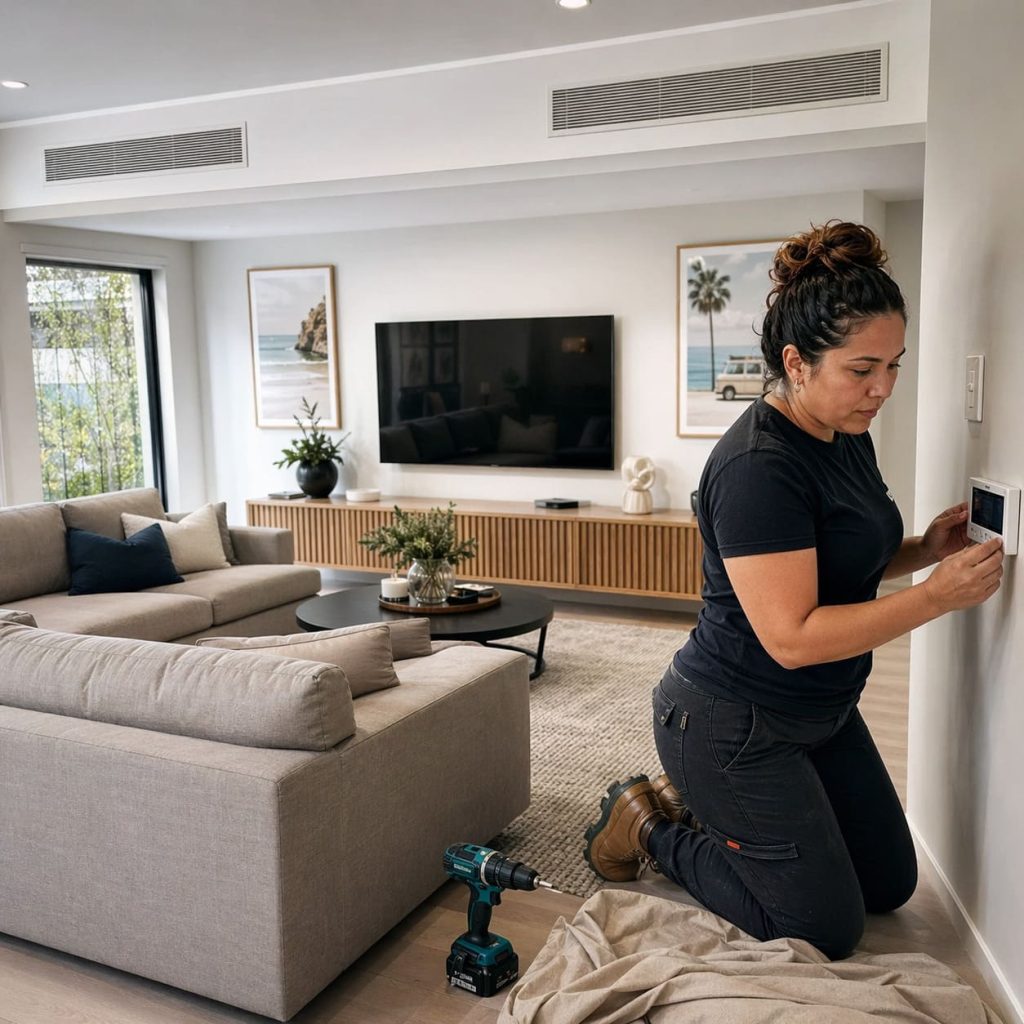
A confident replacement decision is evidence-led
A confident replacement decision does not start with frustration after one breakdown. It starts when the evidence shows that the system no longer serves the business reliably, even after reasonable repairs.
Repair remains the right answer when the fault is contained, the wider system is dependable, and the business can live with the repair without repeated disruption. Replacement becomes the stronger answer when repairs keep interrupting work, comfort remains poor, noise creates complaints, refrigerant issues keep returning, or access-heavy visits are simply postponing the same risk.
A proper site assessment removes the false certainty that comes from judging the decision by the indoor unit alone. Your records show the pattern, and the building shows the practical constraints. Once those two pieces are in front of you, the choice shifts from wondering whether to approve another repair to knowing exactly what must be checked before more money and downtime go into the old system.
Common questions about commercial air conditioning replacement
Does poor cooling always mean the system needs replacing?
Poor cooling does not automatically mean replacement. A blocked filter, controls fault, or isolated component issue may be repairable, but repeated poor cooling across several areas points to a wider system or design problem.
Is an air conditioning inspection the same as a service visit?
An air conditioning inspection is separate from normal servicing, cleaning, and repair. It assesses system efficiency and gives building owners or managers advice on improvement opportunities.
Can several small air conditioning units trigger inspection duties?
Yes. Several individual units below 12 kW can still fall under inspection duties if their combined effective rated output is more than 12 kW and they are under single control.
Does a refrigerant leak mean the whole system must be replaced?
A single refrigerant leak does not automatically mean full replacement. Repeated leak-related work, restricted refrigerant supply, or poor system condition can make replacement more sensible than continued repair.
Will replacement always need planning permission in London?
Planning permission depends on the property, external plant position, appearance, noise, and local constraints. Building regulations approval is a separate issue, so both may need to be considered before work starts.
This is general information, not professional advice.
