


Do you need planning permission for an air conditioning unit in the UK?
Most air conditioning units do not require planning permission in the UK if they meet certain criteria. This applies particularly to residential properties using small systems. However, exceptions exist depending on the location of the property, the size and type of the unit, and how close it is installed to boundaries or rooftops. Commercial installations and units on listed buildings or within conservation areas are more likely to need approval from your local planning authority.
- Where planning permission is typically not needed
- When might planning permission be required?
- What are the technical building regulations for air conditioning?
- Are there special requirements for commercial installations?
- What is the air conditioner distance from property boundaries?
- Listed building and conservation areas: what changes?
- Can I install my own air conditioning unit?
- What are the consequences of ignoring planning permission?
- Final thoughts by Right Air Solutions in London
Where planning permission is typically not needed
For a domestic air conditioning unit, planning permission is generally not required when:
The external condenser unit is less than 0.6 cubic metres in size
It is not installed on a pitched roof
It is more than one metre from the edge of a flat roof
It is more than one metre from any boundary
The property is not located in a conservation area or other specially designated land such as a National Park, Area of Outstanding Natural Beauty, or World Heritage Site
When a system meets these criteria, it is classed as permitted development and does not need explicit planning approval.
Pro Tip: If you’re unsure whether your property is in a designated area like a Conservation Zone or Area of Outstanding Natural Beauty, contact your local planning authority before committing to any equipment or installer. This early step can prevent delays and additional costs.
When might planning permission be required?
Planning permission becomes a consideration when the property is:
Located in a protected area
A listed building
In close proximity to neighbouring properties where noise pollution could become an issue
Additionally, any air conditioning installation involving significant structural changes may fall outside permitted development rights.
What are the technical building regulations for air conditioning?
Even if planning permission is not needed, building regulations still apply. These include:
Compliance with Part P of the Building Regulations for electrical safety
Ensuring safe handling of refrigerants, particularly for systems using F-Gases
For larger installations over 12 kilowatts, especially in commercial environments, a TM44 inspection is legally required every five years. Systems over 500 square metres must also have a valid Energy Performance Certificate.
Failure to follow these regulations could result in invalid warranties or enforcement action. Using accredited engineers who understand these requirements ensures long-term performance and peace of mind.
Pro Tip: Always choose an installer who is F-Gas certified and experienced with UK building regulations. It ensures not just compliance but long-term performance, energy efficiency and safety for your system.
Are there special requirements for commercial installations?
Yes. Commercial air conditioning systems often involve larger units or more complex setups such as VRF or VRV systems. Because of this, they are subject to stricter regulations. These include:
F-Gas certification for installers
Adherence to refrigerant management protocols
Mandatory planning permission in many cases due to visibility, scale or environmental impact
Businesses should consult their local planning department and work with accredited engineers to ensure full compliance. You can find trusted services through our air conditioning installation page.
Location and noise: Two major considerations
Installing an air conditioning unit for a bedroom or other domestic area near a boundary may still cause disputes even if it is technically compliant. Local authorities may investigate noise complaints. It is good practice to install units as far away as possible from neighbouring properties.
For commercial units, location impacts both planning permission and practical efficiency. Rooftop installations or external wall mounting should always be evaluated for accessibility, airflow and potential visual intrusion.
Get a Free Quote for Air Conditioning Installation
Thinking about installing air conditioning? Our experts are ready to help you with site evaluation, recommendations and a no-obligation quote.
What is the air conditioner distance from property boundaries?
According to current air conditioning regulations UK, external units should be positioned:
At least one metre from the property boundary
At least one metre from the edge of a flat roof
Not on a pitched roof
If your planned location does not meet these requirements, planning permission must be obtained before installation begins.
Listed buildings and conservation areas: what changes?
If your home is a listed property, you will likely need both planning permission and listed building consent. This is due to restrictions on changes that affect the building’s character. Similarly, installations in conservation areas may be subject to visibility and design regulations that differ from general planning law.
Installing wall mounted air conditioning units on the front elevation of properties in protected areas often requires formal approval. You may also be restricted in your choice of unit depending on its appearance and sound output.
How do building regulations affect air conditioning performance?
Regulations are not just about permission; they directly affect how a system operates. To ensure maximum efficiency and safety, building regulations demand:
Proper insulation of ductwork
Safe electrical connections
Correct installation height for wall mounted air conditioning units
Ventilation that avoids condensation buildup
Ignoring these can reduce efficiency and may cause long term damage. To prevent issues, schedule your work through professional air conditioning installers near me who understand these rules.
Can I install my own air conditioning unit?
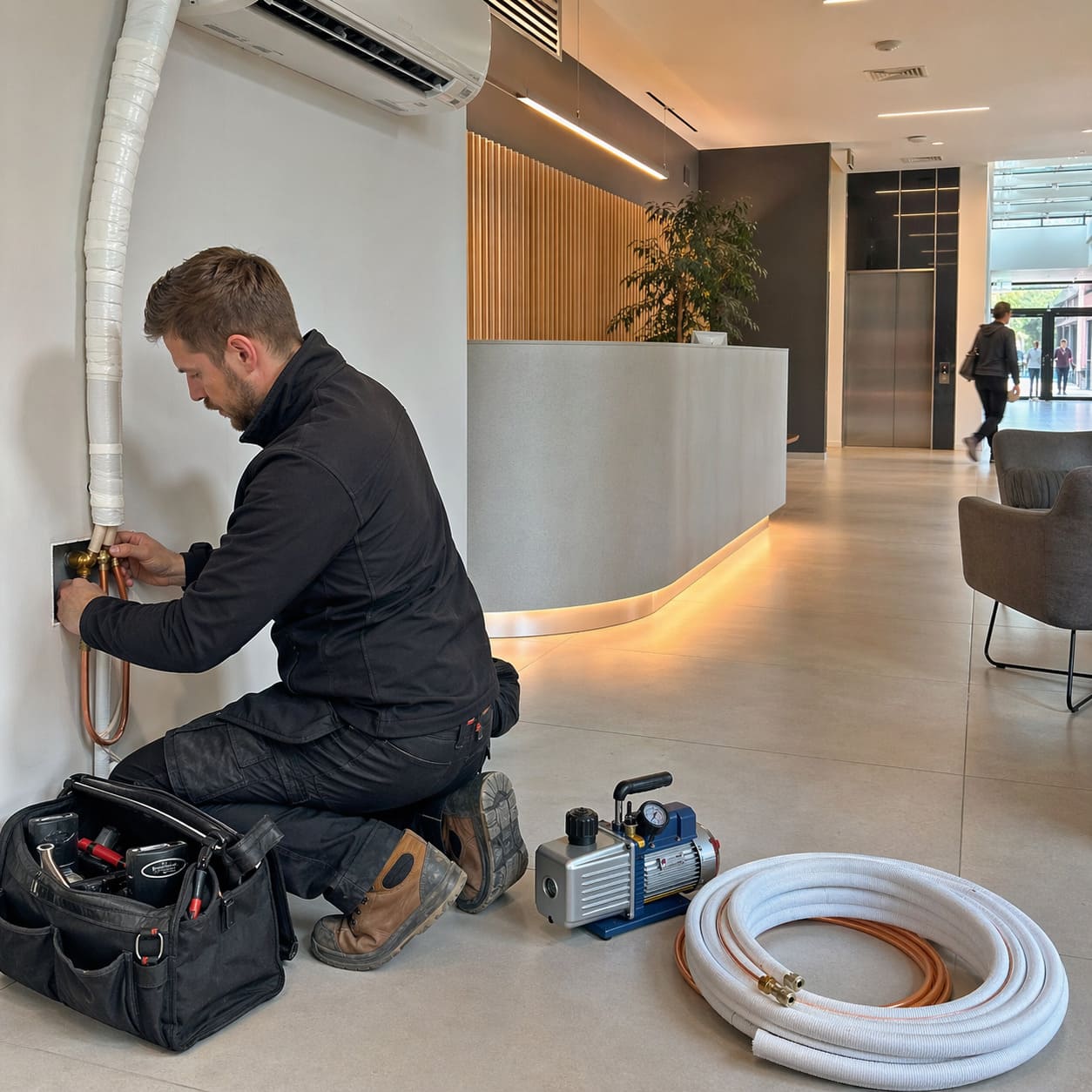
While portable air conditioning units can be used without installation, fixed systems should be installed by qualified professionals. DIY installations may not meet safety or efficiency regulations. Moreover, refrigerant handling must be carried out by certified contractors under F-Gas regulations.
Why professional installation matters
Besides legal compliance, choosing professional installers ensures:
Correct unit sizing
Optimal placement for performance and noise reduction
Valid manufacturer warranties
Scheduled maintenance support
Explore our air conditioning services for expert help.
What are the consequences of ignoring planning permission?
Installing a unit without necessary planning permission or violating building regulations can lead to:
Enforcement notices requiring removal
Fines from the local council
Insurance voiding
Planning rules are actively enforced, particularly in areas where air conditioning units affect public spaces, heritage buildings or shared walls.
Final thoughts by RightAir Solutions In London
Most UK homes can add a home air conditioning unit without formal planning permission, provided the installation meets basic criteria. However, properties in protected areas, flats, and commercial buildings face more restrictions. Always check with your local authority before starting work.
Hiring a certified engineer is the safest and most reliable path forward. They ensure that your air conditioning unit UK complies with all rules and performs efficiently.
For more detailed advice, visit our contact page to speak with our team.
Read Similar Blogs

Air conditioning in a conservation area: what you can and can’t do without approval
Learn how to install air conditioning in a conservation area, when approval is needed, and practical steps for planning compliant, discreet solutions.
Whole-life cost of air conditioning in London: what nobody tells you about the first five years
Discover the real five-year costs of air conditioning in London, from installation to maintenance, energy bills, and comfort tips unique to local properties.

Get your air conditioning ready for summer with this practical pre-season checklist. Avoid breakdowns and enjoy reliable cooling even on the hottest days.

RightAir Solutions
