What can you do if your building does not allow an outdoor air conditioning unit?
If an outdoor condenser is not allowed, you still have several cooling options. Indoor-only air conditioning systems, portable units, certain splitless technologies, and in some buildings communal cooling can all provide a workable route, although each comes with different limits on performance, space, noise, and installation requirements.
Table of Contents
Understanding why outdoor units may be restricted
Plenty of London properties cannot accept an external air conditioning unit, and the reason is often less arbitrary than it first appears. A refusal may come from planning rules, building management, a lease, or the physical character of the building itself.
- Listed status or conservation area guidance may restrict visible changes to the exterior
- Lease agreements may ban alterations to facades, roofs, balconies, or shared walls
- Building management companies may object to noise, appearance, or access for maintenance
- Shared ownership arrangements may limit changes to communal areas or external surfaces
A period flat in Hampstead, for example, may fall under heritage-related controls that focus on visual impact. A managed apartment building in Maida Vale may have no planning issue at all, but the lease could still block any condenser on a balcony or rear elevation.
Neighbour concerns also play a part. Local planning authorities and management companies often look at noise pollution, the look of the building, and whether pipework or grilles would alter the exterior in a way other residents can see. Even when a system is technically possible, permission can still be the sticking point.
Pro Tip: Always verify both planning regulations and lease conditions before starting air conditioning projects in managed buildings.
Internal air conditioning systems: how they work
Indoor-only air conditioning usually refers to a self-contained system that rejects heat without a standard outdoor condenser fixed to the building. In many cases, that means a water-cooled arrangement or another internal condenser set-up that uses the building’s services to move heat away.
People often assume that all air conditioning needs a box outside. That is not always true. Some systems can sit within the property, often in a utility area, cupboard, ceiling void, or other serviceable space, provided there is suitable water supply, drainage, ventilation, and access for maintenance.
A few common points cleared up
Q: Does an internal system cool as well as a conventional split system? A: It can cool effectively in the right setting, but suitability depends heavily on room size, heat load, layout, and the building’s services.
Q: Does it still need installation work? A: Yes. “No outdoor unit” does not mean “no building work”. Pipework, drainage, power supply, and service access still matter.
Q: Does it take up more indoor space? A: Often, yes. That space requirement is one of the main trade-offs.
Some specialist installers, including RightAir Solutions, work on this type of bespoke design in London properties where external equipment is not practical. The design stage matters because these systems are less forgiving of poor placement or unrealistic expectations.
Pros and cons are easier to grasp in a simple side-by-side view:
- Advantages: no external condenser, potential suitability for restricted buildings, cleaner exterior appearance
- Drawbacks: greater dependence on internal space, more design constraints, possible limits in larger or more complex areas
A compact flat with one or two priority rooms may suit this route far better than a sprawling top-floor conversion with solar gain on multiple sides.
Book a Cooling Assessment
Arrange a professional consultation to evaluate indoor-only air conditioning options tailored for your building and requirements.
Portable air conditioning: pros, cons, and practicalities
Portable air conditioners can be useful, but they are usually a compromise. They suit temporary cooling needs, rented spaces, and situations where fixed installation is off the table for now.
A small home office, a bedroom during hotter spells, or a short-term tenancy can all make a portable unit sensible. By contrast, anyone expecting silent whole-home cooling is likely to be disappointed.
The practical issue many buyers miss is venting. Most portable units need to expel warm air through a window kit or another approved opening. Without that vent path, the unit has little chance of cooling the room properly.
Their strengths and weaknesses are fairly clear in everyday use:
- Pros: quick to set up, movable between rooms, no permanent installation on the building
- Cons: noisier than many fixed systems, less efficient in larger rooms, takes up floor space, still needs venting
Before choosing one, it helps to check three things.
- Whether the room can accommodate a vent hose without creating an awkward window gap
- Whether noise levels will be acceptable for sleeping or working
- Whether the unit’s condensate arrangement is manageable in daily use
For a tenant in a small flat, that may be enough to get through warm weather. For a south-facing living room used every evening, it can feel like a stopgap that asks a lot from one machine.
Pro Tip: Prioritise system placement that allows easy future access for maintenance to avoid disruptive repairs later.
Ductless and splitless cooling technologies
Some alternatives sit outside the standard air conditioning category, which is why they can seem appealing at first glance. Evaporative coolers are the best-known example.
These appliances cool air through water evaporation rather than a conventional refrigeration cycle. In dry climates they can feel effective, but London’s humidity limits their usefulness, especially on muggy days when people want relief most. Air movement can feel fresher, yet temperature reduction is often modest.
A few installation-light cooling products also promise comfort without an external condenser. Those can be suitable in narrow situations, such as personal cooling in a single room or supplementary use alongside shading and ventilation. They are rarely a like-for-like answer for proper air conditioning in a warm flat that overheats every summer.
What tends to work best depends on the setting:
- Evaporative coolers: better for air movement and modest comfort improvement than true cooling
- Splitless or compact integrated systems: potentially suitable in restricted properties, but only after careful assessment of room size, heat gains, and servicing needs
- Simple fans or air circulators: useful for comfort support, though they do not lower room temperature in the way air conditioning does
That difference matters most in top-floor flats, glazed rooms, and converted loft spaces, where heat build-up is often the real issue.
Using building infrastructure: centralised and communal cooling
In some larger developments, the answer may already be within the building. Newer apartment blocks, mixed-use schemes, and certain commercial premises sometimes have communal HVAC systems or central cooling infrastructure that individual occupiers can connect to or control locally.
Anyone living in a managed block should check whether shared services exist before focusing only on stand-alone options. Residents do not always realise what was built into the development, especially if documents from the original handover are buried in a lease pack or management file.
A sensible review usually involves these steps:
- Check the lease or resident documents for references to communal air conditioning, shared plant, or comfort cooling
- Ask building management what is already installed, what rights residents have, and whether local controls are possible
- Confirm who handles maintenance, metering, access, and compatibility with any internal units
The attraction is obvious. Shared infrastructure can avoid external visual changes and may simplify approval. The less appealing side is that access, permissions, and control can be tied to resident agreements and management processes, which can move slowly.
Where communal plant exists, the question is often less about buying a machine and more about understanding the building’s rules, technical limits, and who maintains which part of the system.
Request a Detailed Quote
Receive a customised quote for installation of efficient air conditioning systems that comply with property restrictions.
Design and installation considerations for indoor-only solutions
Choosing an indoor-only system is partly about cooling and partly about how the system lives inside the property. Layout, noise, drainage, and visual integration all deserve attention early on.
A neat scheme usually starts with space planning. Indoor condenser units and associated components need room, and that room has to remain accessible for servicing. Tucking everything into the smallest cupboard can create a maintenance headache later, especially in London homes where every square metre matters.
Acoustic expectations also need a realistic check. Quiet air conditioning is possible, but no system is silent in all conditions. Bedroom placement, wall construction, ceiling void depth, and neighbouring rooms all influence how noticeable a system feels in daily life.
Water supply and drainage can be the deciding factor for certain internal systems. Some require dependable access to building services, plus a clear route for condensate removal. In older properties, those routes can be less straightforward than the cooling requirement itself.
A useful planning checklist includes:
- Where the main unit and associated services can sit without dominating the room or blocking access
- How noise will be managed in sleeping, working, or living areas
- Whether drainage, power, and servicing access have been considered from the start
- How the system will look once grilles, pipe routes, or access panels are in place
Good design often disappears into the background. A well-planned installation may read as part of the interior rather than an afterthought, which is often especially important in period homes and carefully finished flats. RightAir Solutions is one of several firms that work in this more considered way, where the fit within the property matters as much as the cooling itself.
Common misconceptions and forward-looking solutions
A few myths keep appearing in conversations about air conditioning where no outdoor unit is allowed.
- “If there is no outdoor condenser, proper cooling is impossible.” Some indoor systems can cool effectively, but they need the right property conditions and a realistic brief.
- “Portable units are ventless.” Most still need warm air to be exhausted through a window kit or similar opening.
- “If planning permission is not needed, the job is automatically allowed.” Lease terms, management rules, and communal ownership can still restrict what happens inside or outside the building.
- “Alternative systems work the same way in every property.” A compact modern flat and a high-ceilinged heritage conversion can behave very differently in summer.
Cooling technology is also moving in a direction that suits tighter urban buildings better. Lower-profile equipment, better controls, quieter operation, and smarter integration with existing interiors are all making restricted properties less difficult than they once were. Environmental standards and building regulations will continue to shape what is practical, yet the broad picture is encouraging.
For readers dealing with London property rules, the most useful starting point is simple: separate the permission issue from the technical one. Once you know what the building allows, the right option usually becomes much easier to judge on comfort, space, and everyday livability.
Speak to an Expert
Connect with our knowledgeable team for guidance on planning, permissions, and the most suitable cooling solutions for your space.
Read Similar Blogs
Air conditioning in a conservation area: what you can and can’t do without approval
Learn how to install air conditioning in a conservation area, when approval is needed, and practical steps for planning compliant, discreet solutions.
Whole-life cost of air conditioning in London: what nobody tells you about the first five years
Discover the real five-year costs of air conditioning in London, from installation to maintenance, energy bills, and comfort tips unique to local properties.
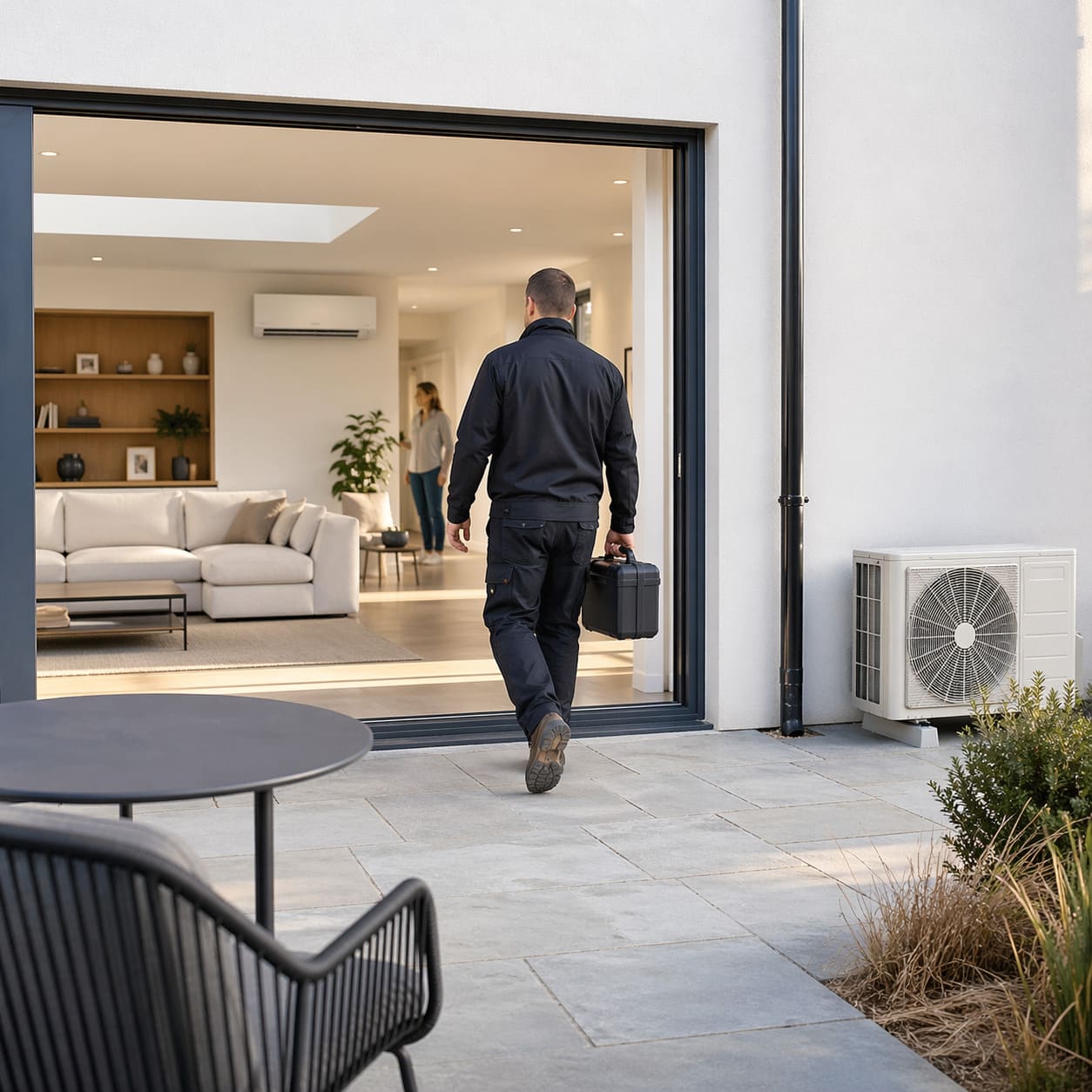
Get your air conditioning ready for summer with this practical pre-season checklist. Avoid breakdowns and enjoy reliable cooling even on the hottest days.

RightAir Solutions