RightAir Solutions is a company that specialises in commercial air conditioning services.

What factors should London businesses review before installing air conditioning?

Businesses in London must review planning permissions, building suitability, system choice, visual and acoustic impact, energy costs, maintenance planning, and installer competence before committing to an air conditioning installation.

Table of Contents

Planning Controls Are Stricter Than You May Expect

London’s architectural density and heritage protections mean air conditioning installations are rarely as straightforward as they may seem. Overlooking permissions or compliance requirements is one of the most common sources of delay and limitation on commercial projects.

Several constraints may apply:

  • Planning Permission: Required in listed buildings, conservation areas, or where external changes affect the character of the property. Even rooftop units may be subject to review by local planning authorities or Historic England.
  • Building Regulations: Regulations such as Part F (ventilation) or Part L (energy efficiency) govern how systems must be designed and installed to meet modern standards.
  • Lease and Landlord Restrictions: In commercial properties, air conditioning installations often need landlord approval. For multi-tenant sites, shared building systems and responsibilities also come into play.
  • Environmental and Noise Compliance: Outdoor condenser units generate noise and affect façades. London boroughs may enforce limits related to decibel levels or airflow direction, especially near pavements or neighbouring dwellings.

Many businesses assume these concerns only apply to residential or heritage buildings. In practice, most commercial premises require at least one form of sign-off or compliance check. Early review avoids costly adjustments later.

Pro Tip: Always check for planning conditions or conservation restrictions even if your building seems modern.

Your Property May Dictate More Than You Think

The suitability of a London building for air conditioning depends on more than square footage. Older structures and converted properties often conceal complications that are only obvious during a survey.

Common constraints include:

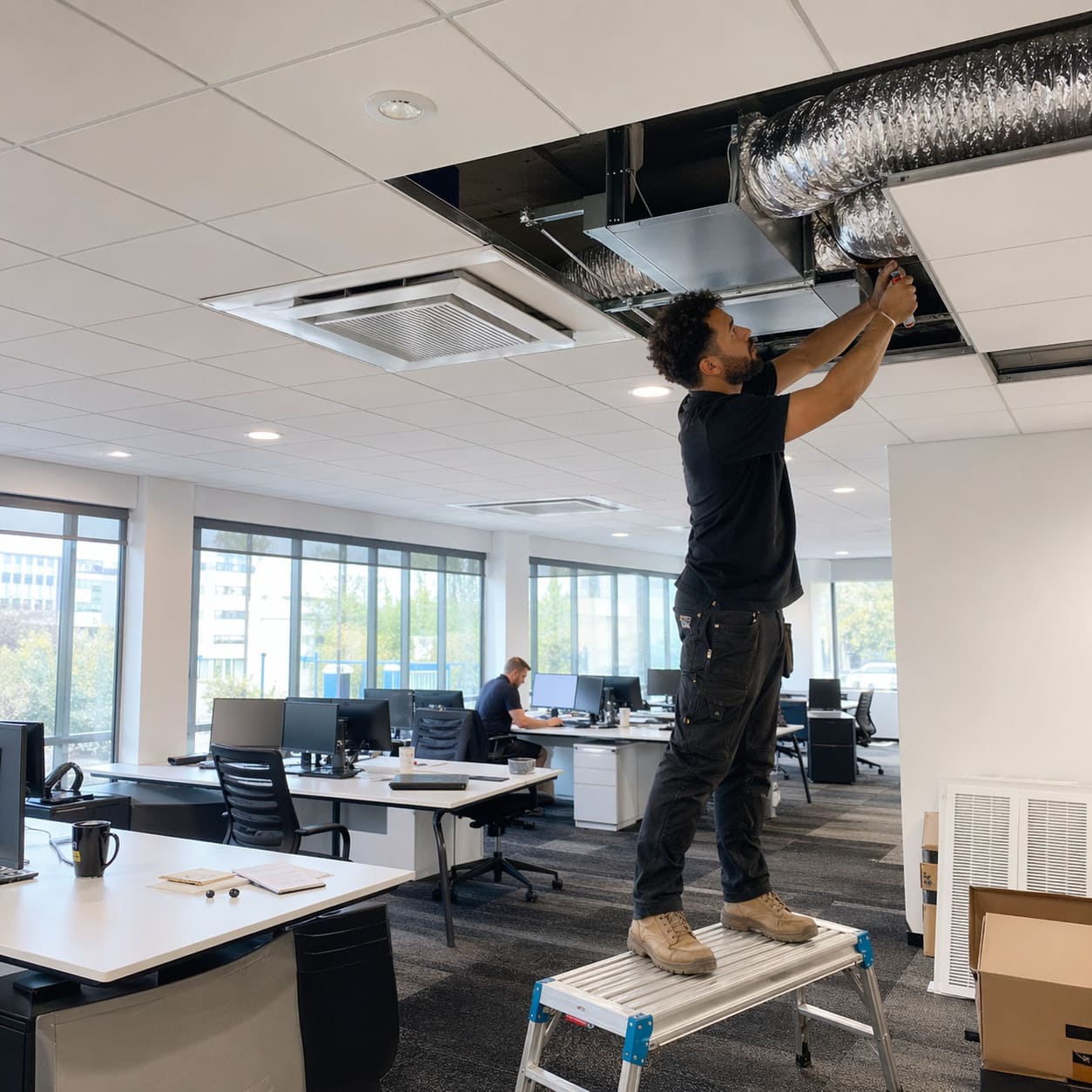
  • Ceiling Voids and Ducting Routes: Some offices lack adequate ceiling height or cavity space to accommodate ducted systems. Where routing is possible, structural beams and fire-breaks must be respected.
  • Wall and Floor Construction: Masonry walls, timber floors, and haphazard renovations can lengthen installation time or complicate internal unit placement.
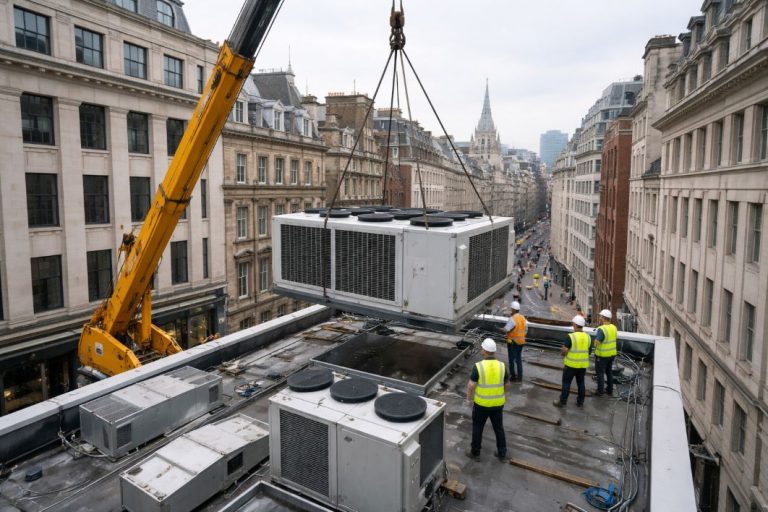
  • Access Logistics: External units often need craning or scaffold access, especially in upper-storey flats or tight rear yards. Installers must also consider tenant or public access during works.
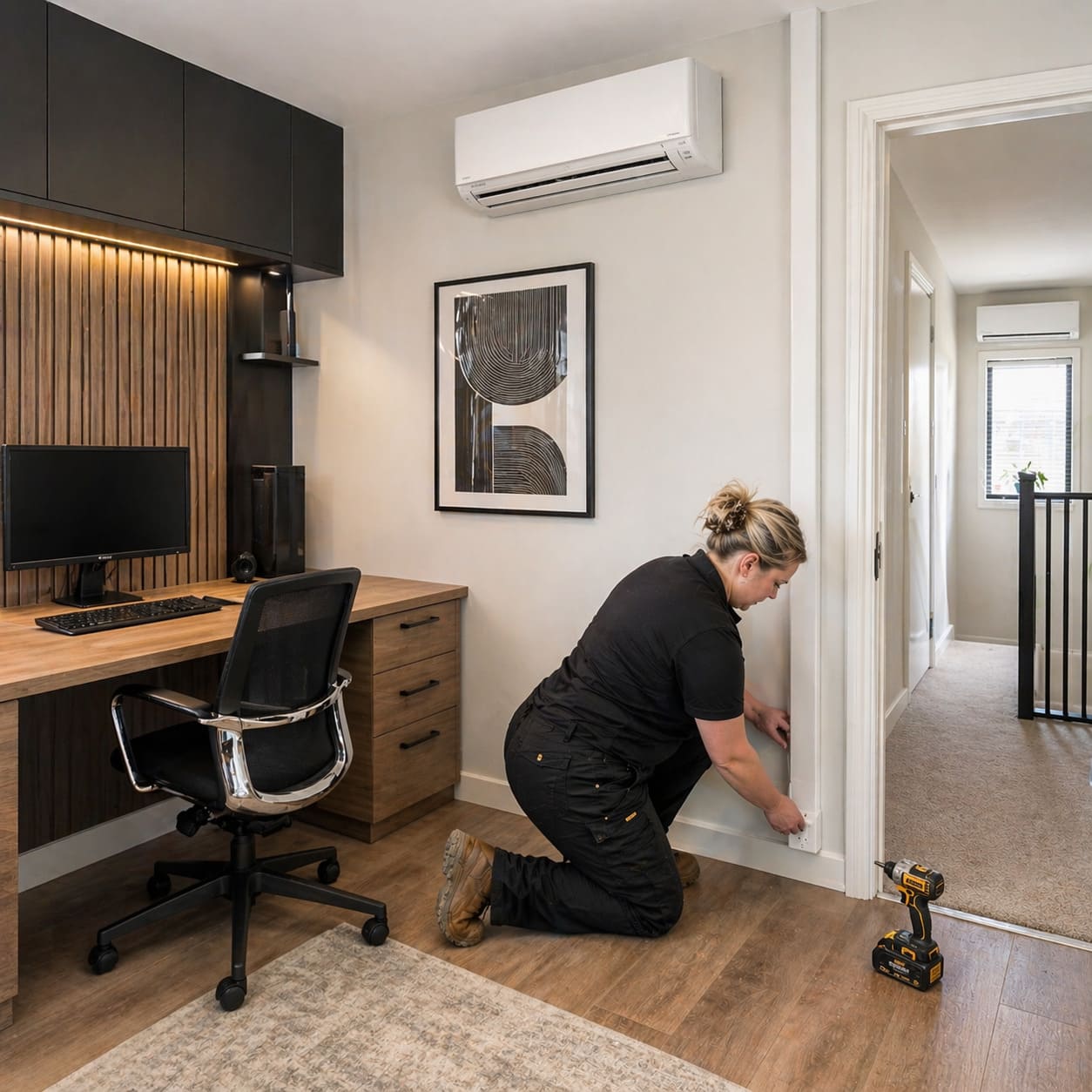
  • Visual and Aesthetic Coordination: In client-facing spaces or high-spec interiors, units must be placed discreetly and finished appropriately. Off-the-shelf installations frequently clash with design intent.

In many properties, a site survey reveals installation is possible but more nuanced than anticipated. Thoughtful assessment at the outset avoids system choice being led purely by catalogue specifications.

Book a Site Survey

Ensure your building is suitable for air conditioning before making decisions. Our specialists offer detailed commercial site assessments.

Not All Systems Fit All Spaces

System selection affects the comfort, look, and acoustic environment of a workspace. It also influences running cost, ease of control, and reception by users. Choosing the right system is less about equipment and more about how the space behaves.

For example:

  • Split Systems: Ideal for individual rooms or cellular offices with limited occupants. These typically involve one indoor unit to one outdoor condenser.
  • Multi-Split or VRF/VRV Systems: More suited to multi-zone spaces or whole-building solutions. These allow several indoor heads to connect to a single external unit, helping reduce outdoor clutter.
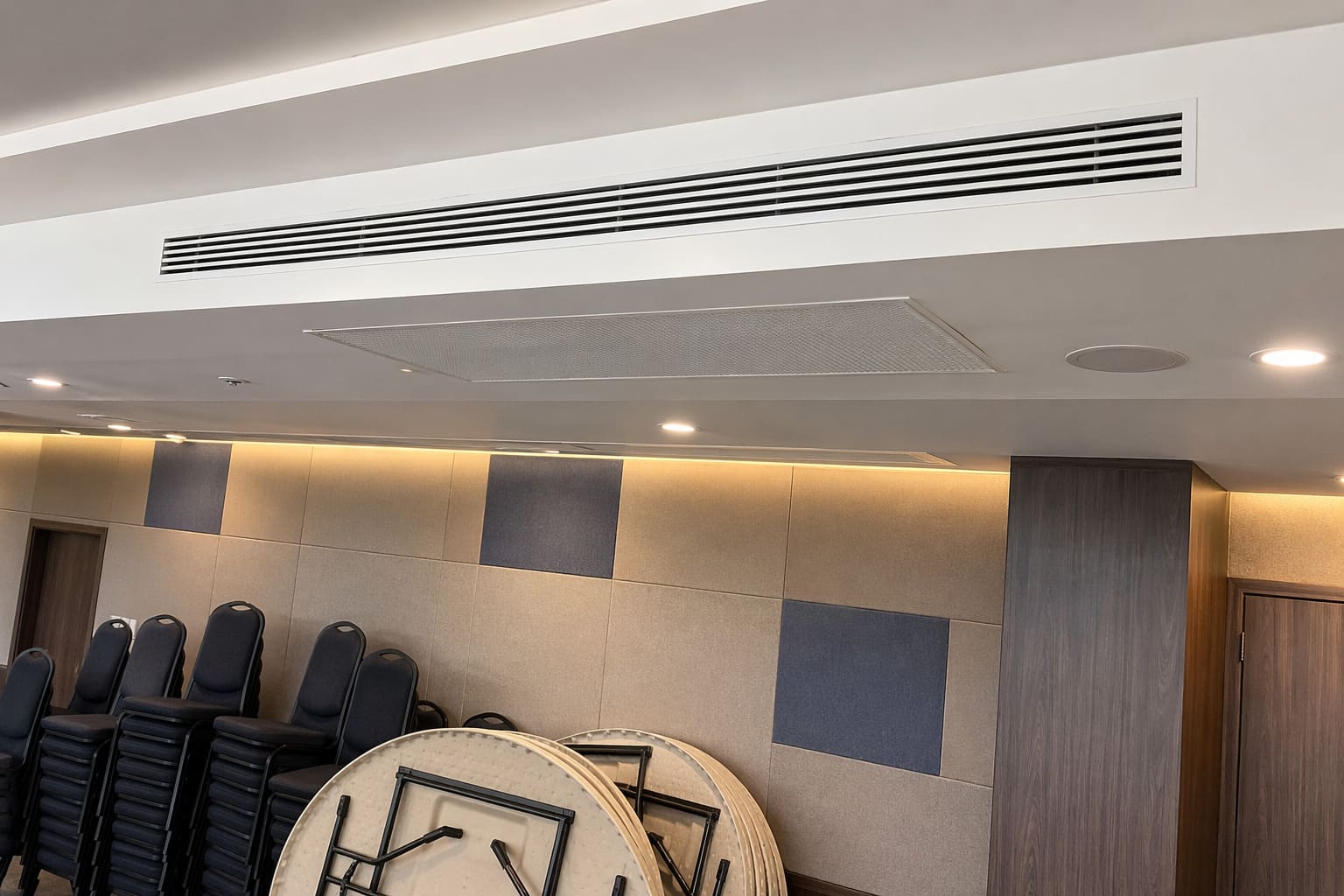
  • Ducted Installations: Visually discreet, with only grilles visible internally. Well suited for spaces prioritising aesthetics but reliant on ceiling voids or accessible service areas.
  • Smart Controls and Zoning: Especially useful in mixed-use premises where occupants have differing comfort needs. Zoned controls help avoid overcooling or energy waste.

An open-plan office may benefit from a centralised ducted system, while a series of partitioned meeting rooms could suit multi-split units. The choice should reflect spatial layout but also likely usage patterns and acoustic expectations.

Pro Tip: Internal ceiling and wall construction can double the complexity of an install if not properly surveyed upfront.

Sound and Appearance Matter More Than You Think

In many commercial environments, the true test of a system is how quietly and unobtrusively it performs. Client-facing areas, shared workspaces, and residential-adjacent premises all amplify the need for discretion.

Important considerations include:

  • External Unit Placement: Condensers generate both sound and visual impact. Poor placement can lead to neighbour complaints or council intervention, particularly in quiet streets or mixed-use courtyards.
  • Internal Acoustics: Meeting rooms, studios, and reception areas require particular attention to air movement noise, fan hum, and duct vibration. Sound attenuation must be built into the design.
  • Aesthetic Integration: Standard wall units may look out of place in high-end interiors. Options exist for ceiling cassettes, concealed ducted outlets, or units colour-matched to surroundings.
  • Visibility from Public or Shared Areas: Even small adjustments in grille placement or casing detail can affect how the system is perceived.

Systems should be selected and positioned not just for function, but for the experience they create within a space. Early coordination with design teams is therefore not optional, but often integral.

Efficiency Is Designed In, Not Added Later

London commercial energy costs are significant, and many older buildings are poorly insulated. System efficiency should therefore be central to specification, not considered once the unit is running.

Key energy-related factors include:

  • SEER/SCOP Ratings: These seasonal efficiency metrics indicate how a unit performs over a full range of conditions, not just peak output. They are more indicative than basic spec sheets.
  • Smart Controls: Systems with responsive thermostats, occupancy sensors, or timed zoning help prevent overuse in unoccupied areas.
  • Integration with Building Fabric: Poor insulation, solar gain, or unmanaged heat loads from IT equipment can all undermine system efficiency unless addressed holistically.
  • Lifecycle Costs: High-efficiency systems may justify their cost over time, particularly where usage is consistent and predictable.

Efficiency improves both comfort and sustainability, but it only does so when designed intentionally. A poorly sized or wrongly placed unit will cost more to run, regardless of rating.

Consult an Installation Expert

Discuss your property’s challenges with engineers experienced in high-spec London premises. Start your planning the right way.

Maintenance Is Part of the System, Not an Add-On

Installation is only the beginning of an air conditioning system’s life. Ongoing maintenance is both a legal requirement and a practical necessity for performance and hygiene.

Minimum expectations should include:

  1. Routine Servicing: At least annually, often more frequently for commercial systems, especially those serving high-occupancy spaces.
  2. Filter and Refrigerant Checks: Blocked filters or low refrigerant levels reduce efficiency and can trigger faults.
  3. System Hygiene: Coils and drainage elements require periodic cleaning to prevent mould or odour issues.
  4. Access for Engineers: Systems must be installed with future access in mind, or routine work becomes disruptive and expensive.
  5. Compliance Monitoring: Commercial systems above certain capacities require TM44 inspections and possible F-Gas reporting.

A well-maintained system costs less to run and lasts significantly longer. Design choices made at the outset have a direct impact on whether maintenance will be easy or overlooked.

Installation Quality Shapes Everything That Follows

Even the best-specified system can disappoint if poorly installed. For London businesses, choosing an installer familiar with complex buildings and architectural sensitivities is as important as selecting the right unit type.

Qualities worth checking:

  • Site-Specific Planning: The contractor should assess light, noise, occupancy, and layout before making recommendations, and not assume a default system will suffice.
  • Experience with London Properties: Intricate layouts, heritage constraints, multi-tenant access, and shared mechanical provisions all demand specialist handling.
  • Discreet and Clean Execution: In high-end or occupied spaces, installation should be quiet, tidy, and minimally disruptive.
  • Clear Handover and Support: Reliable servicing, prompt fault diagnosis, and accessible aftercare make a difference over time.

Some firms, such as RightAir Solutions in North West London, focus specifically on complex or high-spec installations. Their strength lies in anticipating practical challenges and delivering solutions that feel appropriate to the building, not superimposed on it.

The right installation partner will fit the chosen system but will help you make the right choice in the first place. Where comfort, longevity, and discretion matter, it pays to work with a team that understands those priorities from the outset.

Plan Ongoing Maintenance

Set up a tailored service agreement to keep your system efficient and compliant year-round.

Share

Read Similar Blogs

RightAir Solutions

32 Donnington Rd, London NW10 3QU
 
020 3886 2326
 
GQRC+JX London