How can a busy London pub or bar stay cool without sounding overworked?
Yes, a busy London pub or bar can be cooled without intrusive noise, but the quiet result comes from the whole design. The room use, heat sources, airflow, indoor unit positions and outdoor condenser location all need checking before anyone chooses equipment from a catalogue.
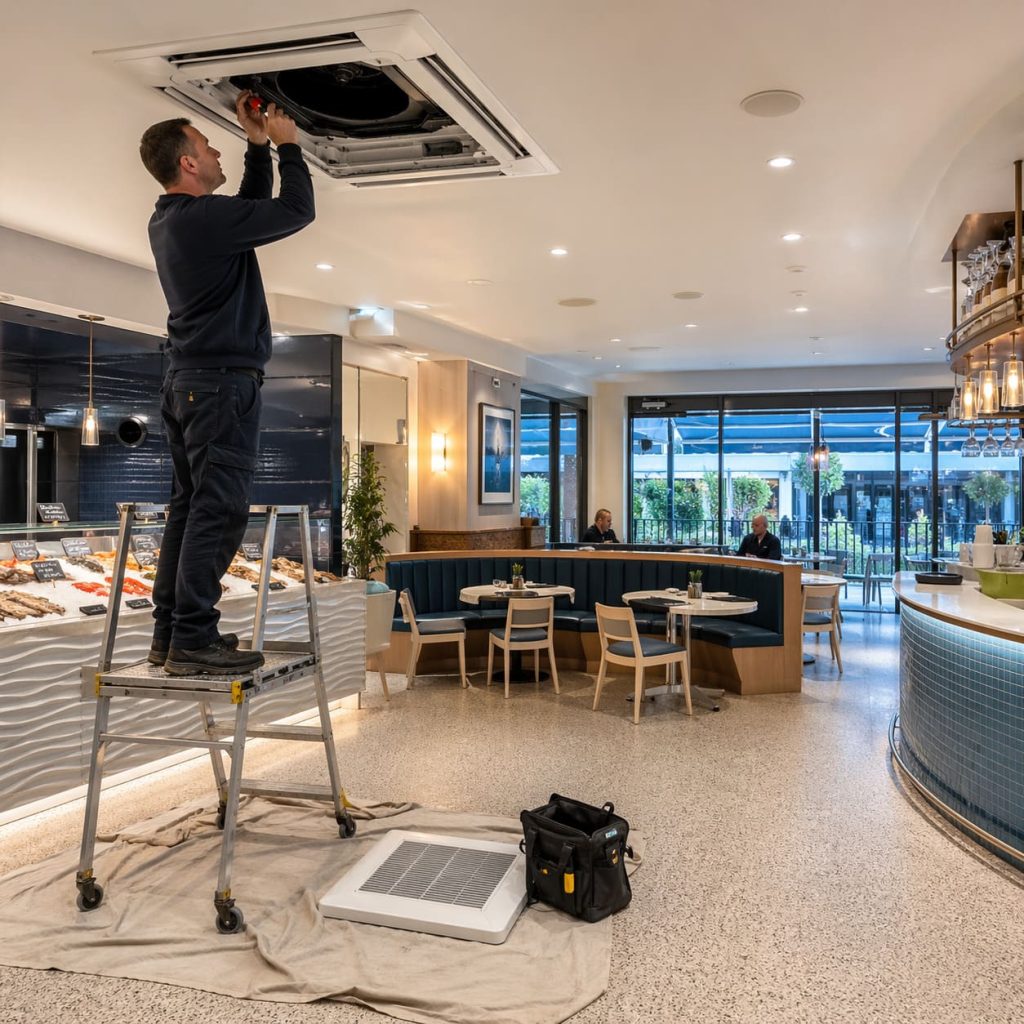
Quiet cooling starts with how the venue behaves when full
Most operators ask for a quiet unit first. That sounds sensible, until the venue fills up and the system has to fight heat from people, lighting, open doors, bar fridges, glass frontage and back-bar activity.
A full bar is a different cooling problem from a calm office. Heat arrives in bursts, doors open at the wrong time, and the busiest period is also the moment when fan noise matters most. If the system is undersized or placed badly, fan speed rises and the room starts to feel as if the air conditioning is working too hard.
Noise in a customer-facing space is judged by the people in it. A unit that sounds acceptable on a product sheet can still annoy customers if it blows across a row of stools, hums above a quieter seating area or makes staff raise their voices at the bar.
Good commercial air conditioning protects the atmosphere of the room as much as the temperature. Cooling a busy pub needs stable airflow, sensible zoning and equipment that can run within its comfort zone during peak service.
Cooling and ventilation have different jobs
Air conditioning cools and recirculates air unless the chosen system has a fresh-air element built into the wider design. Ventilation brings in outdoor air and removes stale or polluted air, so the two need to be planned together for a busy hospitality venue.
The Health and Safety Executive is clear that desk or ceiling fans “won’t improve ventilation”, although they can help people feel cooler where ventilation is already adequate. That matters in pubs because a fan can move warm air around without dealing with the freshness of the room.
Approved Document F, Volume 2 covers buildings other than dwellings, and Requirement F1(1) under the Building Regulations 2010 says adequate means of ventilation must be provided for people in the building. The point for you is practical, not bureaucratic: cold air in a packed room is not the same as well-managed fresh air.
Draughts deserve the same attention. A venue can be cooler on paper and still feel wrong if cold air lands straight on a table, a till position or a standing area near the bar. Fresh air, extract, filtration and comfort cooling need to be considered as one room experience.
Where a venue has substantial catering, simple drink service assumptions stop being useful. Commercial kitchen ventilation can bring in guidance such as Chartered Institution of Building Services Engineers Guide B2, Building Engineering Services Association DW 172 and Health and Safety Executive catering guidance, because kitchen extract is a different problem from cooling the front bar.

Place indoor units around seating and service patterns first, because airflow that feels fine in a plan can feel intrusive once the bar is full.

System choice depends on layout, visibility and plant position
The best air conditioning for a bar is the system that fits the venue’s layout, ceiling space, customer sightlines and outdoor plant options. A product category alone tells you very little unless it is matched to the room.
| System type | Where it fits well | Noise and appearance points to test |
|---|---|---|
| Split system | A smaller, simpler bar or a single customer area | The indoor unit can be visible, so placement matters. The outdoor condenser still needs a suitable position. |
| Multi-split system | A venue with more than one area served by fewer outdoor units | Pipe routes and zoning need careful planning, especially where rooms have different peak times. |
| Ceiling cassette | Open rooms where air can spread from the ceiling | The unit can distribute air well, but position affects draughts, appearance and how close fan noise feels. |
| Ducted air conditioning | Venues that need a discreet interior finish | Ducts, grilles and access panels need enough hidden space, so survey detail matters before selection. |
| Variable refrigerant volume or variable refrigerant flow system | Larger or multi-zone venues with several rooms | Variable refrigerant volume or variable refrigerant flow, often called VRV or VRF, can serve several indoor units, but outdoor plant, controls and access need proper design. |
Ceiling cassette air conditioning for pubs suits some open rooms, but it is not a shortcut to quiet comfort. A cassette above a conversational seating pocket can feel louder than a less visible ducted grille in the right place.
Ducted air conditioning for bars often gives the cleanest look inside the room, yet it asks more from the building. Older London venues may have tight ceiling voids, awkward service routes or finishes that cannot be disturbed casually.
Use the table to narrow the conversation, then let the site survey test the choice against the real venue. Bar air conditioning in London fails when the system type is chosen before the building has had a vote.
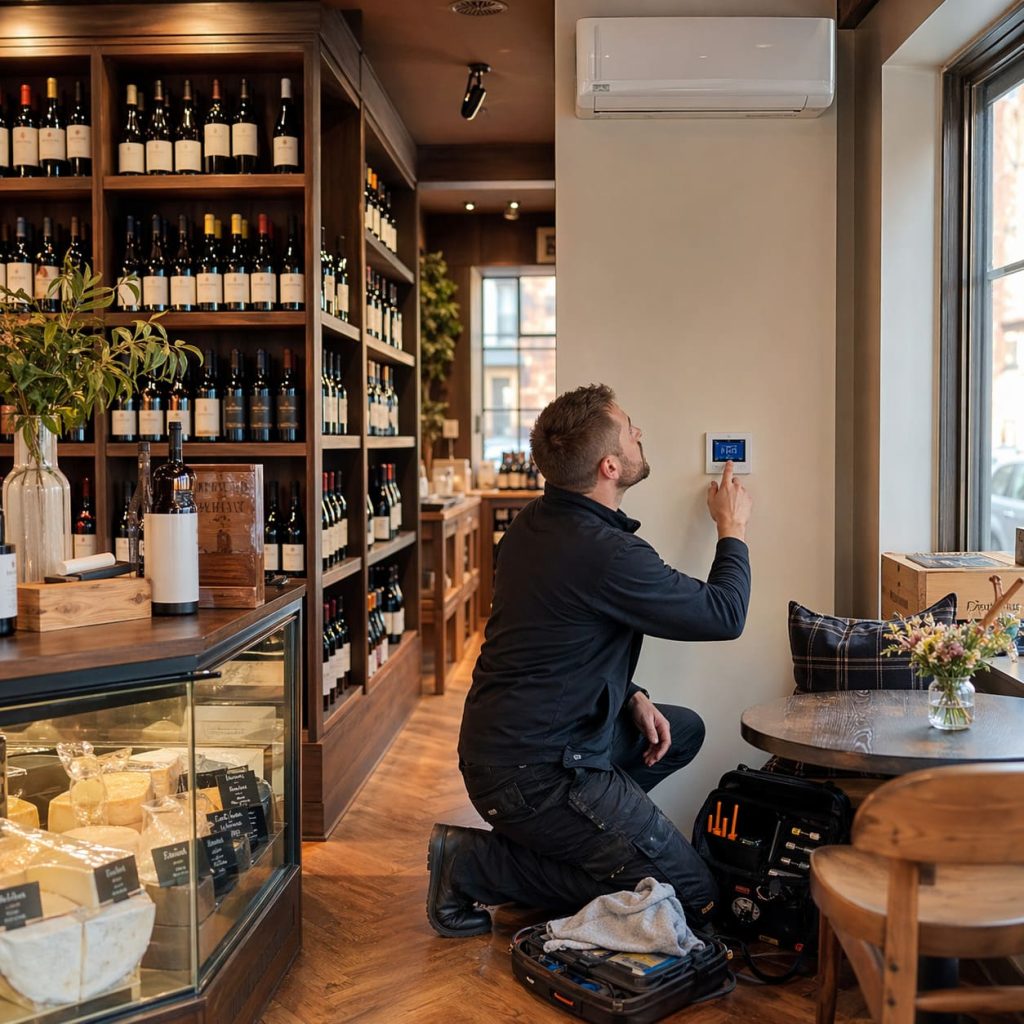
Outdoor plant location decides how neighbours experience the system
Picture a condenser tucked away in a rear courtyard because it looks discreet from the street. During late trading, the same courtyard can bounce sound toward bedroom windows and make a quiet-looking location the wrong location.
West and North West London venues often sit below flats, beside shared walls or inside older mixed-use buildings. Rear elevations, roofs, lightwells and courtyards can all work, but each one changes how sound travels, how maintenance is done and how vibration enters the building.
City of London guidance gives a useful example of how local authority expectations can work: new plant noise is expected to be at least 10 dBA below the existing background level, measured one metre from the window of the nearest noise-sensitive premises using British Standard BS 4142. A dBA reading is a sound level adjusted to how people hear, and the LA90 background noise level is part of the way background sound is assessed. Other boroughs set their own expectations, so a brochure figure cannot settle the issue by itself.
Indoor fan noise
Indoor fan noise is usually about speed, position and airflow path. An indoor unit serving a packed front bar may need to work harder than one cooling a smaller snug, and a badly aimed airflow pattern can make customers feel draughts before the room actually feels comfortable.
Fan noise also changes the mood of a room. If the background music has to rise because the unit above the bar is too obvious, the system has already affected the venue’s atmosphere.
Outdoor condenser noise
Outdoor condenser noise depends on more than the manufacturer noise output data. Line of sight to nearby windows, reflected sound from hard walls and the hours of operation all affect whether neighbours notice the plant.
City of London guidance also notes that people are more sensitive to noise between 11pm and 7am for venues such as pubs, clubs, restaurants and takeaways. That is why late trading changes the design test. A condenser that would pass unnoticed in a daytime shop can become a problem when a bedroom window is close by.
Acoustic enclosures can help in the right situation, but they need space, airflow and maintenance access. Putting a box around the problem without checking heat rejection and servicing can create a new problem.
Structure-borne vibration
Structure-borne vibration is the low-level buzz or rumble that travels through a roof, wall or steel frame. Anti-vibration mountings, also called resilient mountings, help separate equipment from the structure so vibration has less of a path into the building.
Roof plant needs careful thought for this reason. A roof may remove the condenser from a courtyard, but the structure beneath it still needs to be suitable, and the service route must be safe enough for future maintenance.
Noise is judged where people hear it, not where the equipment sits.
Treat outdoor plant location as part of the design, since a discreet position from the street can still create complaints if sound reflects into nearby windows.

The survey proves whether the design can stay quiet
A proper pub air conditioning survey tests the busiest version of the venue before equipment is selected. The survey should turn guesswork about comfort, neighbour impact and future access into a design that can be installed and maintained without drama.
- Check peak trading conditions. The installer needs to understand how the room behaves when it is full, including door use and the busiest parts of the bar.
- Map heat sources and airflow paths. Bar equipment, lighting, glass, cellar areas and back-bar activity all affect where cooling is needed and where air should avoid blowing directly.
- Identify indoor unit positions. The aim is even comfort without placing fan noise over the wrong part of the room. A quiet air conditioning installer will care where people sit, stand and work.
- Test outdoor plant options against neighbours and access. Roofs, courtyards, lightwells and rear elevations should be checked for sound path, maintenance access and vibration risk.
- Plan acoustic control before installation. Approved Document F expects mechanical ventilation systems to be designed and installed to reduce noise, including through secure fixing, suitable equipment choice and resilient mountings where vibration could be a problem.
- Confirm controls and maintenance access. Filters, grilles and service panels need to be reachable, because neglected access turns a good design into a noisy liability over time.
A specialist installer such as RightAir Solutions will normally want to see how the venue actually works before finalising a design, especially in older West and North West London buildings where access, appearance and nearby homes can all affect the answer.
The decisive point is simple: prioritise the survey over the product sheet, because a quiet venue is won before the first unit is fitted.
Common questions about pub and bar air conditioning
Do pubs in London have air conditioning?
Many London pubs and bars use fixed air conditioning, especially where heat builds up during busy trading. The right setup depends on the room layout, outdoor plant options and neighbour impact.
Can ceiling cassette air conditioning be quiet enough for a pub?
Ceiling cassette units can suit open pub spaces, but their position matters. A cassette placed above a quiet seating area can feel more intrusive than one planned around airflow and conversation levels.
Can neighbours complain about pub air conditioning noise?
Neighbours can raise concerns if outdoor plant is noticeable, especially near bedrooms or during late hours. Plant location, background noise, acoustic treatment and vibration control all need checking before installation.
How often should bar air conditioning be serviced?
The service pattern depends on use, access and the type of system installed. A busy venue should treat maintenance as part of keeping fan noise, airflow and reliability under control.
Can air conditioning replace ventilation in a pub?
Air conditioning should not be treated as a replacement for ventilation unless the whole system has been designed to provide the fresh air the building needs. Cooling and fresh air have different jobs, even though both affect comfort.
This is general information, not professional advice.
