Why is your upstairs bedroom so hot at night?
Your upstairs bedroom is hot at night because it has stored heat during the day and cannot lose it fast enough after sunset. Heat rising plays a part, but roof exposure, sun-facing windows, trapped warm air and weak airflow usually combine, especially in loft rooms and top-floor flats.
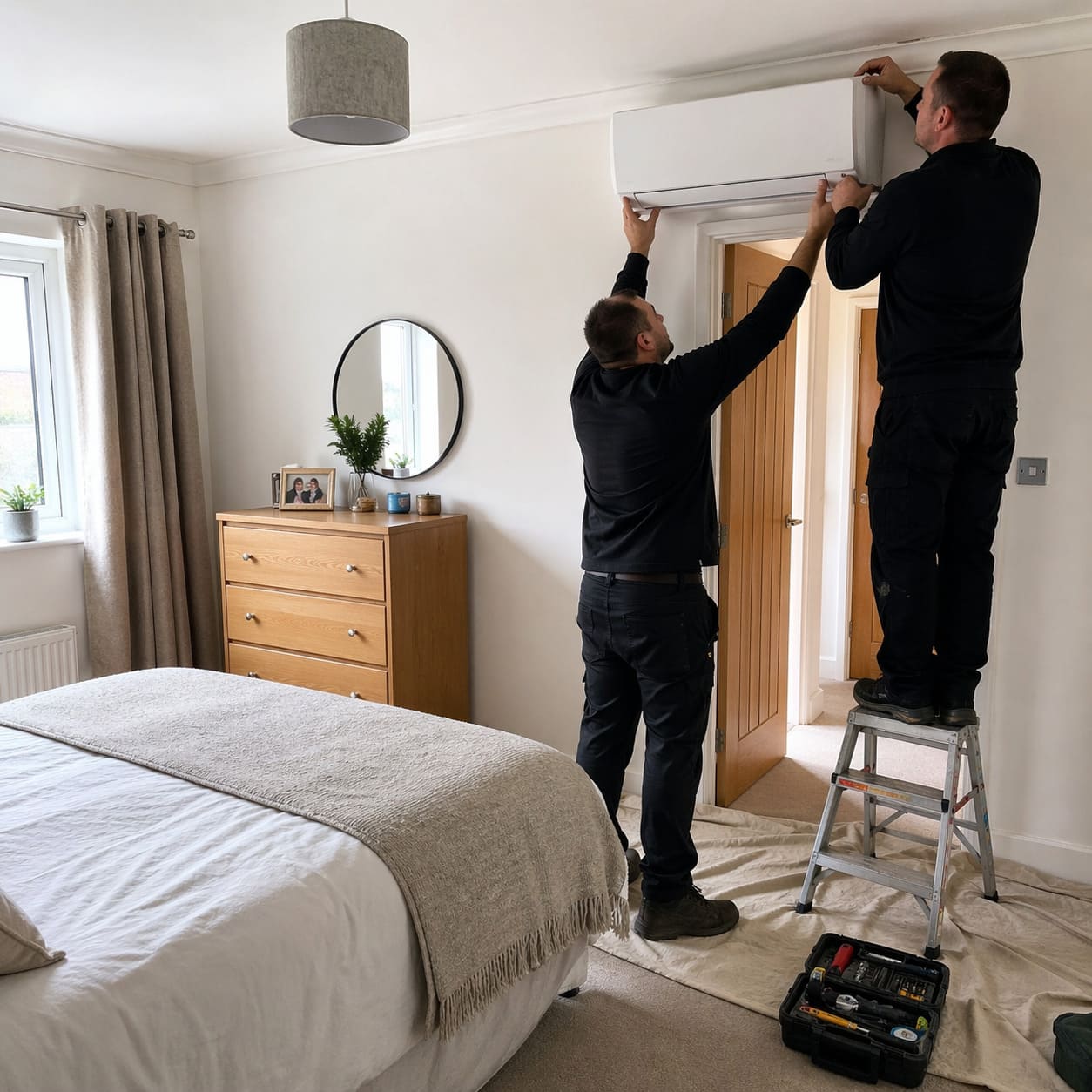
Heat rising is only the easy answer
Leaving a window open all day or running a fan can seem logical, then the room is still uncomfortable at bedtime. The usual reason is simple: the room has gained heat faster than it can remove it.
Warm air does rise, and UK Health Security Agency guidance identifies top-floor flats as homes more likely to overheat. That explains part of the problem, but it does not explain why an upstairs bedroom can stay hot after the outside air has cooled. By then, the roof, walls, glazing and contents of the room have been absorbing heat for hours, and they release it back into the space during the evening.
Large east, west or south-facing windows with little shade make this worse because they bring in solar gains during the day. A bedroom hotter than the rest of the house may therefore have a local problem, such as strong afternoon sun on the glass, roof heat above it, or a poor route for warm air to leave.
A hot loft room at night is rarely fixed by one trick because the issue is more than warm air in the room. The room is failing to shed stored heat quickly enough.
Free consultation on air conditioning, ventilation and refrigeration, tailored to your property.
Book a Free ConsultationOne-sided ventilation is the hidden blocker
Opening a window is not the same as ventilating a room. Air needs a route through the space, so fresh air can enter and warm air can leave.
Single-aspect rooms trap heat
Single-aspect rooms have opening windows on one side only. UK Health Security Agency guidance says homes with windows on only one side are more likely to overheat because there is less ventilation through the home.
That matters in West and North West London, where flats, loft conversions and older houses often have rooms with no easy cross-ventilation. Cross-ventilation means air has both an entry point and an exit point. Without that route, an open window can stir the edge of the room while stored heat remains in the fabric and furnishings.
Noise and security also limit what you can do at night. A large opening may make sense on paper, but it may be impractical beside a road, near neighbours, or in a room that cannot be left unsecured. Purge ventilation, which means using wider openings to clear heat from a home, has to work with the building as it is used.
Layouts can break the air path
Internal layout can stop heat removal even when the window position looks sensible. Closed bedroom doors, narrow corridors, blocked vents and awkward stairwells can all restrict the air route. A top-floor room can become a pocket of stale warm air because the rest of the home is not helping that heat escape.
This is where a site visit matters. A professional installer, such as RightAir Solutions, will usually want to see the room, the outdoor-unit options, the glazing and the airflow path before suggesting a system. Upstairs heat problems in London homes are rarely caused by one factor alone.
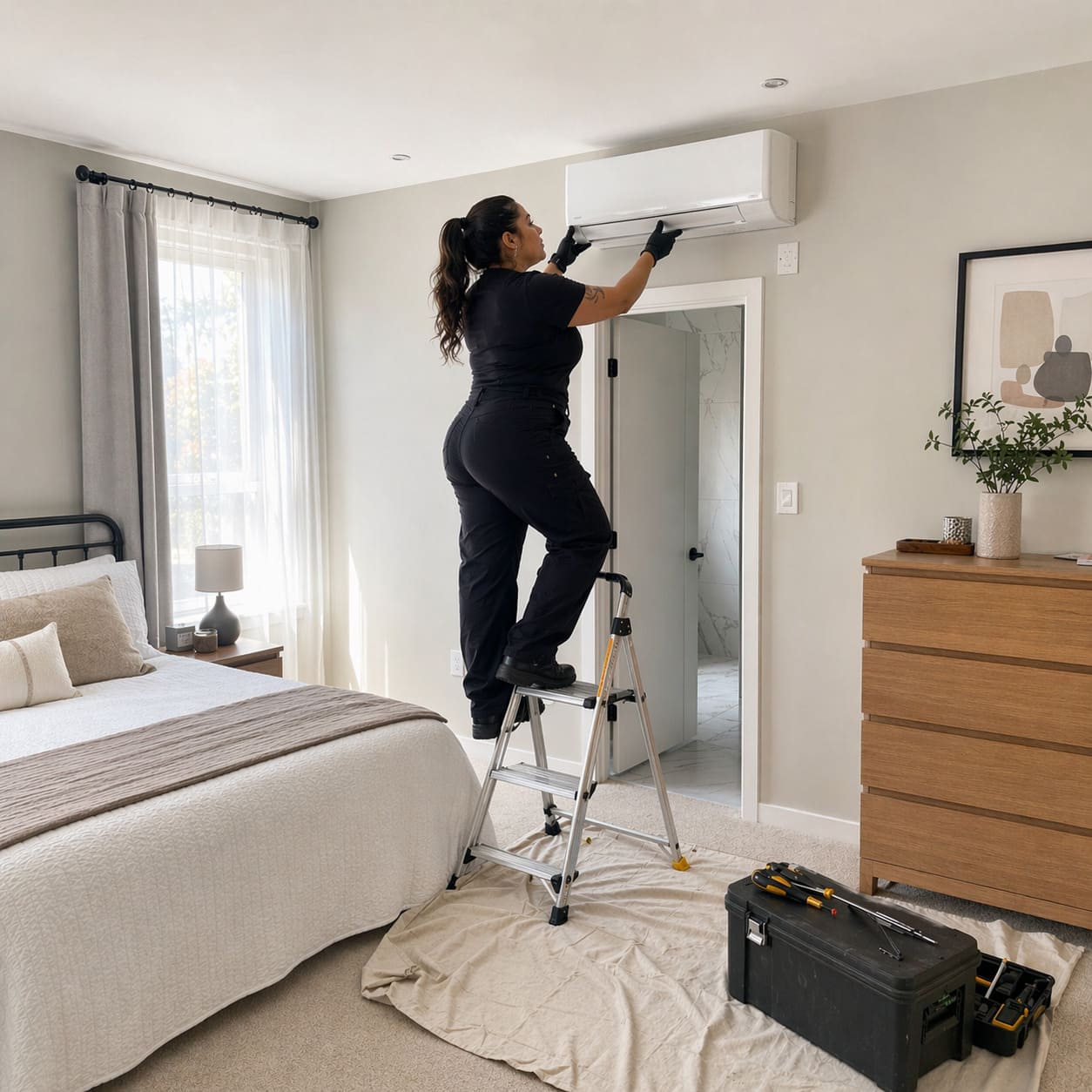
If a bedroom only has one opening window, check whether the rest of the home blocks the air path. A closed door or narrow hallway can leave heat trapped even when the window is open.

Tonight’s fixes should remove heat, not add noise
Short-term cooling works better when you follow the right order. Stop heat getting in first, then remove heat when the outside air gives you the chance, then use air movement to improve comfort.
- Block daytime heat before it enters. Close blinds or curtains on sun-facing windows during the day, especially where the room gets direct sun. External shading works harder than internal shading, but even a simple internal measure can reduce some heat gain.
- Use windows by conditions, not habit. Open windows when it is safe and the air outside feels cooler, such as at night. Leaving them open in hotter daytime air can make the room worse.
- Create a route for air to pass through. If the room has only one window, look at whether air can move through the rest of the home when doors are open. If nothing gives warm air a way out, the window has less effect.
- Use a fan for comfort, not room cooling. A fan moves air across you, which can make sleep easier, but it does not reduce the room temperature. Official UK advice says electric fans can be used if the air temperature is below 35°C, but they should not be aimed directly at the body because this can lead to dehydration.
- Cut internal heat sources. Turn off lights and electrical equipment that are not in use. Cooking at cooler times of day can also reduce heat inside the home.
- Move sleep temporarily if needed. During hot weather, using a cooler part of the house for sleeping is a practical short-term measure. That does not solve the bedroom, but it may make the night manageable.
These steps sort behaviour problems from building problems. If the room still overheats after careful shading, window timing and airflow, the cause is probably deeper than daily habits.
One hot bedroom needs a design, not a box
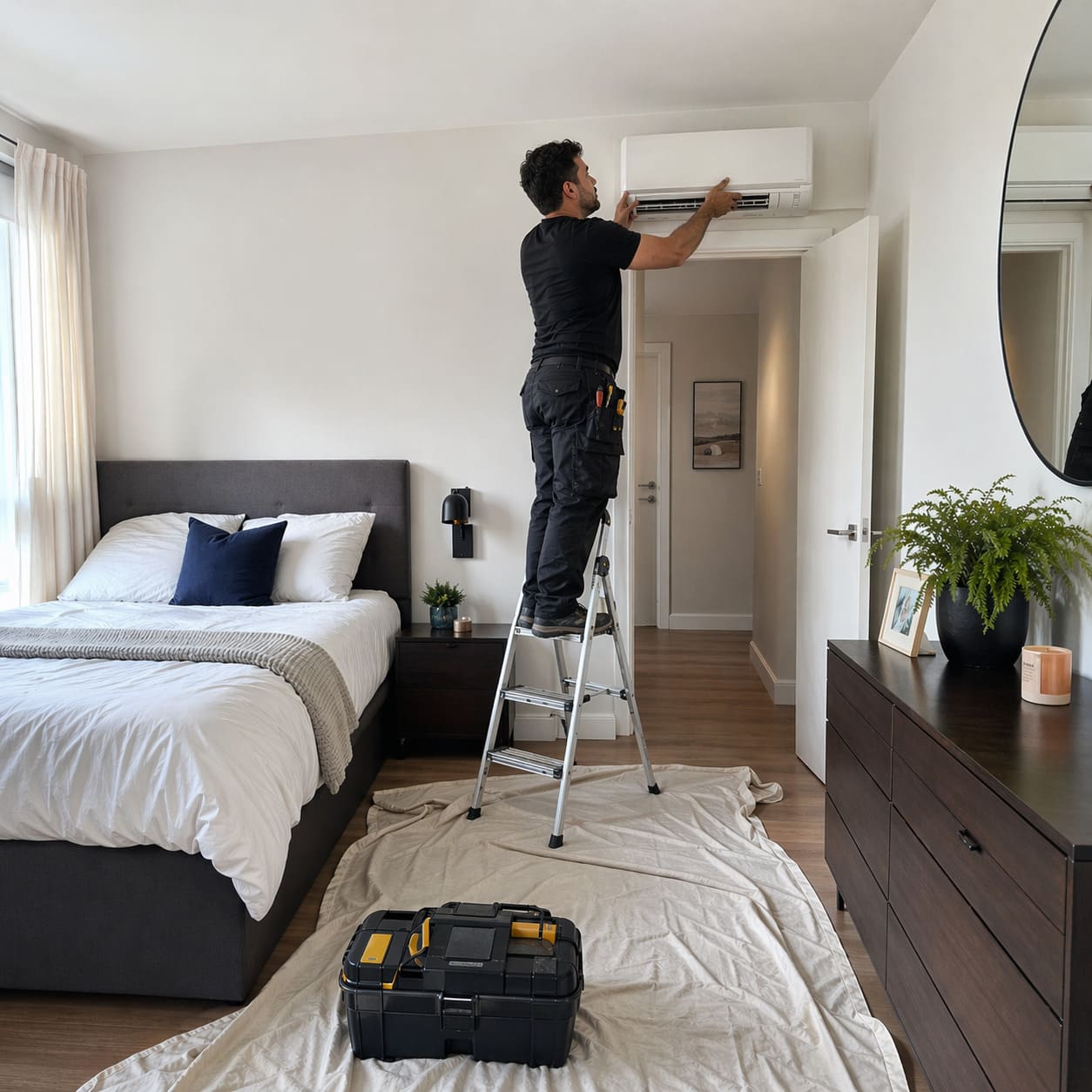
A portable unit or fan can help one top-floor bedroom for a while, yet the same room may still be noisy, awkward to use, or hotter than expected by midnight. Permanent cooling is a design decision because the room, roof, glass, airflow and installation route all affect the result.
Here is the difference between a product-led choice and a survey-led design.
| Decision point | Product-led choice | Survey-led design |
|---|---|---|
| Room problem | Starts with the appliance | Starts with why the room overheats |
| Heat gain | May overlook roof and glazing | Looks at sun, roof exposure and room use |
| Airflow | Treats air movement as enough | Checks whether heat can leave the space |
| Noise | Considered late | Built into indoor and outdoor-unit choices |
| Appearance | Handled after selection | Planned through unit position and pipe routes |
| Maintenance | Easy to forget | Access is considered before installation |
Comfort measures are different from engineered cooling. A fan can improve how the room feels, and shading can reduce heat gain, but mechanical cooling actually removes heat when passive measures and ventilation are not enough.
Approved Document O: Overheating applies to new residential buildings in England, including houses and flats. It is useful as a way of thinking even for many existing homes, because Requirement O1 focuses on limiting unwanted solar gains in summer and providing a way to remove heat from indoors. Mechanical cooling is treated as the answer only where enough heat cannot be removed without it.
For an existing upstairs bedroom, the practical assessment is room-specific. A good survey looks at the likely heat load, glazing, indoor-unit position, outdoor-unit location, pipe route, condensate drainage, controls, acoustic impact and future access for servicing. Lease terms, neighbours, conservation limits and visual impact can all affect the final design, but a competent provider handles those constraints as part of the job.
RightAir Solutions tends to sit in that survey-led camp, especially for high-end homes where a visible shortcut can spoil a room as quickly as noise can spoil sleep. Split air conditioning, multi-split systems and ducted cooling each have a place, but the property decides which route makes sense.
Ceiling fans improve comfort, but they do not remove stored heat from the room. They work best as part of a wider plan that also reduces daytime heat gain.

Bedroom overheating is becoming a design priority
A hot upstairs bedroom used to be treated as a seasonal nuisance. That view is ageing badly. Bedroom overheating is now being assessed more directly because sleep spaces need to perform during warmer conditions, and quick fixes do not always keep pace with the way homes are built and used.
CIBSE, the Chartered Institution of Building Services Engineers, launched an updated CIBSE TM59 overheating guidance document on 6 July 2026. TM59 is referenced within Part O of the Building Regulations and is used as an industry method for evaluating overheating risk in homes. The update includes revised approaches to bedroom overheating and ceiling fans, with ceiling fans framed as a low-energy comfort measure, not a direct substitute for cooling the air.
Future-readiness is the sharper point. The 2026 TM59 update requires assessment using future weather files representing the 2050s climate, which puts more weight on passive design measures from the start. In London properties where noise, appearance and access already shape every installation decision, the next 12 to 24 months will bring more serious scrutiny of how bedrooms lose heat, not just how they are cooled. A properly solved room will be quiet, discreet and specific to the property, because guesswork is the part of the system that fails first.
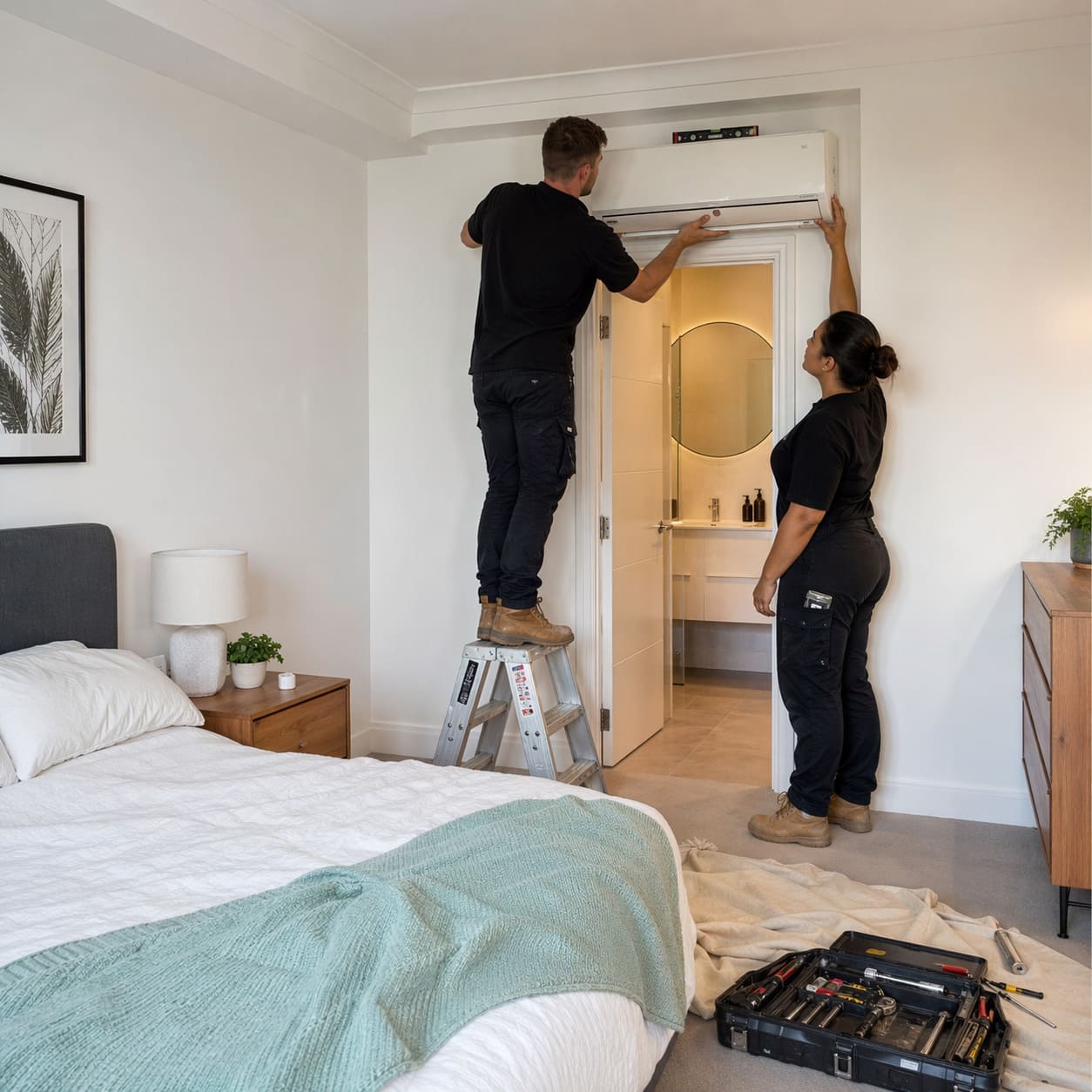
Clear pricing, realistic timelines and honest advice from an experienced London installer.
Request a QuoteCommon questions about cooling an upstairs bedroom
Is a loft bedroom always hotter than a normal bedroom?
A loft bedroom is more exposed to roof heat and can have limited airflow, so it is more likely to overheat at night. The actual cause still depends on shading, ventilation and how much heat the room stores during the day.
Will blackout curtains solve a hot upstairs bedroom?
Blackout curtains can reduce some solar gain, but they are not the same as external shading or a proper heat-removal strategy. If the room has poor airflow or roof heat build-up, curtains alone will not solve the night-time problem.
Is air conditioning worth it for one bedroom?
Air conditioning can be worth considering when shading, window timing and airflow changes do not keep the room comfortable for sleep. The system still needs a room-specific design so it works quietly and fits the property.
Why does downstairs cool down faster than upstairs?
Downstairs rooms often have less roof exposure and may have better airflow through the home. Upstairs rooms also collect rising warm air and can release stored heat from the roof and upper walls after sunset.
Can a ceiling fan replace air conditioning?
A ceiling fan can improve comfort by moving air, but it does not cool the room itself. It may be part of a low-energy comfort plan, although it will not remove stored heat from an overheating bedroom.
