Common Mistakes Businesses Make When Installing Air Conditioning
Discover the most common pitfalls in commercial air conditioning installations and how to avoid costly, inefficient decisions in your next project.
RightAir Solutions is a company that specialises in commercial air conditioning services.
Many businesses run into recurring issues during air conditioning installations, often due to rushed decisions, site oversights, or misjudged system choices. Avoiding these pitfalls comes down to careful planning, property-specific design, and respect for both regulatory and practical constraints.
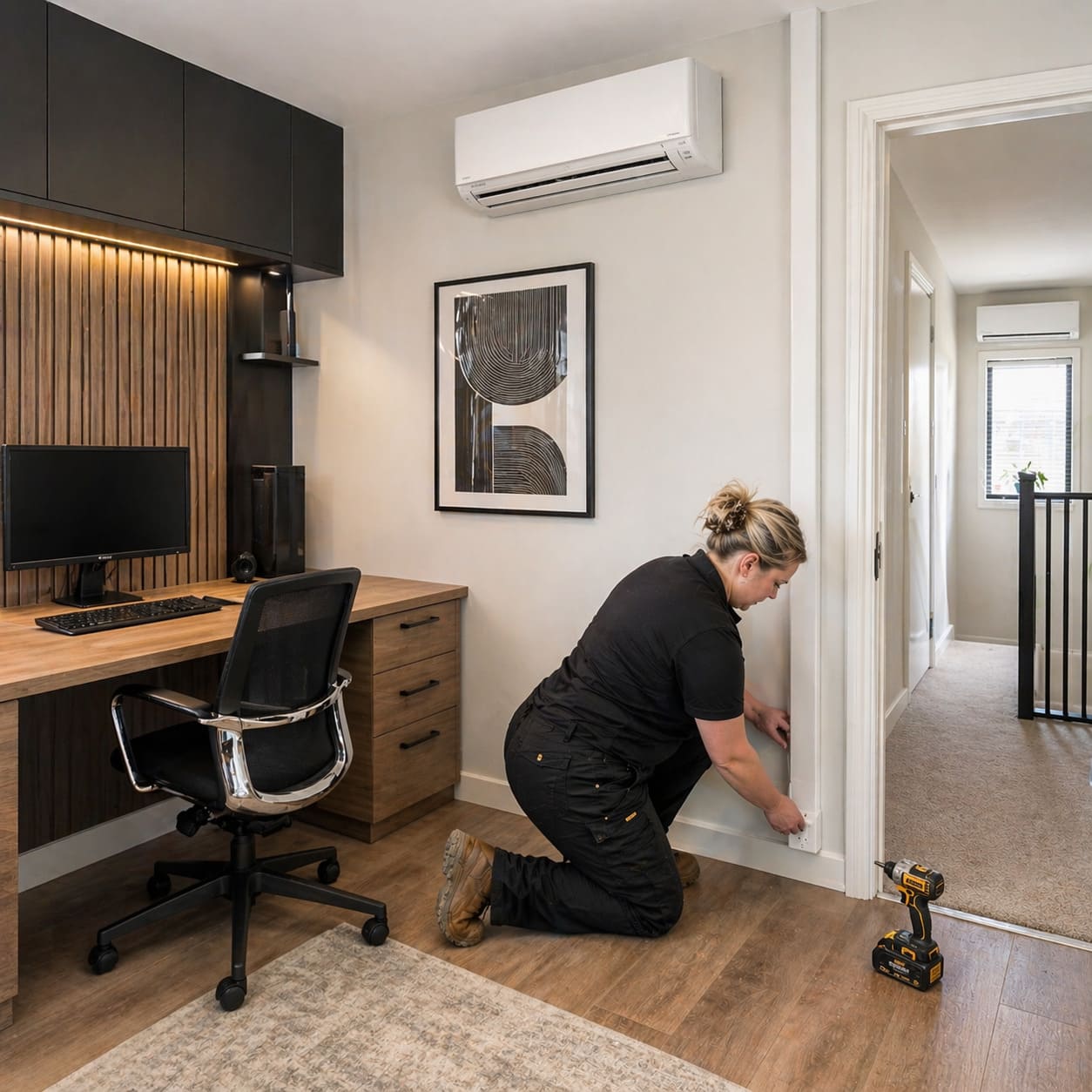
A frequent misconception is that air conditioning systems are essentially plug-and-play. In reality, every property presents its own set of conditions that directly influence how a system should be designed and installed. Using off-the-shelf specifications can result in overuse, inefficiency, or poor comfort control.
Proper system design addresses multiple interdependent factors:
A site survey that considers Building Regulations Part F, CIBSE recommendations, and F-Gas obligations builds real value into the system before a single component is installed. Without it, efficiency suffers, system noise increases, and interventions become reactive rather than preventative.
In London, where buildings are often varied and access is limited, bespoke design is not a luxury. It is the baseline for reliable operation.
Selecting an inappropriate system type can cause major issues, regardless of brand or specification. Businesses sometimes assume that larger capacity equals better performance, or that any modern system will suit their needs. In practice, the wrong format can produce discomfort, energy waste, or awkward aesthetics.
Each system type behaves differently:
Overcapacity can lead to frequent cycling, poor humidity control, and faster wear. Undersized systems will work too hard and often fail to maintain comfort. Acoustics and visual settings also shape what works best. A boutique retail space in Notting Hill, for example, has very different needs from a co-working hub in Harlesden.
Good system choice reflects future needs as well as current use. Factoring in flexibility lays the groundwork for longevity and satisfaction.
Pro Tip: In heritage buildings, align early with planners to shorten approval cycles for external condensers.
In London, legal and planning frameworks are particularly important when installing air conditioning, yet they are often overlooked. External condenser units, especially in conservation areas or listed buildings, may require formal planning permission or consent.
Key considerations include:
Neglecting these requirements can lead to installation halts, costly redesigns, or removal orders. Identifying the right permissions ahead of time streamlines the process and reduces stress later. A professional contractor will typically flag these issues early, ensuring compliance aligns with project goals.
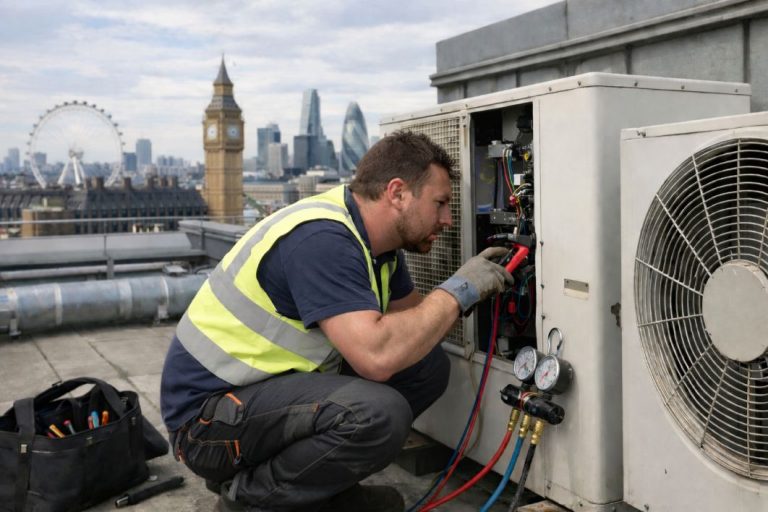
Installation is often seen as job complete. In truth, it is only the beginning of a system’s lifecycle. Maintenance is not optional for commercial systems. It preserves efficiency, prevents faults, and supports both compliance and occupant health.
Common maintenance tasks include:
Neglected systems tend to suffer higher breakdown rates, noise issues, and shortened lifespans. Some also fall out of manufacturer warranty due to missed maintenance intervals.
In some properties across Maida Vale or Queen’s Park, access constraints mean that reactive servicing is difficult. Planned preventative maintenance avoids this by keeping systems in best condition from the outset.
Ensure your system is tailored to your space and compliant from the start. We assess every key factor before design begins.
Noise may not top every client’s priority list but becomes a core concern once the system is up and running. Units that hum or vibrate, whether indoors or out, can undermine the usability of a workspace or breach planning limits. This is particularly relevant for shared buildings or quieter street locations.
Common noise sources include:
Mitigation measures range from acoustic enclosures and flexible mounts to selecting lower-decibel equipment. BS 8233 outlines sound insulation standards that guide acceptable indoor noise levels.
Professional installers account for acoustic loading during system configuration. For quiet offices or client-facing spaces, silent performance is not just a comfort feature. It protects staff focus and business credibility alike.
Pro Tip: During office fit-outs, lock in access scheduling with all trades to avoid last-minute equipment clashes.
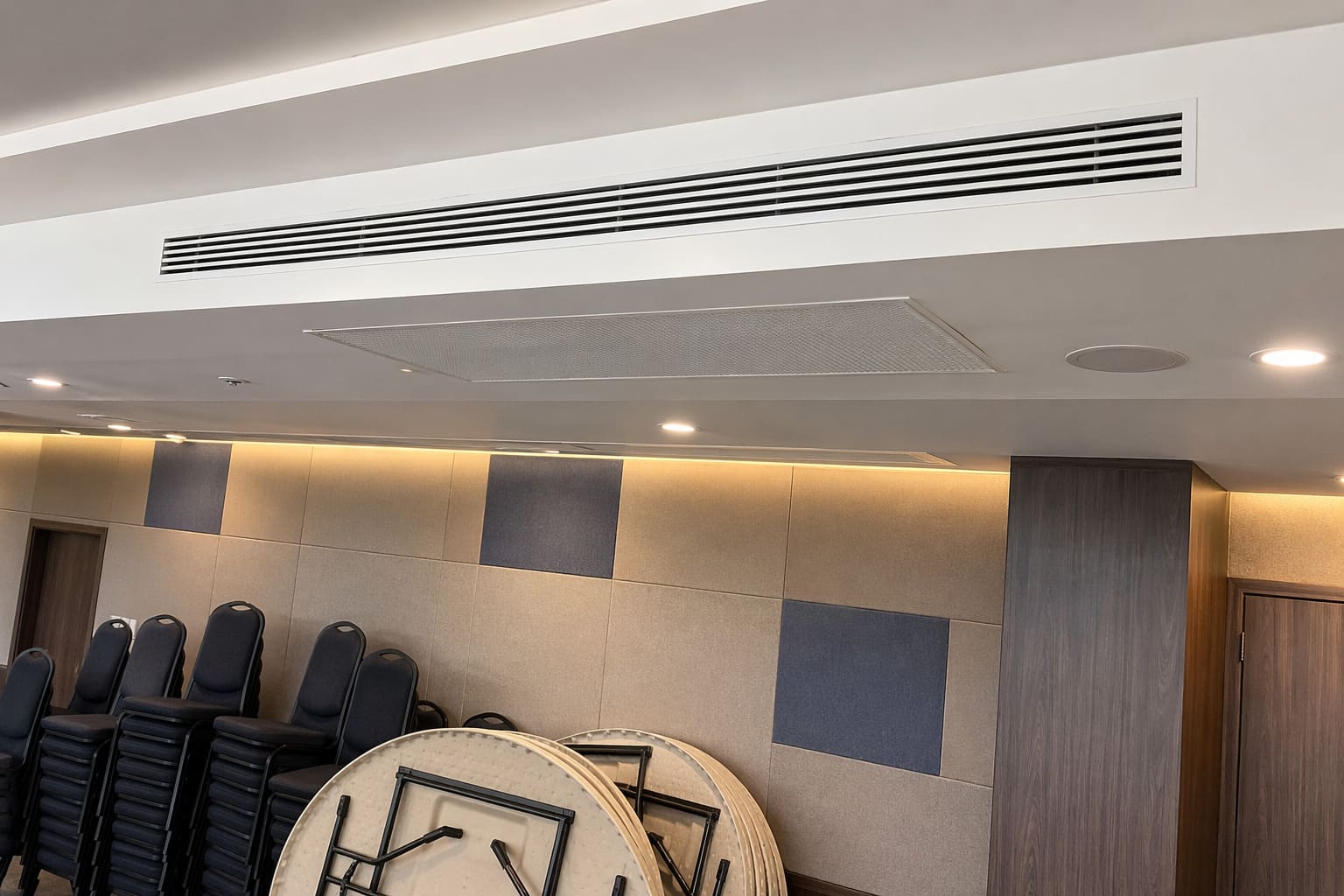
An efficient system that dominates sightlines or clashes with original features may solve one problem while creating another. Proper air conditioning should work with architecture, not against it. This often requires coordination with designers and early decision-making.
Poor aesthetic integration includes:
In contrast, good integration prioritises:
Many of the properties in West London combine historic features with modern refurbishments. This demands a thoughtful, site-specific approach where climate control becomes structurally and visually part of the space.
Get professional guidance on system selection and planning tailored to your property. No commitment required.
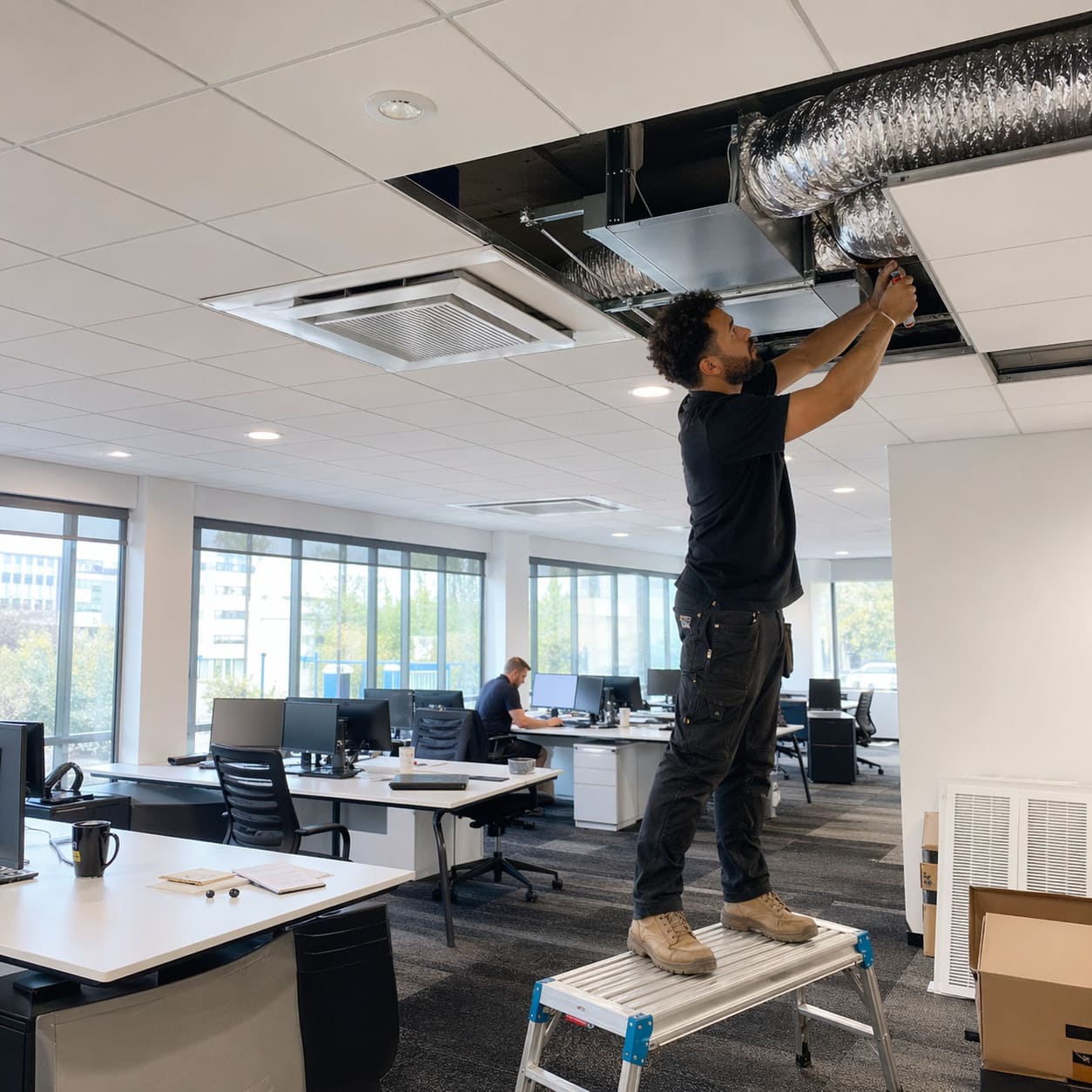
Deadlines are often tight. However, trying to compress installation timelines usually backfires, shortcuts risk functional faults, safety concerns, or disruptive follow-up work. Proper sequencing matters, especially when integrating with other trades.
Rushing often results in:
Air conditioning should be part of a coordinated fit-out or refurbishment plan, not an afterthought. Good system performance begins not at commissioning, but at initial coordination. Planning with adequate lead time ensures that function, aesthetics, and comfort align without conflict or compromise.
Across varied buildings in London, from converted townhouses in Hampstead to mixed-use commercial spaces in Kensington, and the most effective installations are those that are not rushed. They are measured, well-sequenced, and outwardly invisible in operation.
Installing air conditioning in a commercial property is rarely straightforward. Property constraints, system choice, compliance obligations, and operational expectations all intersect. Many of the most common mistakes stem from a failure to account for this challenge at the right moment.
Whether in a new office fit-out or a retail refurbishment, effective systems are those designed specifically for the space, installed with care, and maintained with intent. Partnering with a contractor who is experienced in managing this full lifecycle is often the difference between an install that works quietly in the background and one that becomes a daily concern.
In this respect, firms like RightAir Solutions stand out by delivering dependable climate control outcomes that integrate fully within the context and constraints of London spaces.
Protect your investment with proactive maintenance tailored to London’s building challenges.

Common Mistakes Businesses Make When Installing Air Conditioning
Discover the most common pitfalls in commercial air conditioning installations and how to avoid costly, inefficient decisions in your next project.

Air Conditioning Installation Downtime: What Businesses Should Expect
Learn what to expect during air conditioning installation downtime and how to minimise disruption to your business with smart planning and scheduling.

What London Businesses Must Consider Before Installing Air Conditioning
Planning air conditioning in London? Learn how building type, regulations, and system design affect installations in commercial properties.
RightAir Solutions
At RightAir Solutions, we provide air conditioning services to domestic and business customers for heating and cooling units. We also supply and fit commercial AC and HVAC services with our insured, qualified and experienced London team of air con engineers.