What certifications and experience should a qualified air conditioning installer have in London?
A qualified air conditioning installer in London must hold valid F-Gas certification, demonstrate formal technical training, and have experience working with complex property types across the city. Additional indicators of quality include manufacturer accreditations, attention to safety, professionalism on-site, and ongoing service capabilities.
Table of Contents
Legal and Regulatory Requirements Every Installer Must Meet
In London, compliance with legal standards is non-negotiable. Air conditioning installers must be appropriately certified to handle refrigerants and work safely within buildings.
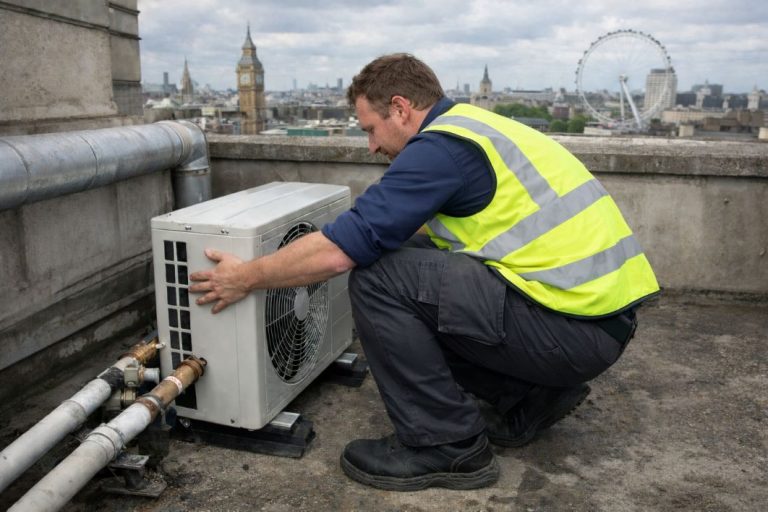
F-Gas Certification Installers handling refrigerants must be F-Gas certified under UK law. This certification, regulated by DEFRA and typically overseen by REFCOM or other authorised registration bodies, ensures environmentally responsible handling and leak prevention. Without it, is the installation likely illegal, but the property owner can be held liable for any non-compliance.
Building Regulations and Part P Electrical work involved in AC installations falls under Part P of the Building Regulations. This means that any installer working on electrical connections must be qualified to self-certify or work with someone who can. Poor or unapproved connections may delay sign-off, increase safety risks, or result in costly remedial work.
Company vs. Individual Certification It is important to distinguish between companies registered with certification bodies and individual engineers. A company may be registered, but the on-site engineer must still hold their own valid qualifications.
Common Misunderstandings Many homeowners assume “licensed” means “qualified.” In the UK, air conditioning installation is regulated through certifications rather than a formal licensing system. Always verify what certifications an individual engineer holds, rather than relying solely on company branding or reviews.
Hiring someone who lacks proper checks might appear convenient, but rectifying poor or non-compliant installations often proves more disruptive and expensive than doing it correctly from the outset.
Pro Tip: Always check both the individual engineer and their company for up-to-date F-Gas certification before work starts.
Technical Qualifications That Signal Competence
Legal compliance is only the baseline. Genuinely competent installers are those who have pursued structured technical training.
Recognised Technical Qualifications Include:
- City & Guilds Level 2 or Level 3 in Air Conditioning and Refrigeration
- NVQ Level 2 or Level 3 in related HVAC disciplines
These qualifications involve a combination of practical and classroom-based learning and cover fault diagnosis, system commissioning, and correct installation methods. In London’s diverse property landscape, such training is important for adapting to system variants and spatial limitations.
Many residential and small commercial systems now incorporate smart controls and low-noise, high-efficiency features. Formal training ensures that units are installed in ways that protect these capabilities rather than compromise them.
Even highly experienced installers benefit from updated training as product ranges, control protocols, and refrigerants evolve. A technician who completed their qualification several years ago should ideally have attended refresher sessions or manufacturer courses to stay current.
Book a Qualified AC Installer Today
Ensure your air conditioning system is fitted safely and legally by our certified team with local knowledge.
Why Local Experience Matters in London Homes
Technical excellence needs to be matched with a firm grasp of London’s unique property challenges. Period conversions, awkward floorplans, and noise-sensitive neighbours raise challenges that generic training cannot fully address.
High-ceilinged Victorian houses, subdivided Georgian terraces, and post-war flats each present specific issues. Limited outdoor unit placement, tricky cable runs, or planning restrictions in conservation areas are common hurdles.
In areas such as Hampstead or Notting Hill, for instance, strict local authority rules may limit visible external equipment or require Listed Building Consent. Installers unfamiliar with these contexts may propose unsuitable solutions or overlook key permissions.
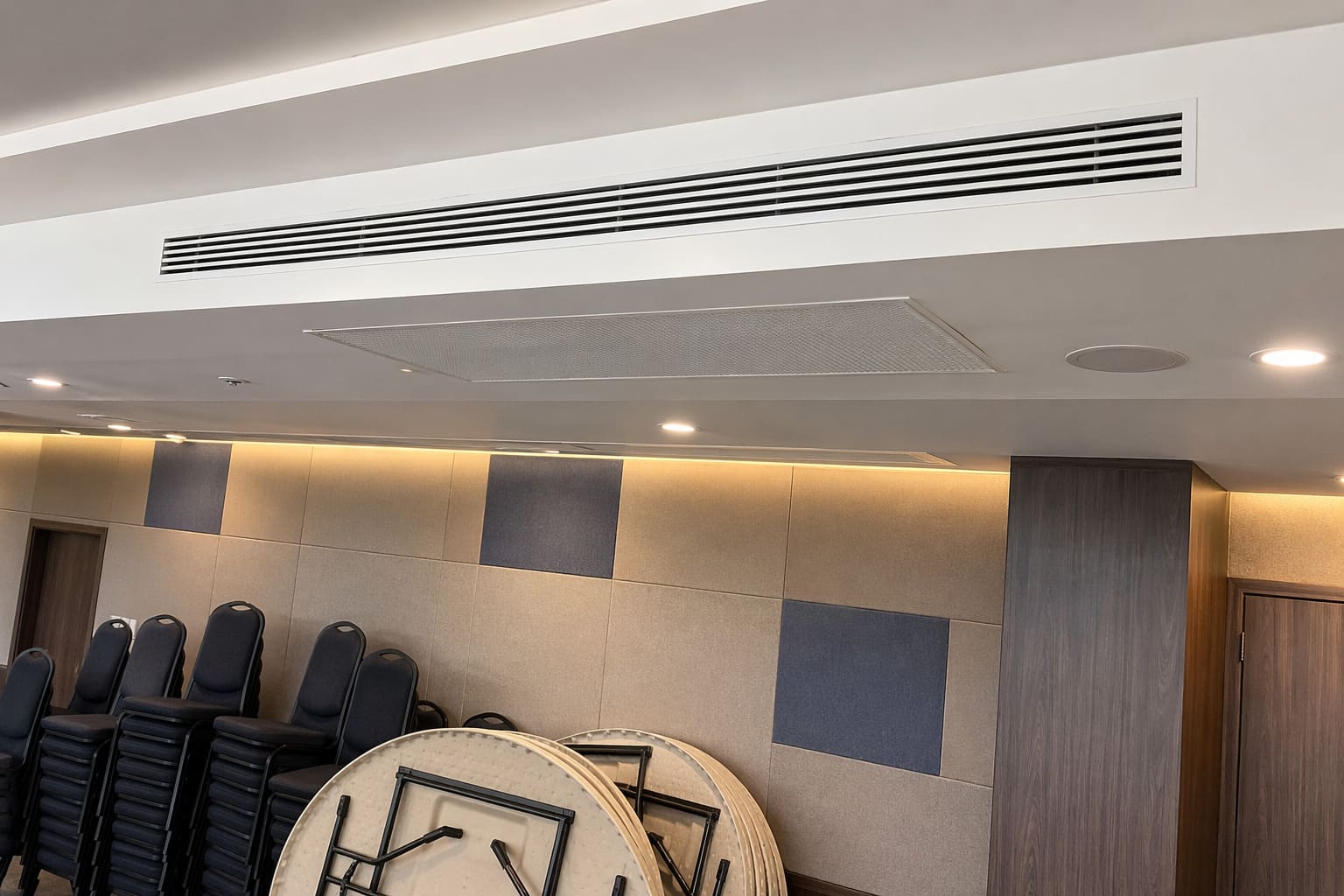
In premium residential settings, acoustic and aesthetic integration are important. Systems should be discreet, quiet, and adaptable to interior design layouts. An installer with experience in high-spec London homes will anticipate these requirements without the need for constant supervision.
From ladder access through narrow communal hallways to coordinating with building management firms, familiarity with logistical constraints can vastly reduce frustration during installation.
The Value of Manufacturer Accreditations
Air conditioning brands often offer product-specific training to approved installers. These qualifications typically go beyond basic functionality and focus on optimised performance, warranty protection, and integration with proprietary features such as smart thermostats or zoning controls.
For example, Daikin or Mitsubishi Electric approved installers are often trained in configuration techniques that affect efficiency, longevity, and compatibility with other devices. This depth of knowledge is less likely with installers who work across dozens of brands with minimal formal interaction with product teams.
Benefits of Installer Accreditation:
- Warranty extensions or full warranty protection often depend on using accredited installers
- Correct calibration and commissioning of smart functions
- Faster diagnosis and efficient servicing post-installation
Without product familiarity, even minor configuration mistakes can lead to inefficiencies or void warranties. As systems become more interconnected and software-reliant, technical alignment with the specific brand matters more than ever.
Pro Tip: For central London properties, confirm in advance whether planning permission impacts the placement of external AC units.
Prioritising Health and Safety Standards
Every air conditioning installation involves risks, electrical, structural, chemical, or physical. A qualified installer demonstrates technical ability, but also a consistent approach to site safety and risk management.
Key Safety Credentials May Include:
- CSCS Cards to Recognised as evidence of basic site safety knowledge
- SafeContractor or equivalent scheme membership to Indicates commitment to health and safety best practice
- PASMA/IPAF training to For work involving towers, lifts, or elevated platforms
- Refrigerant Handling Training to Mandatory under F-Gas but also critical for conduct during equipment servicing
- Up-to-date liability and public indemnity insurance
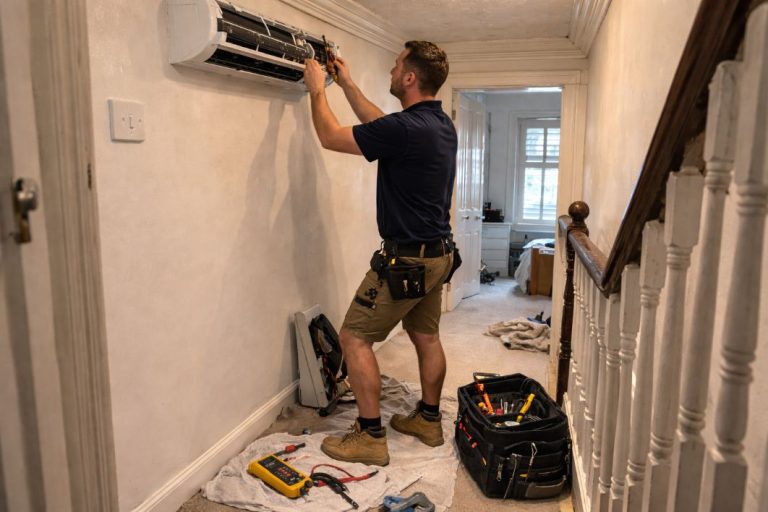
In residential settings, these standards translate into neat, hazard-free work areas, consistent PPE use, and open communication around risks or downtime. A professional team also respects shared spaces and minimises disruption for neighbours.
Before installation begins, assess whether the team appears prepared and cautious. Sloppy setup, unlabelled tools, or disorganised access can signal wider carelessness.
How Professionalism Shapes the Installation Experience
Professionalism is rarely about technical skill alone. For homeowners and property managers in London, how an installer behaves often matters just as much as how they work.
Professional Installers Typically:
- Provide clear, itemised proposals with realistic timelines
- Arrive on time and maintain tidy workspaces
- Use protective coverings and respect flooring, furniture, and decorations
- Communicate clearly about stages, timelines, and any unexpected findings
- Follow up promptly if post-installation issues arise
In contrast, unclear quotes, vague timing, and rushed work create stress and confusion. A well-organised installer inspires confidence by reducing uncertainty, not by promising perfection, but by responding clearly and calmly when questions arise.
Visual cues also tell a story. Branded uniforms are less important than whether technicians work cleanly, communicate politely, and treat the property with visible care.
Request a Compliance Check
Unsure if your existing AC setup meets current standards? Arrange a review by accredited professionals.
Why Ongoing Support is Part of the Qualification Picture
The job does not end when the system is switched on. Long-term comfort, efficiency, and system health depend on planned maintenance, occasional servicing, and prompt fault resolution.
A qualified installer should be set up to install, but also to support:
- Planned preventative maintenance programmes
- Seasonal system checks for refrigerant levels, filters, and performance
- Service continuity in case of faults, updates, or usage changes
- Expert cleaning and anti-bacterial treatments, particularly in shared environments
- Access to replacement parts and diagnostic tools for installed systems
Installers who offer no long-term presence or support framework may leave property owners facing difficulties months or years later.
For consistent comfort and peace of mind, it is worth engaging with an installer who views the system’s future as part of their remit. RightAir Solutions, for instance, is structured around this long-term lifecycle, ensuring that support is built into every stage, not sold as an extra.
Choosing an air conditioning installer in London is not just about finding someone who can mount a unit on a wall. It is about legal compliance, technical competence, local understanding, product-specific knowledge, and an ongoing commitment to the client and property. The most capable teams operate quietly and effectively in the background, and not just during installation, but in the years that follow.
Explore Ongoing Maintenance Plans
Keep your system efficient with scheduled servicing tailored to London homes and commercial properties.
Read Similar Blogs
Should you get your air conditioning serviced at the end of summer
Weak cooling, odours or noise after summer? End of summer air conditioning servicing can reveal faults early and help you decide whether to act now or wait.
Does air conditioning add value to a London home
Air conditioning can add value in London homes when it is quiet, discreet and well planned. See what buyers notice and what can weaken appeal.
Why is your air conditioning leaking water inside and when should you worry
Air conditioning leaking water inside can damage floors and ceilings fast. Spot the likely causes, safe checks and when to call an engineer.
RightAir Solutions