How do you properly clean a portable air conditioning unit?
Cleaning a portable air conditioning unit is a straightforward process when you know the steps. It involves turning off the power, wiping down the casing, cleaning or replacing the air filters, draining and disinfecting the condensate tank, clearing the air vents and exhaust hose, and carefully cleaning the evaporator and condenser coils. Maintaining a clean air conditioner helps it operate more efficiently, lowers energy consumption, and provides healthier indoor air.
- How to prepare for cleaning a portable air conditioner
- What you need to clean a portable air conditioner
- Step-by-step guide to cleaning your portable air conditioner
- How often should you clean your portable air conditioner?
- How does regular cleaning improve energy efficiency?
- Mistakes to avoid when cleaning a portable air conditioner
- Signs your portable air conditioner needs cleaning
- Easy-to-follow maintenance checklist
- How to clean mould from a portable air conditioner safely
- How do you properly clean a portable air conditioning unit?
- Why is it important to keep a portable air conditioner clean?
Why is it important to keep a portable air conditioner clean?
A clean portable air conditioner ensures better airflow, stronger cooling performance, and improved energy efficiency. Over time, dust, dirt, and mould can clog internal components, forcing the system to work harder. This increases wear on the compressor and fans, leading to higher energy bills and a reduced lifespan. By maintaining your unit, you can also prevent bacteria and allergens from circulating in your living space.
How to prepare for cleaning a portable air conditioner
Before beginning, turn off the air conditioner and unplug it from the socket. Allow the unit to cool completely. Wear protective gloves and a face mask if you are dealing with heavy dust or potential mould. Keep a small tray nearby to hold screws and small parts.
What you need to clean a portable air conditioner
Microfibre cloths
Mild household detergent
Vacuum cleaner with a soft brush attachment
Coil cleaning spray that is safe for aluminium surfaces
Soft brushes
Screwdriver set
White vinegar and water solution for mould removal
Pro Tip:
After draining the condensate tank, run the unit on fan-only mode for one hour to ensure internal components are fully dry before storing it for the season.
Step-by-step guide to cleaning your portable air conditioner
How to clean the exterior casing
Use a damp microfibre cloth with a mild detergent to gently wipe down the casing. Take care not to let moisture seep into ventilation openings or electronic controls. Dry the surface immediately with a clean cloth.
How to clean the air filters
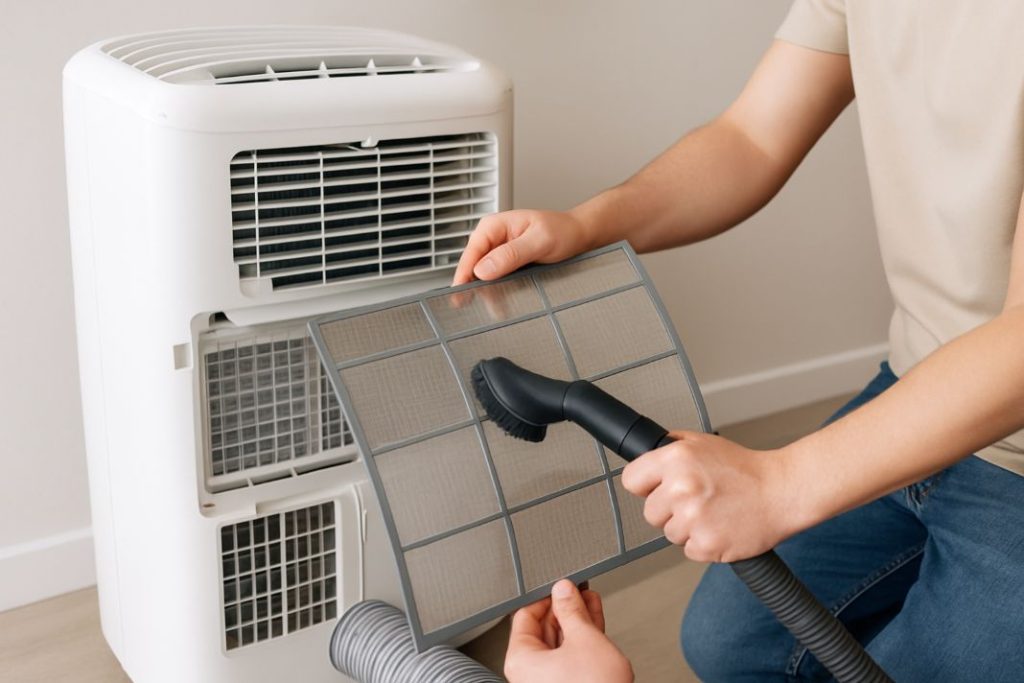
Locate the air filter, usually behind a removable panel. Remove it carefully and use a vacuum cleaner with a brush attachment to remove dust and debris. If the filter is washable, rinse it under warm water with a little detergent and allow it to dry naturally. Cleaning the filter regularly improves airflow and reduces strain on the motor.
How to clean the exhaust hose and vents
Detach the exhaust hose and inspect the interior for dust buildup or mould. Use a long brush or vacuum cleaner to remove debris. Clean the exterior surface with warm soapy water. Ensure the hose is dry before reattaching it. If you are unsure about how to reconnect it correctly.
Draining and cleaning the condensate tank
Find the drain plug located near the bottom of the unit. Place a shallow container underneath and remove the plug to drain the collected water. Clean the inside of the tank with a cloth and a vinegar solution to kill bacteria and mould spores. Dry the tank thoroughly before replacing the plug securely.
How to clean the evaporator and condenser coils
Access to the coils typically requires removing the back panel of the unit. Use a vacuum cleaner with a brush attachment to clean the coils gently. For stubborn dirt, apply a specialist coil cleaning spray, following the product instructions. Avoid damaging the thin aluminium fins by using soft strokes.
When should you attempt advanced internal cleaning?
If you notice persistent odours or performance problems, deeper internal cleaning may be necessary. However, dismantling components beyond the access panels can void your warranty. In these cases, consider booking a deep clean of your air conditioning with RightAir Solutions’ expert service team.
Book a Professional Deep Clean
Get your portable air conditioner thoroughly cleaned and restored by our certified experts
How often should you clean your portable air conditioner?
Regular cleaning keeps your unit performing well. Wipe the exterior weekly, clean the air filter every two weeks during periods of heavy use, and give the entire unit a thorough clean at the end of each season.
How does regular cleaning improve energy efficiency?
When filters, vents, and coils are clean, your air conditioner can cool a room more effectively with less effort. This reduces the strain on the compressor and blower motor, leading to lower electricity bills and helping the unit maintain its designed cooling capacity.
Mistakes to avoid when cleaning a portable air conditioner
Using strong chemical cleaners that can corrode plastic or metal parts
Reinstalling wet filters, which can promote mould growth
Losing screws or forcing panels back into place incorrectly
Ignoring buildup inside the exhaust hose or around the intake vents
Signs your portable air conditioner needs cleaning
Noticeable drop in cooling power
Persistent musty smells when the unit is running
Unusual rattling or humming noises
Leaking water around the base of the unit
Easy-to-follow maintenance checklist
Weekly:
Wipe down the exterior surfaces
Every two weeks:
Vacuum or wash the air filters
End of season:
Drain the water tank
Clean internal coils if accessible
Prepare for storage following our full seasonal maintenance checklist
How to clean mould from a portable air conditioner safely
Switch off and unplug the unit. Remove the air filter and wash it with warm soapy water. Wipe any mouldy areas inside the unit with a vinegar and water solution using a soft cloth. Dry the cleaned surfaces completely before reassembling the unit.
When should you call a professional AC cleaner?
If you find mould deep inside the machine, notice persistent performance problems, or feel unsure about removing internal panels, professional servicing is the safest option. The RightAir Solutions team provides full inspections, deep cleaning, and repairs to help keep your unit working at its best.
Keeping your portable air conditioner at its best
Looking after your portable air conditioner helps it work more efficiently, last longer, and keep your indoor air healthier. A few simple maintenance habits, like cleaning the filter and draining the water tank, can make a big difference. If you ever need help, RightAir Solutions offers expert advice and professional support to make sure your unit stays in top condition.
Frequently asked questions
How often should I clean my portable air conditioner?
Clean the filters every two weeks during heavy use. Deep clean the entire unit at the start and end of each cooling season.
Can I use vinegar to clean my air conditioner coils?
Vinegar works well for cleaning the water tank and surfaces but use a dedicated coil cleaner for the evaporator and condenser coils.
Why does my portable air conditioner smell bad?
A bad smell often means there is mould or bacteria inside. Cleaning the filter, water tank, and internal surfaces usually solves the problem.
What happens if I do not clean my air conditioner?
The unit can lose cooling efficiency, use more energy, circulate dirty air, and suffer from early mechanical failure.
Should I get a professional to clean my unit annually?
If you want thorough cleaning without risk, professional maintenance once a year is a smart investment, especially before peak summer use.
How should I store my portable air conditioner during winter?
Drain all water, clean and dry the unit, remove the filter for cleaning, and store it in a dry, sheltered place covered with a dust sheet.
Can I use a pressure washer to clean my portable air conditioner?
No, a pressure washer can easily damage delicate coils and electronics. Use a vacuum and soft brushes for safe and effective cleaning.
Read Similar Blogs

Whole-life cost of air conditioning in London: what nobody tells you about the first five years
Discover the real five-year costs of air conditioning in London, from installation to maintenance, energy bills, and comfort tips unique to local properties.

Get your air conditioning ready for summer with this practical pre-season checklist. Avoid breakdowns and enjoy reliable cooling even on the hottest days.

Can you get air conditioning installed if you rent your flat in London?
Explore the steps, permissions, and expert tips for tenants seeking air conditioning in rented London flats. Learn what to expect before starting the process.
RightAir Solutions